







Kowkhdan’s untapped tourism potential calls for coordinated action
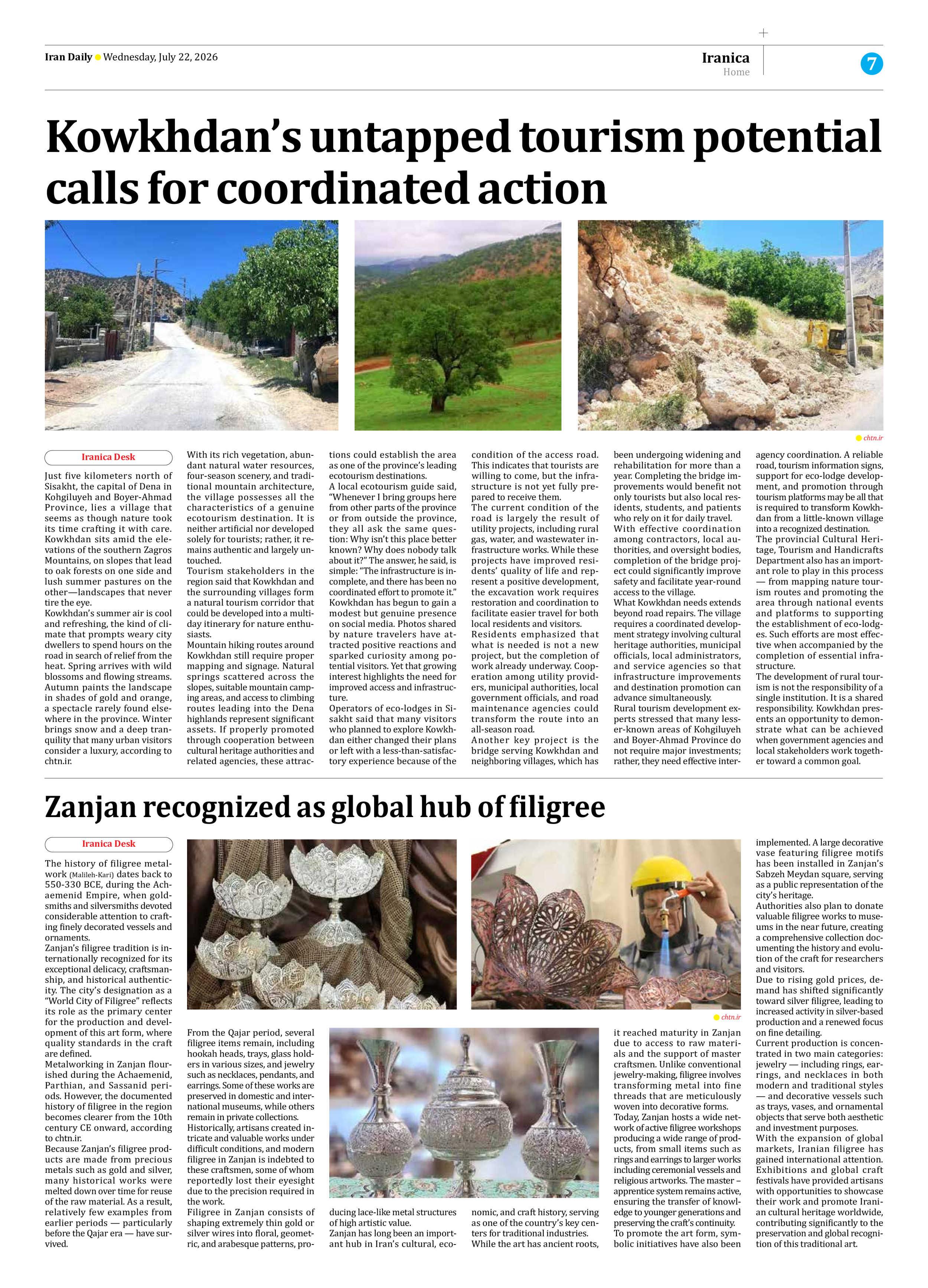
Just five kilometers north of Sisakht, the capital of Dena in Kohgiluyeh and Boyer-Ahmad Province, lies a village that seems as though nature took its time crafting it with care. Kowkhdan sits amid the elevations of the southern Zagros Mountains, on slopes that lead to oak forests on one side and lush summer pastures on the other—landscapes that never tire the eye.
Kowkhdan’s summer air is cool and refreshing, the kind of climate that prompts weary city dwellers to spend hours on the road in search of relief from the heat. Spring arrives with wild blossoms and flowing streams. Autumn paints the landscape in shades of gold and orange, a spectacle rarely found elsewhere in the province. Winter brings snow and a deep tranquility that many urban visitors consider a luxury, according to chtn.ir.
With its rich vegetation, abundant natural water resources, four-season scenery, and traditional mountain architecture, the village possesses all the characteristics of a genuine ecotourism destination. It is neither artificial nor developed solely for tourists; rather, it remains authentic and largely untouched.
Tourism stakeholders in the region said that Kowkhdan and the surrounding villages form a natural tourism corridor that could be developed into a multi-day itinerary for nature enthusiasts.
Mountain hiking routes around Kowkhdan still require proper mapping and signage. Natural springs scattered across the slopes, suitable mountain camping areas, and access to climbing routes leading into the Dena highlands represent significant assets. If properly promoted through cooperation between cultural heritage authorities and related agencies, these attractions could establish the area as one of the province’s leading ecotourism destinations.
A local ecotourism guide said, “Whenever I bring groups here from other parts of the province or from outside the province, they all ask the same question: Why isn’t this place better known? Why does nobody talk about it?” The answer, he said, is simple: “The infrastructure is incomplete, and there has been no coordinated effort to promote it.”
Kowkhdan has begun to gain a modest but genuine presence on social media. Photos shared by nature travelers have attracted positive reactions and sparked curiosity among potential visitors. Yet that growing interest highlights the need for improved access and infrastructure.
Operators of eco-lodges in Sisakht said that many visitors who planned to explore Kowkhdan either changed their plans or left with a less-than-satisfactory experience because of the condition of the access road. This indicates that tourists are willing to come, but the infrastructure is not yet fully prepared to receive them.
The current condition of the road is largely the result of utility projects, including rural gas, water, and wastewater infrastructure works. While these projects have improved residents’ quality of life and represent a positive development, the excavation work requires restoration and coordination to facilitate easier travel for both local residents and visitors.
Residents emphasized that what is needed is not a new project, but the completion of work already underway. Cooperation among utility providers, municipal authorities, local government officials, and road maintenance agencies could transform the route into an all-season road.
Another key project is the bridge serving Kowkhdan and neighboring villages, which has been undergoing widening and rehabilitation for more than a year. Completing the bridge improvements would benefit not only tourists but also local residents, students, and patients who rely on it for daily travel.
With effective coordination among contractors, local authorities, and oversight bodies, completion of the bridge project could significantly improve safety and facilitate year-round access to the village.
What Kowkhdan needs extends beyond road repairs. The village requires a coordinated development strategy involving cultural heritage authorities, municipal officials, local administrators, and service agencies so that infrastructure improvements and destination promotion can advance simultaneously.
Rural tourism development experts stressed that many lesser-known areas of Kohgiluyeh and Boyer-Ahmad Province do not require major investments; rather, they need effective interagency coordination. A reliable road, tourism information signs, support for eco-lodge development, and promotion through tourism platforms may be all that is required to transform Kowkhdan from a little-known village into a recognized destination.
The provincial Cultural Heritage, Tourism and Handicrafts Department also has an important role to play in this process — from mapping nature tourism routes and promoting the area through national events and platforms to supporting the establishment of eco-lodges. Such efforts are most effective when accompanied by the completion of essential infrastructure.
The development of rural tourism is not the responsibility of a single institution. It is a shared responsibility. Kowkhdan presents an opportunity to demonstrate what can be achieved when government agencies and local stakeholders work together toward a common goal.