





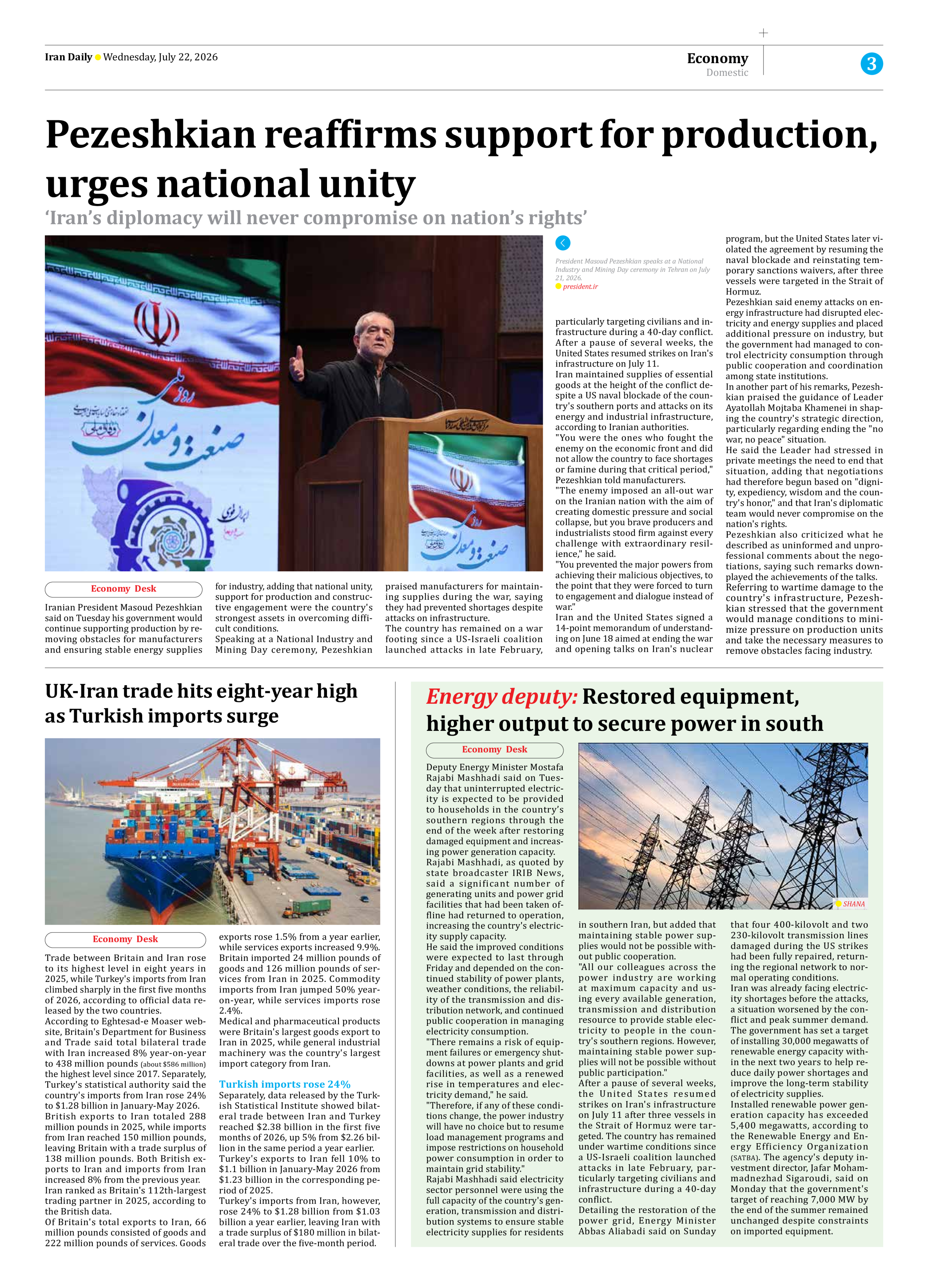


Energy deputy: Restored equipment, higher output to secure power in south
Deputy Energy Minister Mostafa Rajabi Mashhadi said on Tuesday that uninterrupted electricity is expected to be provided to households in the country’s southern regions through the end of the week after restoring damaged equipment and increasing power generation capacity.
Rajabi Mashhadi, as quoted by state broadcaster IRIB News, said a significant number of generating units and power grid facilities that had been taken offline had returned to operation, increasing the country's electricity supply capacity.
He said the improved conditions were expected to last through Friday and depended on the continued stability of power plants, weather conditions, the reliability of the transmission and distribution network, and continued public cooperation in managing electricity consumption.
"There remains a risk of equipment failures or emergency shutdowns at power plants and grid facilities, as well as a renewed rise in temperatures and electricity demand," he said.
"Therefore, if any of these conditions change, the power industry will have no choice but to resume load management programs and impose restrictions on household power consumption in order to maintain grid stability."
Rajabi Mashhadi said electricity sector personnel were using the full capacity of the country's generation, transmission and distribution systems to ensure stable electricity supplies for residents in southern Iran, but added that maintaining stable power supplies would not be possible without public cooperation.
"All our colleagues across the power industry are working at maximum capacity and using every available generation, transmission and distribution resource to provide stable electricity to people in the country's southern regions. However, maintaining stable power supplies will not be possible without public participation."
After a pause of several weeks, the United States resumed strikes on Iran's infrastructure on July 11 after three vessels in the Strait of Hormuz were targeted. The country has remained under wartime conditions since a US-Israeli coalition launched attacks in late February, particularly targeting civilians and infrastructure during a 40-day conflict.
Detailing the restoration of the power grid, Energy Minister Abbas Aliabadi said on Sunday that four 400-kilovolt and two 230-kilovolt transmission lines damaged during the US strikes had been fully repaired, returning the regional network to normal operating conditions.
Iran was already facing electricity shortages before the attacks, a situation worsened by the conflict and peak summer demand. The government has set a target of installing 30,000 megawatts of renewable energy capacity within the next two years to help reduce daily power shortages and improve the long-term stability of electricity supplies.
Installed renewable power generation capacity has exceeded 5,400 megawatts, according to the Renewable Energy and Energy Efficiency Organization (SATBA). The agency's deputy investment director, Jafar Mohammadnezhad Sigaroudi, said on Monday that the government's target of reaching 7,000 MW by the end of the summer remained unchanged despite constraints on imported equipment.