







Pezeshkian reaffirms support for production, urges national unity
‘Iran’s diplomacy will never compromise on nation’s rights’
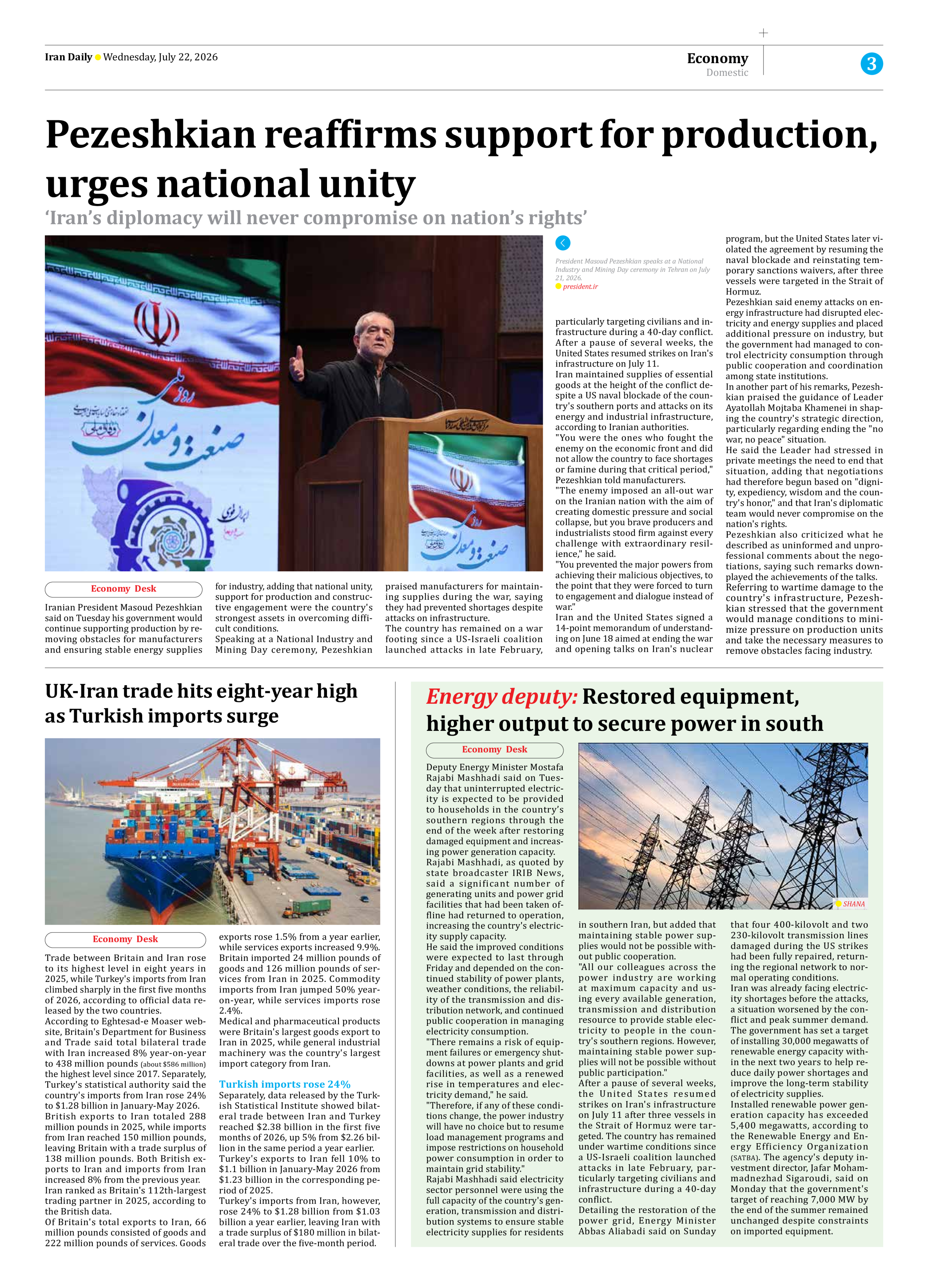
Iranian President Masoud Pezeshkian said on Tuesday his government would continue supporting production by removing obstacles for manufacturers and ensuring stable energy supplies for industry, adding that national unity, support for production and constructive engagement were the country's strongest assets in overcoming difficult conditions.
Speaking at a National Industry and Mining Day ceremony, Pezeshkian praised manufacturers for maintaining supplies during the war, saying they had prevented shortages despite attacks on infrastructure.
The country has remained on a war footing since a US-Israeli coalition launched attacks in late February, particularly targeting civilians and infrastructure during a 40-day conflict. After a pause of several weeks, the United States resumed strikes on Iran's infrastructure on July 11.
Iran maintained supplies of essential goods at the height of the conflict despite a US naval blockade of the country's southern ports and attacks on its energy and industrial infrastructure, according to Iranian authorities.
"You were the ones who fought the enemy on the economic front and did not allow the country to face shortages or famine during that critical period," Pezeshkian told manufacturers.
"The enemy imposed an all-out war on the Iranian nation with the aim of creating domestic pressure and social collapse, but you brave producers and industrialists stood firm against every challenge with extraordinary resilience," he said.
"You prevented the major powers from achieving their malicious objectives, to the point that they were forced to turn to engagement and dialogue instead of war."
Iran and the United States signed a 14-point memorandum of understanding on June 18 aimed at ending the war and opening talks on Iran's nuclear program, but the United States later violated the agreement by resuming the naval blockade and reinstating temporary sanctions waivers, after three vessels were targeted in the Strait of Hormuz.
Pezeshkian said enemy attacks on energy infrastructure had disrupted electricity and energy supplies and placed additional pressure on industry, but the government had managed to control electricity consumption through public cooperation and coordination among state institutions.
In another part of his remarks, Pezeshkian praised the guidance of Leader Ayatollah Mojtaba Khamenei in shaping the country's strategic direction, particularly regarding ending the "no war, no peace" situation.
He said the Leader had stressed in private meetings the need to end that situation, adding that negotiations had therefore begun based on "dignity, expediency, wisdom and the country's honor," and that Iran's diplomatic team would never compromise on the nation's rights.
Pezeshkian also criticized what he described as uninformed and unprofessional comments about the negotiations, saying such remarks downplayed the achievements of the talks.
Referring to wartime damage to the country's infrastructure, Pezeshkian stressed that the government would manage conditions to minimize pressure on production units and take the necessary measures to remove obstacles facing industry.