







Pakistan PM calls for restraint from warring sides in region
Momeni: Tehran focused on expanding cross-border trade with Islamabad
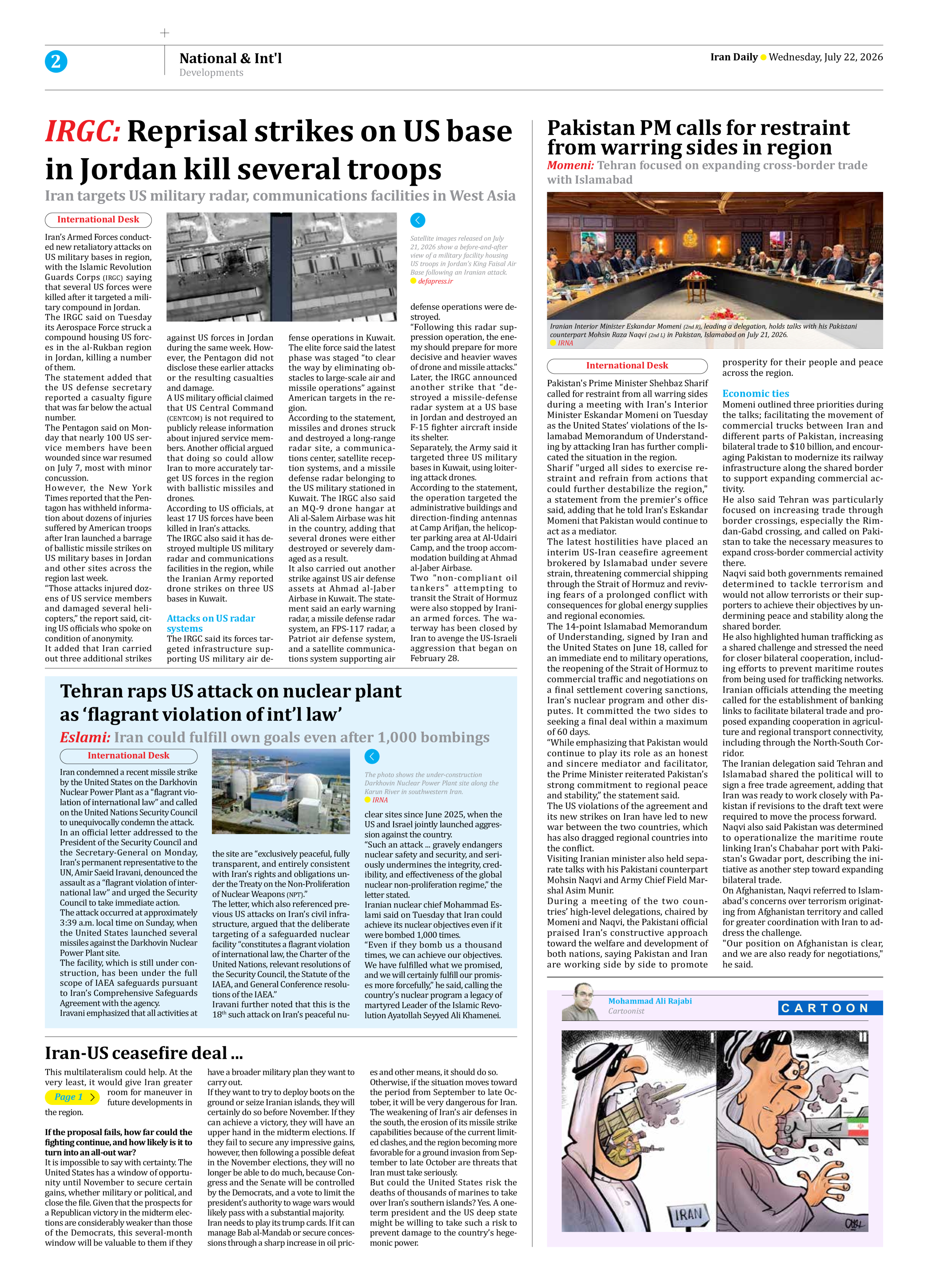
Pakistan's Prime Minister Shehbaz Sharif called for restraint from all warring sides during a meeting with Iran's Interior Minister Eskandar Momeni on Tuesday as the United States’ violations of the Islamabad Memorandum of Understanding by attacking Iran has further complicated the situation in the region.
Sharif "urged all sides to exercise restraint and refrain from actions that could further destabilize the region," a statement from the premier's office said, adding that he told Iran's Eskandar Momeni that Pakistan would continue to act as a mediator.
The latest hostilities have placed an interim US-Iran ceasefire agreement brokered by Islamabad under severe strain, threatening commercial shipping through the Strait of Hormuz and reviving fears of a prolonged conflict with consequences for global energy supplies and regional economies.
The 14-point Islamabad Memorandum of Understanding, signed by Iran and the United States on June 18, called for an immediate end to military operations, the reopening of the Strait of Hormuz to commercial traffic and negotiations on a final settlement covering sanctions, Iran’s nuclear program and other disputes. It committed the two sides to seeking a final deal within a maximum of 60 days.
“While emphasizing that Pakistan would continue to play its role as an honest and sincere mediator and facilitator, the Prime Minister reiterated Pakistan’s strong commitment to regional peace and stability,” the statement said.
The US violations of the agreement and its new strikes on Iran have led to new war between the two countries, which has also dragged regional countries into the conflict.
Visiting Iranian minister also held separate talks with his Pakistani counterpart Mohsin Naqvi and Army Chief Field Marshal Asim Munir.
During a meeting of the two countries’ high-level delegations, chaired by Momeni and Naqvi, the Pakistani official praised Iran’s constructive approach toward the welfare and development of both nations, saying Pakistan and Iran are working side by side to promote prosperity for their people and peace across the region.
Economic ties
Momeni outlined three priorities during the talks; facilitating the movement of commercial trucks between Iran and different parts of Pakistan, increasing bilateral trade to $10 billion, and encouraging Pakistan to modernize its railway infrastructure along the shared border to support expanding commercial activity.
He also said Tehran was particularly focused on increasing trade through border crossings, especially the Rimdan-Gabd crossing, and called on Pakistan to take the necessary measures to expand cross-border commercial activity there.
Naqvi said both governments remained determined to tackle terrorism and would not allow terrorists or their supporters to achieve their objectives by undermining peace and stability along the shared border.
He also highlighted human trafficking as a shared challenge and stressed the need for closer bilateral cooperation, including efforts to prevent maritime routes from being used for trafficking networks.
Iranian officials attending the meeting called for the establishment of banking links to facilitate bilateral trade and proposed expanding cooperation in agriculture and regional transport connectivity, including through the North-South Corridor.
The Iranian delegation said Tehran and Islamabad shared the political will to sign a free trade agreement, adding that Iran was ready to work closely with Pakistan if revisions to the draft text were required to move the process forward.
Naqvi also said Pakistan was determined to operationalize the maritime route linking Iran's Chabahar port with Pakistan's Gwadar port, describing the initiative as another step toward expanding bilateral trade.
On Afghanistan, Naqvi referred to Islamabad's concerns over terrorism originating from Afghanistan territory and called for greater coordination with Iran to address the challenge.
"Our position on Afghanistan is clear, and we are also ready for negotiations," he said.