







Find adventure, tranquility in Shemshak
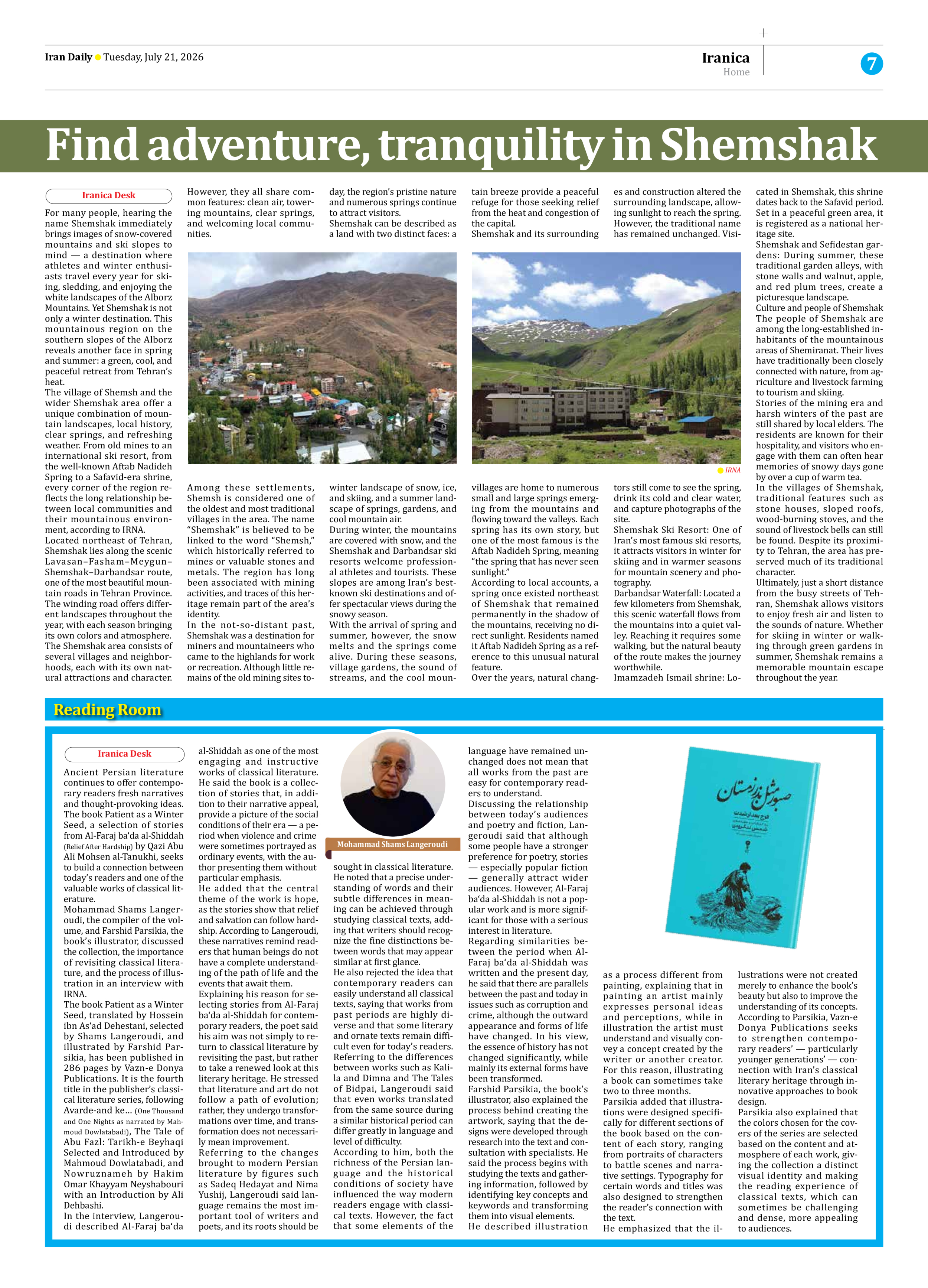
For many people, hearing the name Shemshak immediately brings images of snow-covered mountains and ski slopes to mind — a destination where athletes and winter enthusiasts travel every year for skiing, sledding, and enjoying the white landscapes of the Alborz Mountains. Yet Shemshak is not only a winter destination. This mountainous region on the southern slopes of the Alborz reveals another face in spring and summer: a green, cool, and peaceful retreat from Tehran’s heat.
The village of Shemsh and the wider Shemshak area offer a unique combination of mountain landscapes, local history, clear springs, and refreshing weather. From old mines to an international ski resort, from the well-known Aftab Nadideh Spring to a Safavid-era shrine, every corner of the region reflects the long relationship between local communities and their mountainous environment, according to IRNA.
Located northeast of Tehran, Shemshak lies along the scenic Lavasan–Fasham–Meygun–Shemshak–Darbandsar route, one of the most beautiful mountain roads in Tehran Province. The winding road offers different landscapes throughout the year, with each season bringing its own colors and atmosphere.
The Shemshak area consists of several villages and neighborhoods, each with its own natural attractions and character. However, they all share common features: clean air, towering mountains, clear springs, and welcoming local communities.
Among these settlements, Shemsh is considered one of the oldest and most traditional villages in the area. The name “Shemshak” is believed to be linked to the word “Shemsh,” which historically referred to mines or valuable stones and metals. The region has long been associated with mining activities, and traces of this heritage remain part of the area’s identity.
In the not-so-distant past, Shemshak was a destination for miners and mountaineers who came to the highlands for work or recreation. Although little remains of the old mining sites today, the region’s pristine nature and numerous springs continue to attract visitors.
Shemshak can be described as a land with two distinct faces: a winter landscape of snow, ice, and skiing, and a summer landscape of springs, gardens, and cool mountain air.
During winter, the mountains are covered with snow, and the Shemshak and Darbandsar ski resorts welcome professional athletes and tourists. These slopes are among Iran’s best-known ski destinations and offer spectacular views during the snowy season.
With the arrival of spring and summer, however, the snow melts and the springs come alive. During these seasons, village gardens, the sound of streams, and the cool mountain breeze provide a peaceful refuge for those seeking relief from the heat and congestion of the capital.
Shemshak and its surrounding villages are home to numerous small and large springs emerging from the mountains and flowing toward the valleys. Each spring has its own story, but one of the most famous is the Aftab Nadideh Spring, meaning “the spring that has never seen sunlight.”
According to local accounts, a spring once existed northeast of Shemshak that remained permanently in the shadow of the mountains, receiving no direct sunlight. Residents named it Aftab Nadideh Spring as a reference to this unusual natural feature.
Over the years, natural changes and construction altered the surrounding landscape, allowing sunlight to reach the spring. However, the traditional name has remained unchanged. Visitors still come to see the spring, drink its cold and clear water, and capture photographs of the site.
Shemshak Ski Resort: One of Iran’s most famous ski resorts, it attracts visitors in winter for skiing and in warmer seasons for mountain scenery and photography.
Darbandsar Waterfall: Located a few kilometers from Shemshak, this scenic waterfall flows from the mountains into a quiet valley. Reaching it requires some walking, but the natural beauty of the route makes the journey worthwhile.
Imamzadeh Ismail shrine: Located in Shemshak, this shrine dates back to the Safavid period. Set in a peaceful green area, it is registered as a national heritage site.
Shemshak and Sefidestan gardens: During summer, these traditional garden alleys, with stone walls and walnut, apple, and red plum trees, create a picturesque landscape.
Culture and people of Shemshak
The people of Shemshak are among the long-established inhabitants of the mountainous areas of Shemiranat. Their lives have traditionally been closely connected with nature, from agriculture and livestock farming to tourism and skiing.
Stories of the mining era and harsh winters of the past are still shared by local elders. The residents are known for their hospitality, and visitors who engage with them can often hear memories of snowy days gone by over a cup of warm tea.
In the villages of Shemshak, traditional features such as stone houses, sloped roofs, wood-burning stoves, and the sound of livestock bells can still be found. Despite its proximity to Tehran, the area has preserved much of its traditional character.
Ultimately, just a short distance from the busy streets of Tehran, Shemshak allows visitors to enjoy fresh air and listen to the sounds of nature. Whether for skiing in winter or walking through green gardens in summer, Shemshak remains a memorable mountain escape throughout the year.