





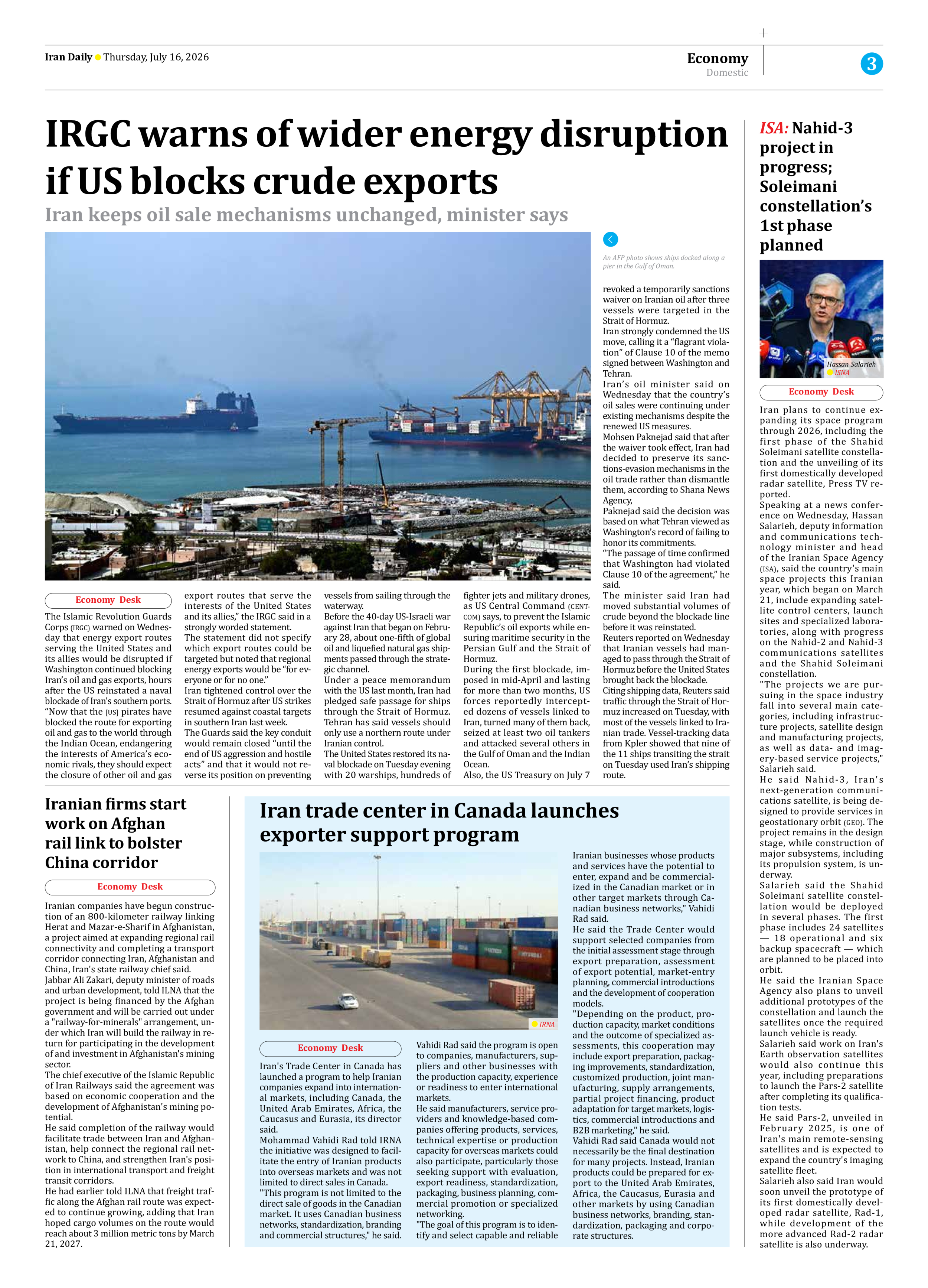


IRGC warns of wider energy disruption if US blocks crude exports
Iran keeps oil sale mechanisms unchanged, minister says
The Islamic Revolution Guards Corps (IRGC) warned on Wednesday that energy export routes serving the United States and its allies would be disrupted if Washington continued blocking Iran’s oil and gas exports, hours after the US reinstated a naval blockade of Iran’s southern ports.
“Now that the [US] pirates have blocked the route for exporting oil and gas to the world through the Indian Ocean, endangering the interests of America’s economic rivals, they should expect the closure of other oil and gas export routes that serve the interests of the United States and its allies,” the IRGC said in a strongly worded statement.
The statement did not specify which export routes could be targeted but noted that regional energy exports would be “for everyone or for no one.”
Iran tightened control over the Strait of Hormuz after US strikes resumed against coastal targets in southern Iran last week.
The Guards said the key conduit would remain closed “until the end of US aggression and hostile acts” and that it would not reverse its position on preventing vessels from sailing through the waterway.
Before the 40-day US-Israeli war against Iran that began on February 28, about one-fifth of global oil and liquefied natural gas shipments passed through the strategic channel.
Under a peace memorandum with the US last month, Iran had pledged safe passage for ships through the Strait of Hormuz. Tehran has said vessels should only use a northern route under Iranian control.
The United States restored its naval blockade on Tuesday evening with 20 warships, hundreds of fighter jets and military drones, as US Central Command (CENTCOM) says, to prevent the Islamic Republic’s oil exports while ensuring maritime security in the Persian Gulf and the Strait of Hormuz.
During the first blockade, imposed in mid-April and lasting for more than two months, US forces reportedly intercepted dozens of vessels linked to Iran, turned many of them back, seized at least two oil tankers and attacked several others in the Gulf of Oman and the Indian Ocean.
Also, the US Treasury on July 7 revoked a temporarily sanctions waiver on Iranian oil after three vessels were targeted in the Strait of Hormuz.
Iran strongly condemned the US move, calling it a “flagrant violation” of Clause 10 of the memo signed between Washington and Tehran.
Iran’s oil minister said on Wednesday that the country’s oil sales were continuing under existing mechanisms despite the renewed US measures.
Mohsen Paknejad said that after the waiver took effect, Iran had decided to preserve its sanctions-evasion mechanisms in the oil trade rather than dismantle them, according to Shana News Agency,
Paknejad said the decision was based on what Tehran viewed as Washington’s record of failing to honor its commitments.
“The passage of time confirmed that Washington had violated Clause 10 of the agreement,” he said.
The minister said Iran had moved substantial volumes of crude beyond the blockade line before it was reinstated.
Reuters reported on Wednesday that Iranian vessels had managed to pass through the Strait of Hormuz before the United States brought back the blockade.
Citing shipping data, Reuters said traffic through the Strait of Hormuz increased on Tuesday, with most of the vessels linked to Iranian trade. Vessel-tracking data from Kpler showed that nine of the 11 ships transiting the strait on Tuesday used Iran’s shipping route.