







Strait of Hormuz shut until US ends regional intervention: IRGC
The Islamic Revolution Guards Corps (IRGC) Navy announced the closure of the Strait of Hormuz “until further notice,” saying the waterway will remain closed until the United States ends its intervention in the region.
In a statement on Sunday, the IRGC Navy said the measure had been taken “in light of the security situation resulting from the unlawful intervention of foreign powers.”
“The Strait of Hormuz has been closed until further notice and will remain closed until the United States ends its intervention in the region. No vessel will be permitted to transit the strait,” the statement said.
The IRGC Navy warned against any additional military aggression against the Islamic Republic under the pretext of the closure of the waterway, for which the enemy, itself, has been responsible.
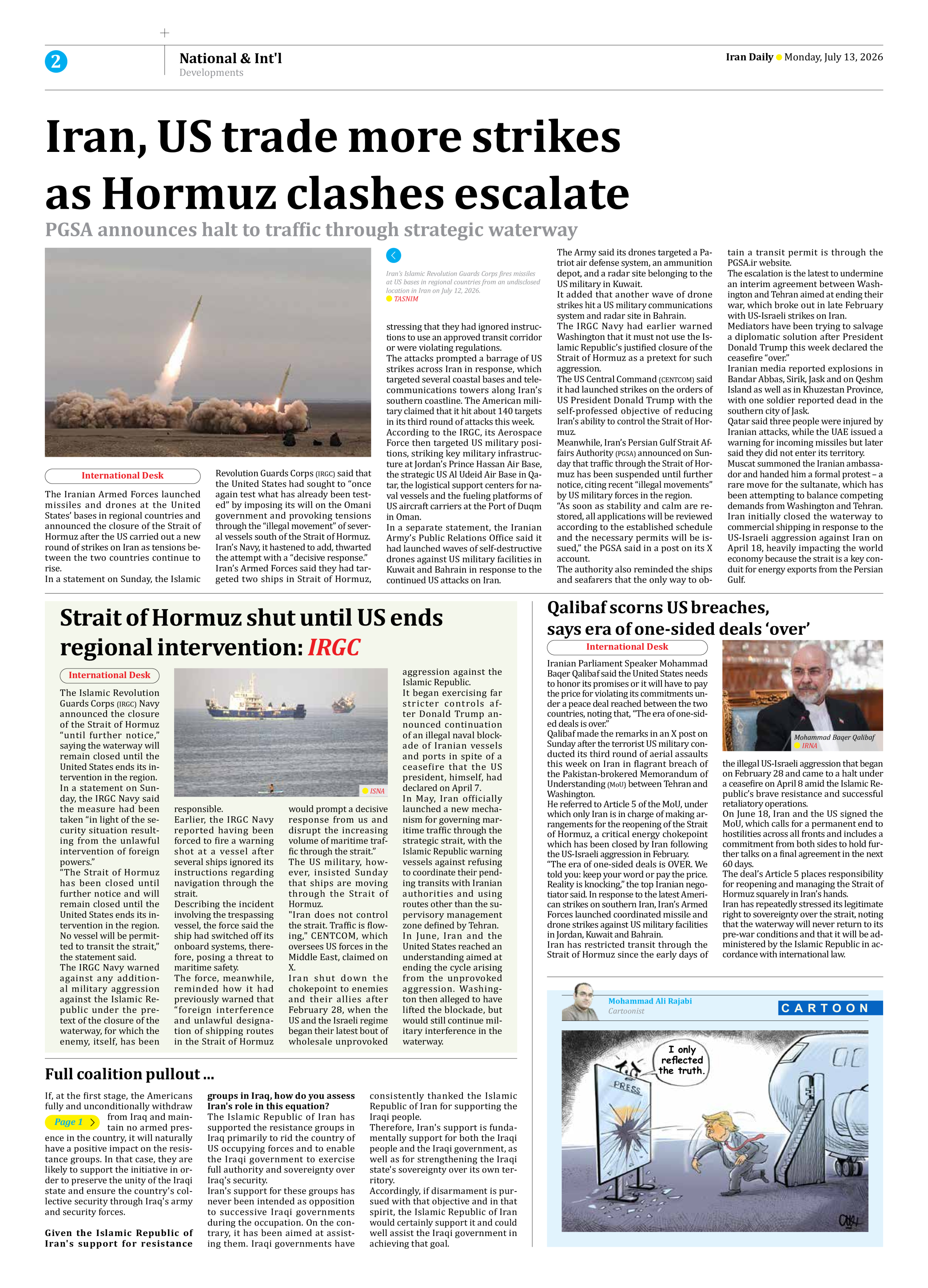
Earlier, the IRGC Navy reported having been forced to fire a warning shot at a vessel after several ships ignored its instructions regarding navigation through the strait.
Describing the incident involving the trespassing vessel, the force said the ship had switched off its onboard systems, therefore, posing a threat to maritime safety.
The force, meanwhile, reminded how it had previously warned that “foreign interference and unlawful designation of shipping routes in the Strait of Hormuz would prompt a decisive response from us and disrupt the increasing volume of maritime traffic through the strait.”
The US military, however, insisted Sunday that ships are moving through the Strait of Hormuz.
"Iran does not control the strait. Traffic is flowing," CENTCOM, which oversees US forces in the Middle East, claimed on X.
Iran shut down the chokepoint to enemies and their allies after February 28, when the US and the Israeli regime began their latest bout of wholesale unprovoked aggression against the Islamic Republic.
It began exercising far stricter controls after Donald Trump announced continuation of an illegal naval blockade of Iranian vessels and ports in spite of a ceasefire that the US president, himself, had declared on April 7.
In May, Iran officially launched a new mechanism for governing maritime traffic through the strategic strait, with the Islamic Republic warning vessels against refusing to coordinate their pending transits with Iranian authorities and using routes other than the supervisory management zone defined by Tehran.
In June, Iran and the United States reached an understanding aimed at ending the cycle arising from the unprovoked aggression. Washington then alleged to have lifted the blockade, but would still continue military interference in the waterway.