







Iraq’s holy cities stage funeral processions for Martyr Khamenei
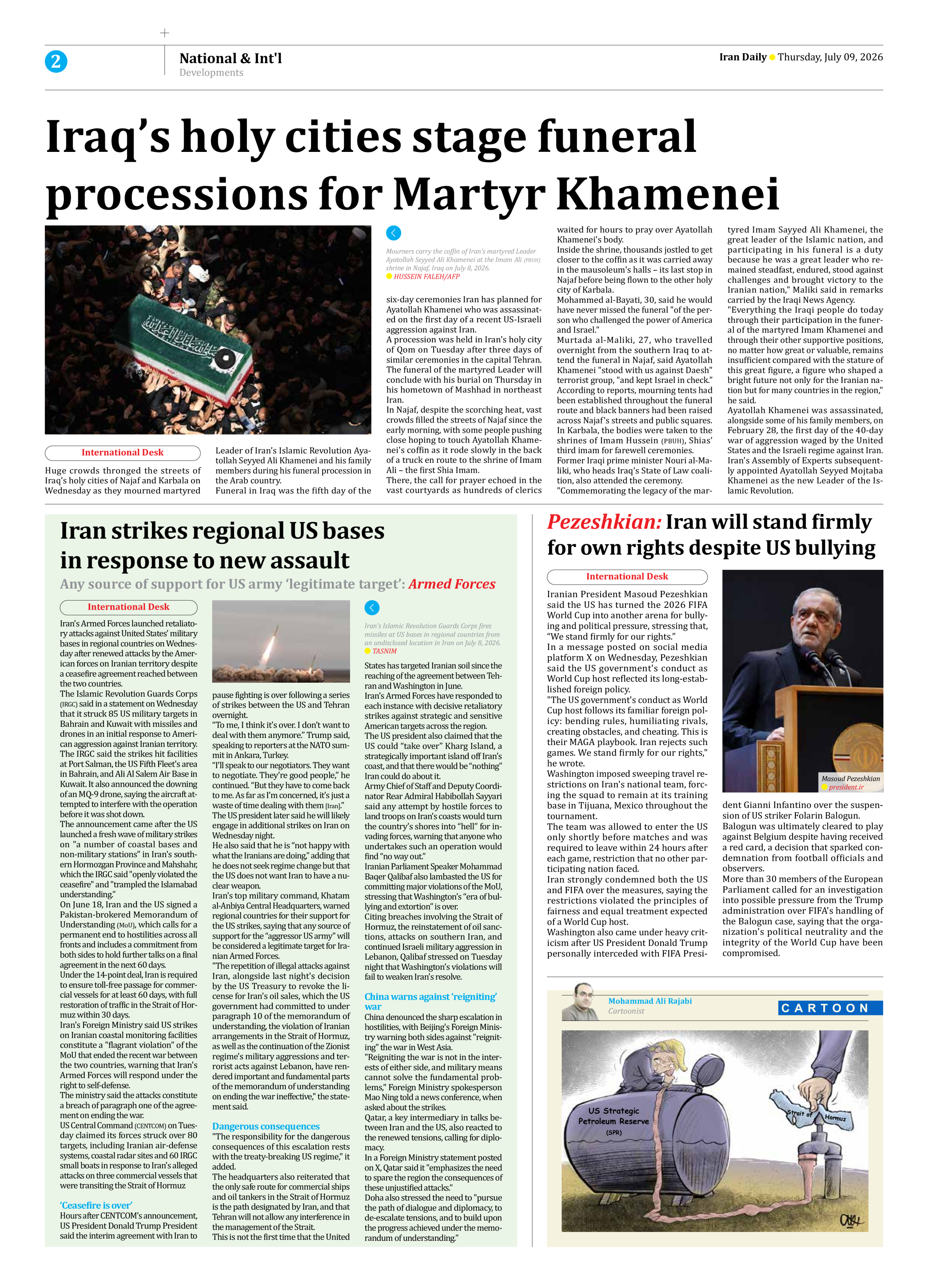
Huge crowds thronged the streets of Iraq’s holy cities of Najaf and Karbala on Wednesday as they mourned martyred Leader of Iran’s Islamic Revolution Ayatollah Seyyed Ali Khamenei and his family members during his funeral procession in the Arab country.
Funeral in Iraq was the fifth day of the six-day ceremonies Iran has planned for Ayatollah Khamenei who was assassinated on the first day of a recent US-Israeli aggression against Iran.
A procession was held in Iran's holy city of Qom on Tuesday after three days of similar ceremonies in the capital Tehran. The funeral of the martyred Leader will conclude with his burial on Thursday in his hometown of Mashhad in northeast Iran.
In Najaf, despite the scorching heat, vast crowds filled the streets of Najaf since the early morning, with some people pushing close hoping to touch Ayatollah Khamenei's coffin as it rode slowly in the back of a truck en route to the shrine of Imam Ali – the first Shia Imam.
There, the call for prayer echoed in the vast courtyards as hundreds of clerics waited for hours to pray over Ayatollah Khamenei's body.
Inside the shrine, thousands jostled to get closer to the coffin as it was carried away in the mausoleum's halls – its last stop in Najaf before being flown to the other holy city of Karbala.
Mohammed al-Bayati, 30, said he would have never missed the funeral "of the person who challenged the power of America and Israel.”
Murtada al-Maliki, 27, who travelled overnight from the southern Iraq to attend the funeral in Najaf, said Ayatollah Khamenei "stood with us against Daesh" terrorist group, "and kept Israel in check.”
According to reports, mourning tents had been established throughout the funeral route and black banners had been raised across Najaf's streets and public squares.
In Karbala, the bodies were taken to the shrines of Imam Hussein (PBUH), Shias’ third imam for farewell ceremonies.
Former Iraqi prime minister Nouri al-Maliki, who heads Iraq's State of Law coalition, also attended the ceremony.
"Commemorating the legacy of the martyred Imam Sayyed Ali Khamenei, the great leader of the Islamic nation, and participating in his funeral is a duty because he was a great leader who remained steadfast, endured, stood against challenges and brought victory to the Iranian nation," Maliki said in remarks carried by the Iraqi News Agency.
"Everything the Iraqi people do today through their participation in the funeral of the martyred Imam Khamenei and through their other supportive positions, no matter how great or valuable, remains insufficient compared with the stature of this great figure, a figure who shaped a bright future not only for the Iranian nation but for many countries in the region," he said.
Ayatollah Khamenei was assassinated, alongside some of his family members, on February 28, the first day of the 40-day war of aggression waged by the United States and the Israeli regime against Iran.
Iran’s Assembly of Experts subsequently appointed Ayatollah Seyyed Mojtaba Khamenei as the new Leader of the Islamic Revolution.