







Minister proposes Balkans data corridor in push to expand digital cooperation with Serbia
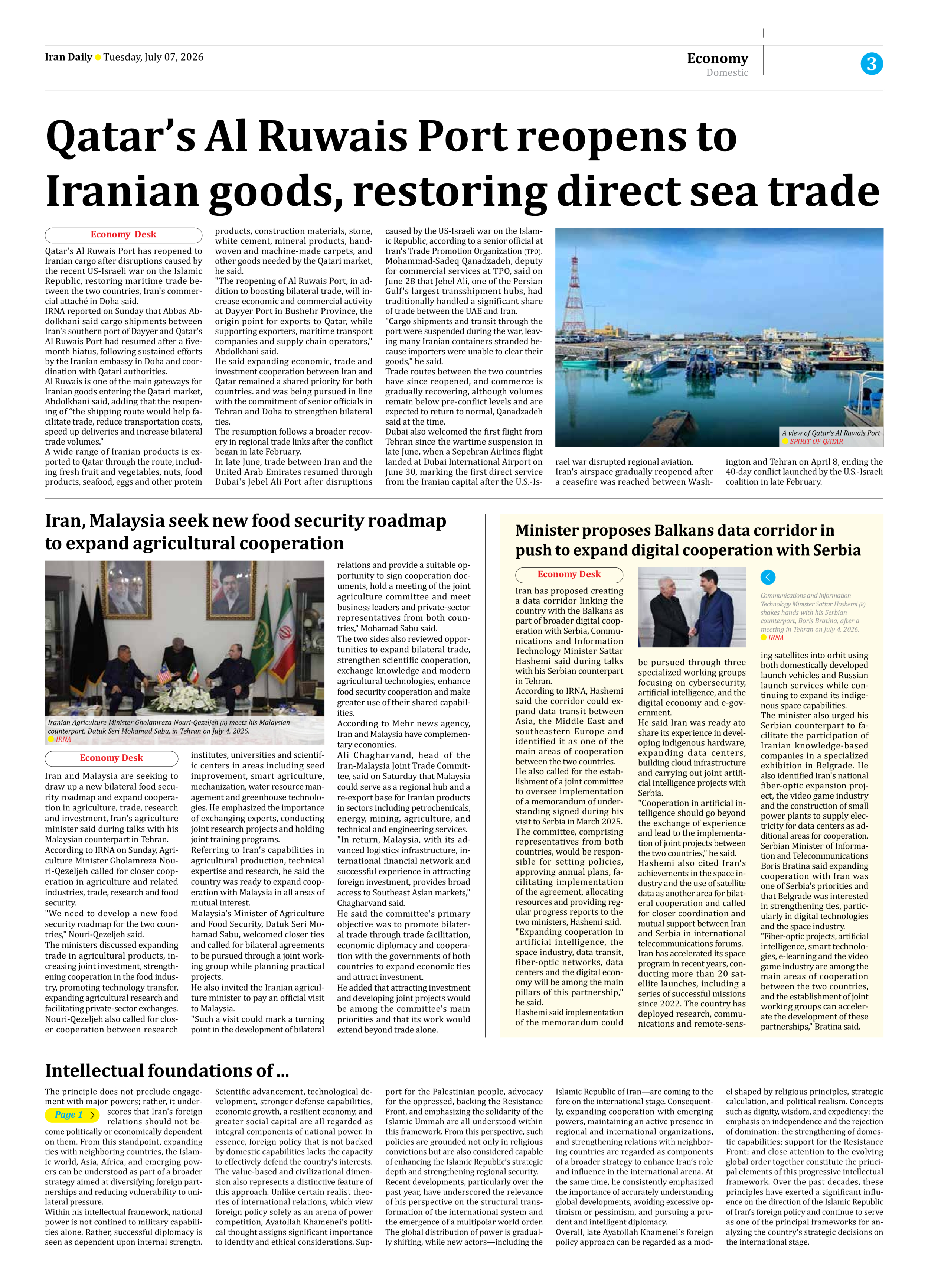
Iran has proposed creating a data corridor linking the country with the Balkans as part of broader digital cooperation with Serbia, Communications and Information Technology Minister Sattar Hashemi said during talks with his Serbian counterpart in Tehran.
According to IRNA, Hashemi said the corridor could expand data transit between Asia, the Middle East and southeastern Europe and identified it as one of the main areas of cooperation between the two countries.
He also called for the establishment of a joint committee to oversee implementation of a memorandum of understanding signed during his visit to Serbia in March 2025.
The committee, comprising representatives from both countries, would be responsible for setting policies, approving annual plans, facilitating implementation of the agreement, allocating resources and providing regular progress reports to the two ministers, Hashemi said.
"Expanding cooperation in artificial intelligence, the space industry, data transit, fiber-optic networks, data centers and the digital economy will be among the main pillars of this partnership," he said.
Hashemi said implementation of the memorandum could be pursued through three specialized working groups focusing on cybersecurity, artificial intelligence, and the digital economy and e-government.
He said Iran was ready ato share its experience in developing indigenous hardware, expanding data centers, building cloud infrastructure and carrying out joint artificial intelligence projects with Serbia.
"Cooperation in artificial intelligence should go beyond the exchange of experience and lead to the implementation of joint projects between the two countries," he said.
Hashemi also cited Iran's achievements in the space industry and the use of satellite data as another area for bilateral cooperation and called for closer coordination and mutual support between Iran and Serbia in international telecommunications forums.
Iran has accelerated its space program in recent years, conducting more than 20 satellite launches, including a series of successful missions since 2022. The country has deployed research, communications and remote-sensing satellites into orbit using both domestically developed launch vehicles and Russian launch services while continuing to expand its indigenous space capabilities.
The minister also urged his Serbian counterpart to facilitate the participation of Iranian knowledge-based companies in a specialized exhibition in Belgrade. He also identified Iran's national fiber-optic expansion project, the video game industry and the construction of small power plants to supply electricity for data centers as additional areas for cooperation.
Serbian Minister of Information and Telecommunications Boris Bratina said expanding cooperation with Iran was one of Serbia's priorities and that Belgrade was interested in strengthening ties, particularly in digital technologies and the space industry.
"Fiber-optic projects, artificial intelligence, smart technologies, e-learning and the video game industry are among the main areas of cooperation between the two countries, and the establishment of joint working groups can accelerate the development of these partnerships," Bratina said.