







Copy in clipboard...
Qatar’s Al Ruwais Port reopens to Iranian goods, restoring direct sea trade
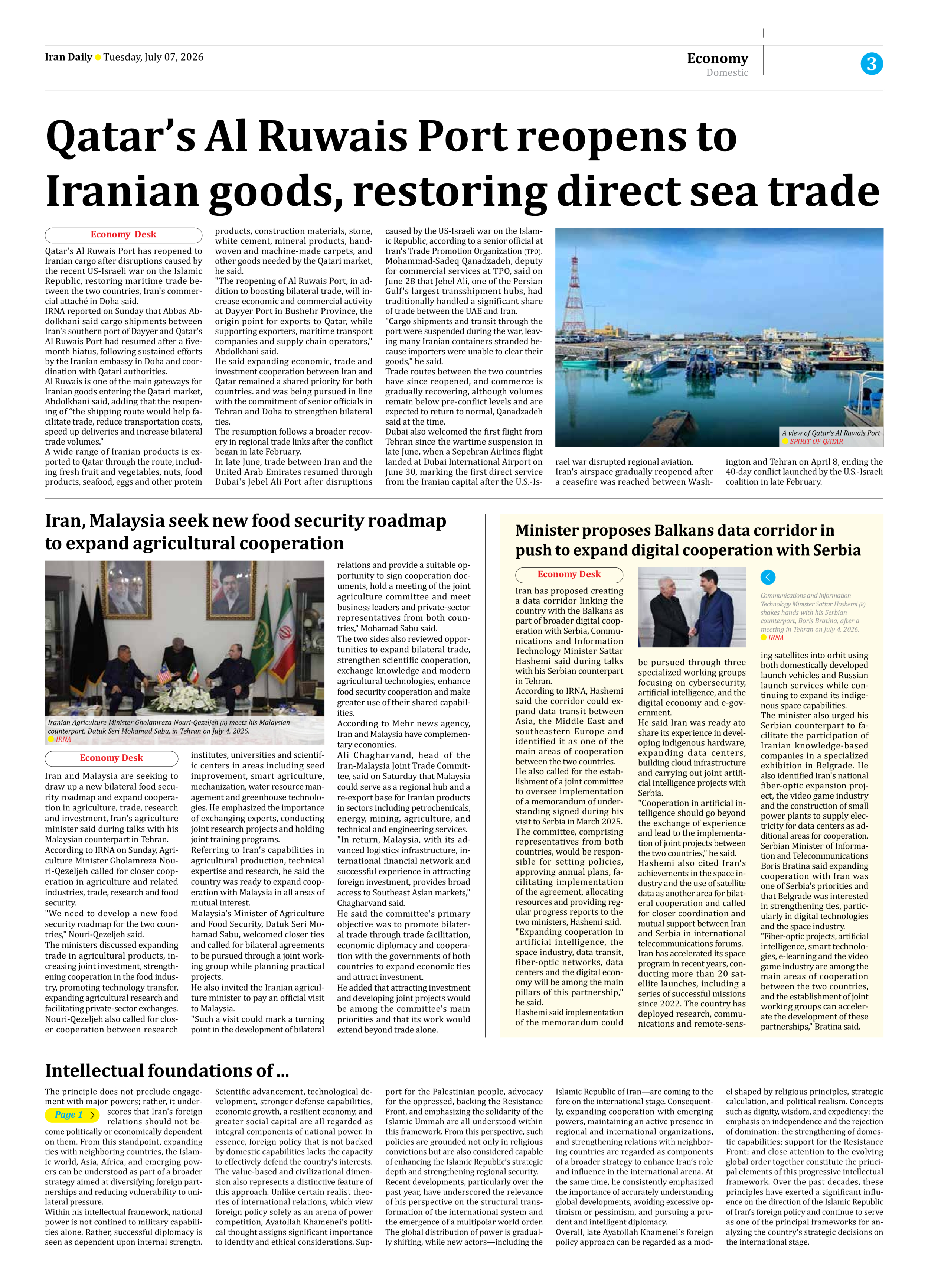
Qatar's Al Ruwais Port has reopened to Iranian cargo after disruptions caused by the recent US-Israeli war on the Islamic Republic, restoring maritime trade between the two countries, Iran's commercial attaché in Doha said.
IRNA reported on Sunday that Abbas Abdolkhani said cargo shipments between Iran's southern port of Dayyer and Qatar's Al Ruwais Port had resumed after a five-month hiatus, following sustained efforts by the Iranian embassy in Doha and coordination with Qatari authorities.
Al Ruwais is one of the main gateways for Iranian goods entering the Qatari market, Abdolkhani said, adding that the reopening of “the shipping route would help facilitate trade, reduce transportation costs, speed up deliveries and increase bilateral trade volumes.”
A wide range of Iranian products is exported to Qatar through the route, including fresh fruit and vegetables, nuts, food products, seafood, eggs and other protein products, construction materials, stone, white cement, mineral products, handwoven and machine-made carpets, and other goods needed by the Qatari market, he said.
"The reopening of Al Ruwais Port, in addition to boosting bilateral trade, will increase economic and commercial activity at Dayyer Port in Bushehr Province, the origin point for exports to Qatar, while supporting exporters, maritime transport companies and supply chain operators," Abdolkhani said.
He said expanding economic, trade and investment cooperation between Iran and Qatar remained a shared priority for both countries. and was being pursued in line with the commitment of senior officials in Tehran and Doha to strengthen bilateral ties.
The resumption follows a broader recovery in regional trade links after the conflict began in late February.
In late June, trade between Iran and the United Arab Emirates resumed through Dubai's Jebel Ali Port after disruptions caused by the US-Israeli war on the Islamic Republic, according to a senior official at Iran's Trade Promotion Organization (TPO).
Mohammad-Sadeq Qanadzadeh, deputy for commercial services at TPO, said on June 28 that Jebel Ali, one of the Persian Gulf's largest transshipment hubs, had traditionally handled a significant share of trade between the UAE and Iran.
"Cargo shipments and transit through the port were suspended during the war, leaving many Iranian containers stranded because importers were unable to clear their goods," he said.
Trade routes between the two countries have since reopened, and commerce is gradually recovering, although volumes remain below pre-conflict levels and are expected to return to normal, Qanadzadeh said at the time.
Dubai also welcomed the first flight from Tehran since the wartime suspension in late June, when a Sepehran Airlines flight landed at Dubai International Airport on June 30, marking the first direct service from the Iranian capital after the U.S.-Israel war disrupted regional aviation.
Iran's airspace gradually reopened after a ceasefire was reached between Washington and Tehran on April 8, ending the 40-day conflict launched by the U.S.-Israeli coalition in late February.