







Iran unveils southern tourism corridor to spur rural revival, rebrand travel
Iran plans to develop a new tourism corridor stretching from Makran on the Gulf of Oman to Khorramshahr in the southwest, Culture, Heritage, Tourism and Handicrafts Minister Reza Salehi-Amiri said Monday in Tehran, unveiling a strategy aimed at expanding pilgrimage and coastal tourism while creating jobs across rural communities.
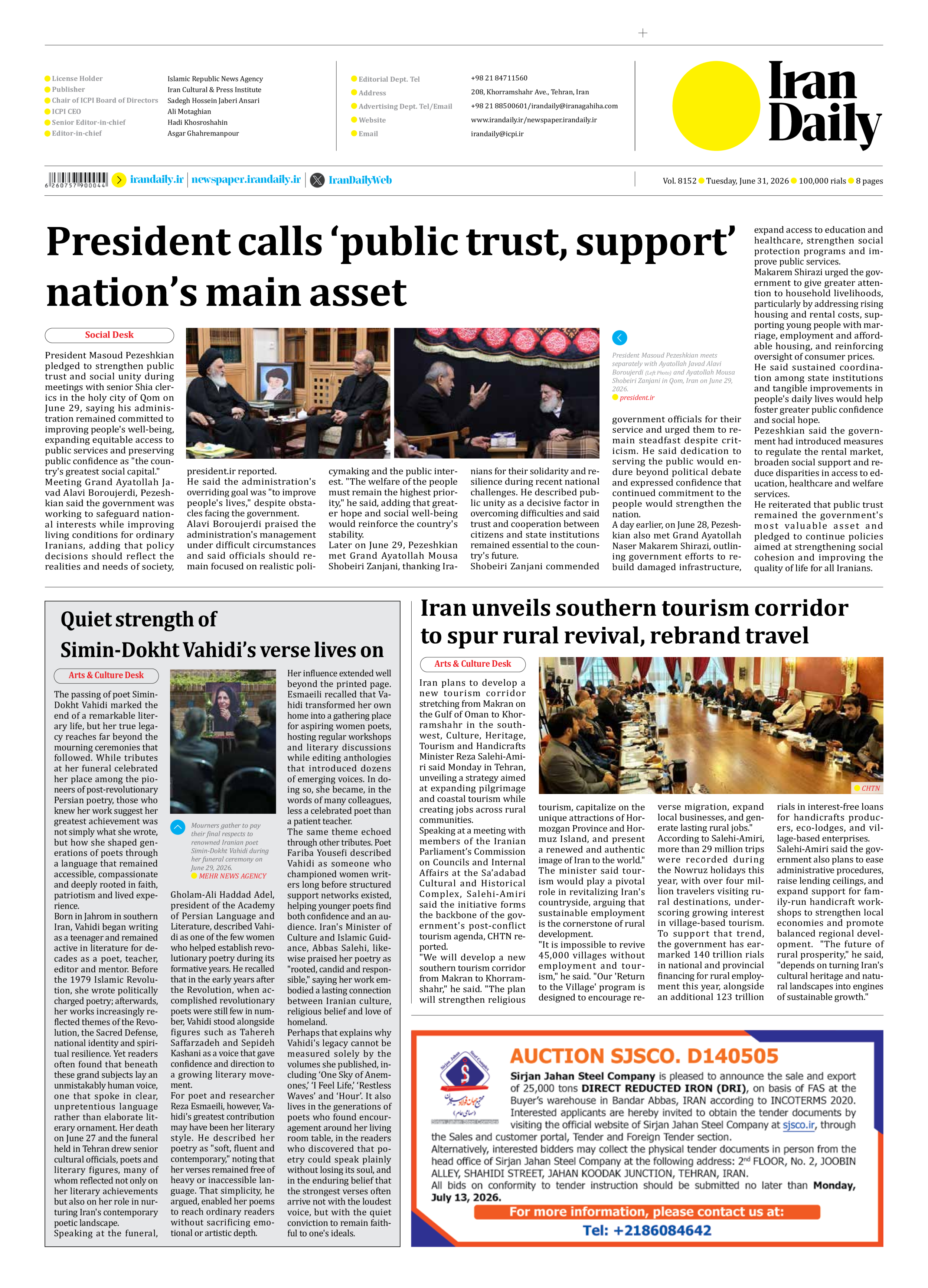
Speaking at a meeting with members of the Iranian Parliament’s Commission on Councils and Internal Affairs at the Sa’adabad Cultural and Historical Complex, Salehi-Amiri said the initiative forms the backbone of the government's post-conflict tourism agenda, CHTN reported.
"We will develop a new southern tourism corridor from Makran to Khorramshahr," he said. "The plan will strengthen religious tourism, capitalize on the unique attractions of Hormozgan Province and Hormuz Island, and present a renewed and authentic image of Iran to the world."
The minister said tourism would play a pivotal role in revitalizing Iran's countryside, arguing that sustainable employment is the cornerstone of rural development.
"It is impossible to revive 45,000 villages without employment and tourism," he said. "Our 'Return to the Village' program is designed to encourage reverse migration, expand local businesses, and generate lasting rural jobs."
According to Salehi-Amiri, more than 29 million trips were recorded during the Nowruz holidays this year, with over four million travelers visiting rural destinations, underscoring growing interest in village-based tourism. To support that trend, the government has earmarked 140 trillion rials in national and provincial financing for rural employment this year, alongside an additional 123 trillion rials in interest-free loans for handicrafts producers, eco-lodges, and village-based enterprises.
Salehi-Amiri said the government also plans to ease administrative procedures, raise lending ceilings, and expand support for family-run handicraft workshops to strengthen local economies and promote balanced regional development. "The future of rural prosperity," he said, "depends on turning Iran's cultural heritage and natural landscapes into engines of sustainable growth."