







Echoes from empty villages in Sistan and Baluchestan Province
Among walls that still stand, the absence of people is more striking than the ruins themselves. Tamarisk branches stretch across dusty alleys, and windows look outward with no human eyes left to meet their gaze. This is the story of a sorrow — a life pulled from the earth, leaving behind only memories and traces of what once was.
These images do not tell the story of a sudden exodus. They tell of a slow and gradual departure. A village emptied not in a single day, but over years. The houses remain. The lanes remain. Even signs of life can still be found. Yet life itself has quietly slipped away from these frames. This photo essay pauses on the details, seeking to narrate a tragedy that unfolded in silence, according to IRNA.
Several villages in Iran’s Sistan and Baluchestan Province were gradually abandoned after years of recurring drought, sandstorms, and severe water shortages. Today, little remains but crumbling structures. Amid the destruction, the dry branches of tamarisk trees have wrapped themselves around abandoned homes, as if they are the last signs of life unwilling to leave this land behind.
Drought in Sistan and Baluchestan is no longer a temporary threat; it has become a chronic crisis. Ongoing disputes over water rights to the Hamun wetlands have devastated agriculture and local livelihoods, triggering widespread migration from villages surrounding the city of Zabol. Many residents have already left, while those who remain are slowly being pushed out of the social and economic fabric of community life.
Today, ruined homes and withered tamarisk trees stand as reminders of a forgotten way of life. Documenting these scenes is an attempt to warn of the fate awaiting villages that are quietly fading into silence.
The village’s narrow alley was once a path of return — a route where footsteps echoed in the evenings and lights guided families back to their homes after dark. Today, it resembles a continuous line of memories. The mud-brick walls still stand, but there are no signs of recent passage. Silence dominates the scene. Not the silence of peace, but the silence of absence. This alley is no longer a destination; it is a corridor of remembrance. Every stone seems to carry a story of departure.
The wooden door remains half open, as if its last owner left in haste, promising, “I’ll be back.” Its paint has peeled away, and the lock has not turned in years, yet the door was never fully closed. This frame tells the story of homes that were abandoned rather than destroyed. In some, belongings still remain, while the walls continue to hold the warmth of memory. The absence of people is more visible than any crack or decay. The door symbolizes a departure once thought temporary, but which became a lasting absence.
When nature moves in
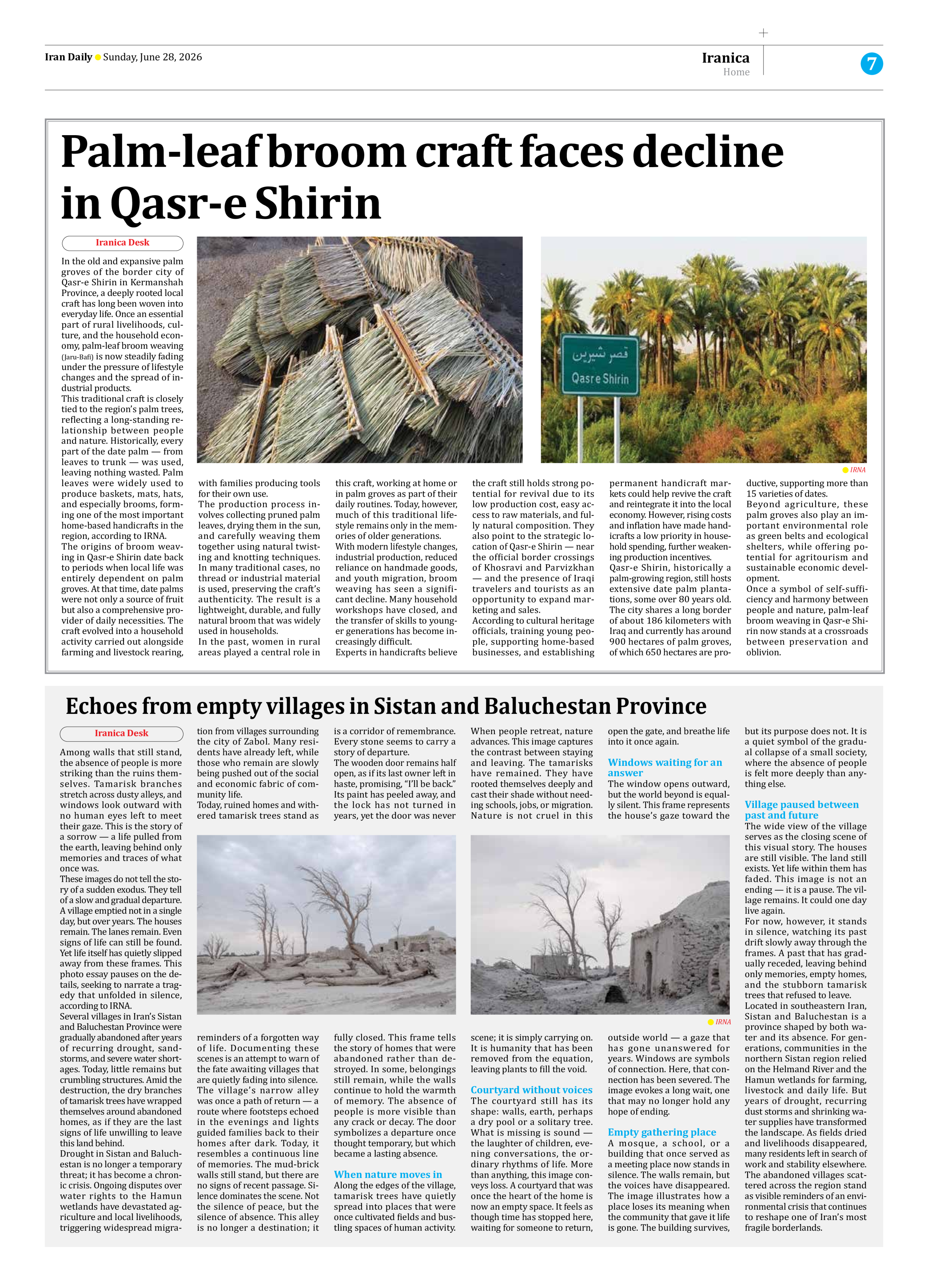
Along the edges of the village, tamarisk trees have quietly spread into places that were once cultivated fields and bustling spaces of human activity. When people retreat, nature advances. This image captures the contrast between staying and leaving. The tamarisks have remained. They have rooted themselves deeply and cast their shade without needing schools, jobs, or migration. Nature is not cruel in this scene; it is simply carrying on. It is humanity that has been removed from the equation, leaving plants to fill the void.
Courtyard without voices
The courtyard still has its shape: walls, earth, perhaps a dry pool or a solitary tree. What is missing is sound — the laughter of children, evening conversations, the ordinary rhythms of life. More than anything, this image conveys loss. A courtyard that was once the heart of the home is now an empty space. It feels as though time has stopped here, waiting for someone to return, open the gate, and breathe life into it once again.
Windows waiting for an answer
The window opens outward, but the world beyond is equally silent. This frame represents the house’s gaze toward the outside world — a gaze that has gone unanswered for years. Windows are symbols of connection. Here, that connection has been severed. The image evokes a long wait, one that may no longer hold any hope of ending.
Empty gathering place
A mosque, a school, or a building that once served as a meeting place now stands in silence. The walls remain, but the voices have disappeared. The image illustrates how a place loses its meaning when the community that gave it life is gone. The building survives, but its purpose does not. It is a quiet symbol of the gradual collapse of a small society, where the absence of people is felt more deeply than anything else.
Village paused between past and future
The wide view of the village serves as the closing scene of this visual story. The houses are still visible. The land still exists. Yet life within them has faded. This image is not an ending — it is a pause. The village remains. It could one day live again.
For now, however, it stands in silence, watching its past drift slowly away through the frames. A past that has gradually receded, leaving behind only memories, empty homes, and the stubborn tamarisk trees that refused to leave.
Located in southeastern Iran, Sistan and Baluchestan is a province shaped by both water and its absence. For generations, communities in the northern Sistan region relied on the Helmand River and the Hamun wetlands for farming, livestock and daily life. But years of drought, recurring dust storms and shrinking water supplies have transformed the landscape. As fields dried and livelihoods disappeared, many residents left in search of work and stability elsewhere. The abandoned villages scattered across the region stand as visible reminders of an environmental crisis that continues to reshape one of Iran’s most fragile borderlands.