







Minab showcases blend of history, agriculture, natural attractions
Minab, located in eastern parts of Hormozgan Province, lies along the Minab River and has long been regarded as one of the most important settlement and agricultural centers in southern Iran due to its fertile lands. Some researchers trace the city’s history back to the Sassanid era and even earlier periods.
The city of Minab recently came under widespread public attention in Iran and around the world following a devastating military attack by the US and Israel on an elementary school in the city. The strike, which resulted in the martyrdom and injuries of innocent schoolchildren, was widely condemned and sparked profound grief and outrage among the public. The tragedy highlighted the devastating human cost of violence against civilians, particularly children, and drew significant media coverage both domestically and internationally. In the wake of this heartbreaking event and the increased attention it generated, the following text provides an overview of the city and its historical and cultural significance.
Its tropical climate, vast palm groves, mango orchards, and proximity to the Sea of Oman have given Minab a distinct identity, turning it into one of the key tourism destinations in eastern Hormozgan, IRNA wrote.
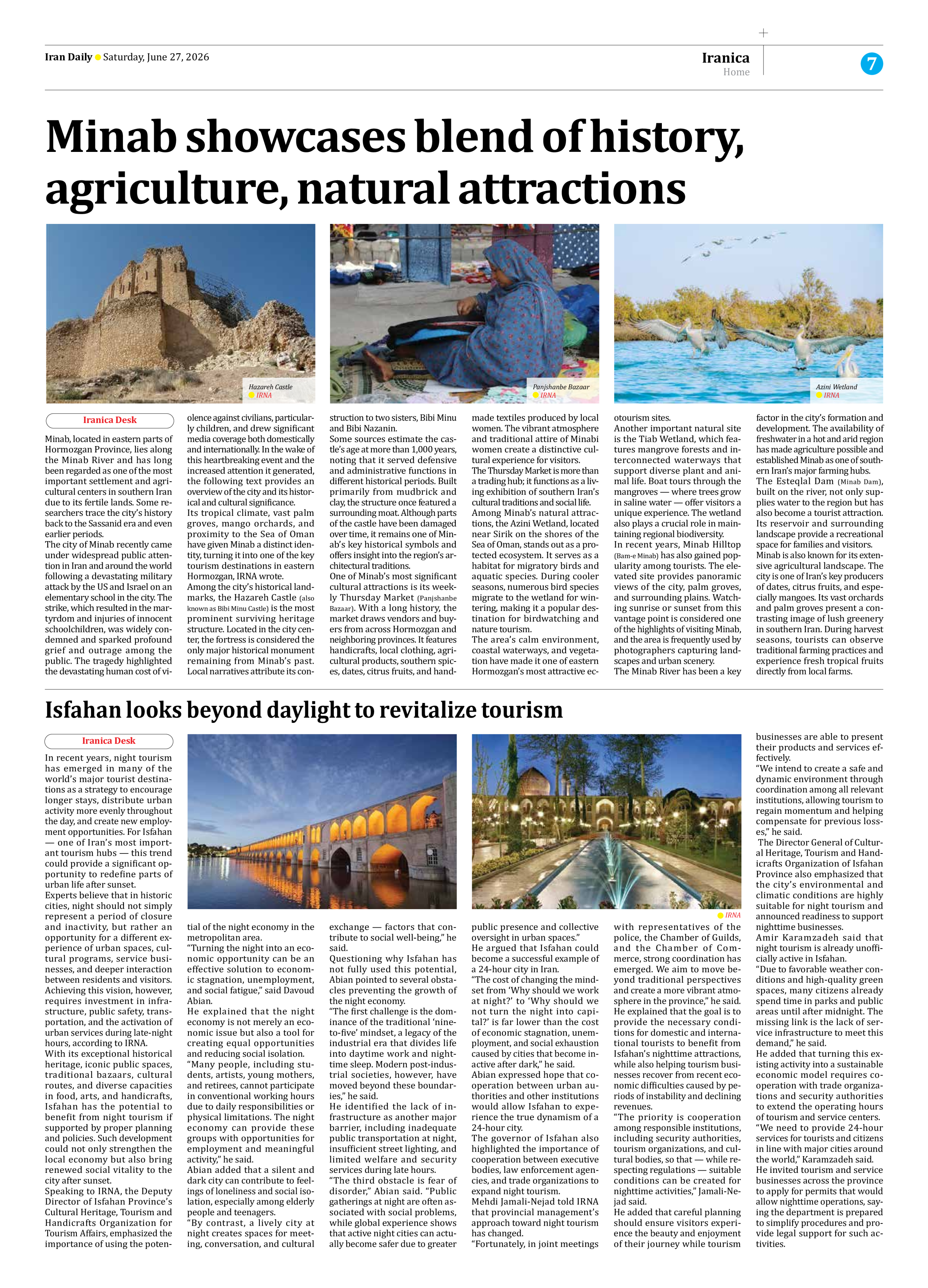
Among the city’s historical landmarks, the Hazareh Castle (also known as Bibi Minu Castle) is the most prominent surviving heritage structure. Located in the city center, the fortress is considered the only major historical monument remaining from Minab’s past. Local narratives attribute its construction to two sisters, Bibi Minu and Bibi Nazanin.
Some sources estimate the castle’s age at more than 1,000 years, noting that it served defensive and administrative functions in different historical periods. Built primarily from mudbrick and clay, the structure once featured a surrounding moat. Although parts of the castle have been damaged over time, it remains one of Minab’s key historical symbols and offers insight into the region’s architectural traditions.
One of Minab’s most significant cultural attractions is its weekly Thursday Market (Panjshanbe Bazaar). With a long history, the market draws vendors and buyers from across Hormozgan and neighboring provinces. It features handicrafts, local clothing, agricultural products, southern spices, dates, citrus fruits, and handmade textiles produced by local women. The vibrant atmosphere and traditional attire of Minabi women create a distinctive cultural experience for visitors.
The Thursday Market is more than a trading hub; it functions as a living exhibition of southern Iran’s cultural traditions and social life.
Among Minab’s natural attractions, the Azini Wetland, located near Sirik on the shores of the Sea of Oman, stands out as a protected ecosystem. It serves as a habitat for migratory birds and aquatic species. During cooler seasons, numerous bird species migrate to the wetland for wintering, making it a popular destination for birdwatching and nature tourism.
The area’s calm environment, coastal waterways, and vegetation have made it one of eastern Hormozgan’s most attractive ecotourism sites.
Another important natural site is the Tiab Wetland, which features mangrove forests and interconnected waterways that support diverse plant and animal life. Boat tours through the mangroves — where trees grow in saline water — offer visitors a unique experience. The wetland also plays a crucial role in maintaining regional biodiversity.
In recent years, Minab Hilltop (Bam-e Minab) has also gained popularity among tourists. The elevated site provides panoramic views of the city, palm groves, and surrounding plains. Watching sunrise or sunset from this vantage point is considered one of the highlights of visiting Minab, and the area is frequently used by photographers capturing landscapes and urban scenery.
The Minab River has been a key factor in the city’s formation and development. The availability of freshwater in a hot and arid region has made agriculture possible and established Minab as one of southern Iran’s major farming hubs.
The Esteqlal Dam (Minab Dam), built on the river, not only supplies water to the region but has also become a tourist attraction. Its reservoir and surrounding landscape provide a recreational space for families and visitors.
Minab is also known for its extensive agricultural landscape. The city is one of Iran’s key producers of dates, citrus fruits, and especially mangoes. Its vast orchards and palm groves present a contrasting image of lush greenery in southern Iran. During harvest seasons, tourists can observe traditional farming practices and experience fresh tropical fruits directly from local farms.