







Kohgiluyeh and Boyer-Ahmad turns to culinary heritage to boost tourism
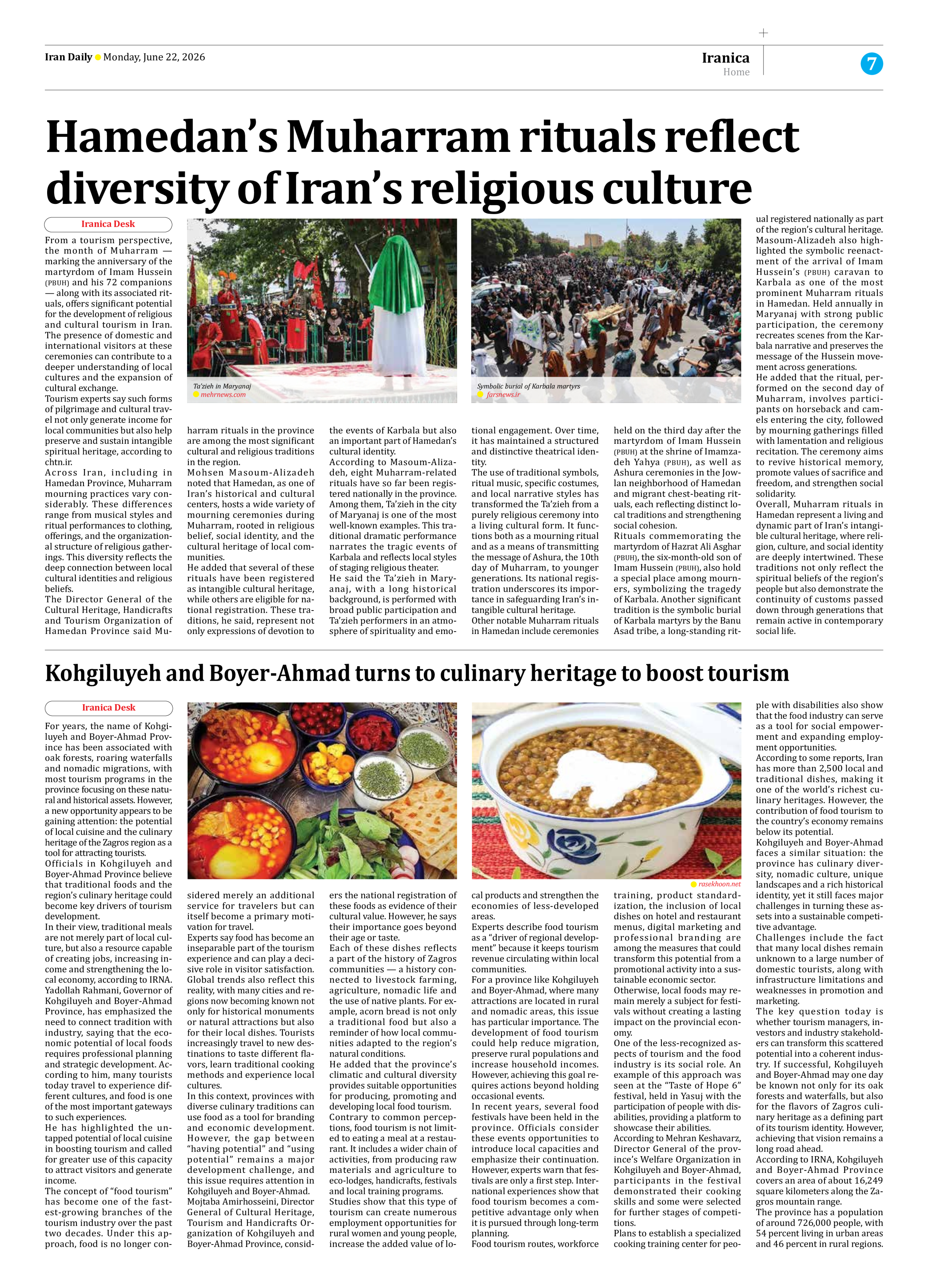
For years, the name of Kohgiluyeh and Boyer-Ahmad Province has been associated with oak forests, roaring waterfalls and nomadic migrations, with most tourism programs in the province focusing on these natural and historical assets. However, a new opportunity appears to be gaining attention: the potential of local cuisine and the culinary heritage of the Zagros region as a tool for attracting tourists.
Officials in Kohgiluyeh and Boyer-Ahmad Province believe that traditional foods and the region’s culinary heritage could become key drivers of tourism development.
In their view, traditional meals are not merely part of local culture, but also a resource capable of creating jobs, increasing income and strengthening the local economy, according to IRNA.
Yadollah Rahmani, Governor of Kohgiluyeh and Boyer-Ahmad Province, has emphasized the need to connect tradition with industry, saying that the economic potential of local foods requires professional planning and strategic development. According to him, many tourists today travel to experience different cultures, and food is one of the most important gateways to such experiences.
He has highlighted the untapped potential of local cuisine in boosting tourism and called for greater use of this capacity to attract visitors and generate income.
The concept of “food tourism” has become one of the fastest-growing branches of the tourism industry over the past two decades. Under this approach, food is no longer considered merely an additional service for travelers but can itself become a primary motivation for travel.
Experts say food has become an inseparable part of the tourism experience and can play a decisive role in visitor satisfaction. Global trends also reflect this reality, with many cities and regions now becoming known not only for historical monuments or natural attractions but also for their local dishes. Tourists increasingly travel to new destinations to taste different flavors, learn traditional cooking methods and experience local cultures.
In this context, provinces with diverse culinary traditions can use food as a tool for branding and economic development. However, the gap between “having potential” and “using potential” remains a major development challenge, and this issue requires attention in Kohgiluyeh and Boyer-Ahmad.
Mojtaba Amirhosseini, Director General of Cultural Heritage, Tourism and Handicrafts Organization of Kohgiluyeh and Boyer-Ahmad Province, considers the national registration of these foods as evidence of their cultural value. However, he says their importance goes beyond their age or taste.
Each of these dishes reflects a part of the history of Zagros communities — a history connected to livestock farming, agriculture, nomadic life and the use of native plants. For example, acorn bread is not only a traditional food but also a reminder of how local communities adapted to the region’s natural conditions.
He added that the province’s climatic and cultural diversity provides suitable opportunities for producing, promoting and developing local food tourism.
Contrary to common perceptions, food tourism is not limited to eating a meal at a restaurant. It includes a wider chain of activities, from producing raw materials and agriculture to eco-lodges, handicrafts, festivals and local training programs.
Studies show that this type of tourism can create numerous employment opportunities for rural women and young people, increase the added value of local products and strengthen the economies of less-developed areas.
Experts describe food tourism as a “driver of regional development” because it keeps tourism revenue circulating within local communities.
For a province like Kohgiluyeh and Boyer-Ahmad, where many attractions are located in rural and nomadic areas, this issue has particular importance. The development of food tourism could help reduce migration, preserve rural populations and increase household incomes. However, achieving this goal requires actions beyond holding occasional events.
In recent years, several food festivals have been held in the province. Officials consider these events opportunities to introduce local capacities and emphasize their continuation. However, experts warn that festivals are only a first step. International experiences show that food tourism becomes a competitive advantage only when it is pursued through long-term planning.
Food tourism routes, workforce training, product standardization, the inclusion of local dishes on hotel and restaurant menus, digital marketing and professional branding are among the measures that could transform this potential from a promotional activity into a sustainable economic sector.
Otherwise, local foods may remain merely a subject for festivals without creating a lasting impact on the provincial economy.
One of the less-recognized aspects of tourism and the food industry is its social role. An example of this approach was seen at the “Taste of Hope 6” festival, held in Yasuj with the participation of people with disabilities, providing a platform to showcase their abilities.
According to Mehran Keshavarz, Director General of the province’s Welfare Organization in Kohgiluyeh and Boyer-Ahmad, participants in the festival demonstrated their cooking skills and some were selected for further stages of competitions.
Plans to establish a specialized cooking training center for people with disabilities also show that the food industry can serve as a tool for social empowerment and expanding employment opportunities.
According to some reports, Iran has more than 2,500 local and traditional dishes, making it one of the world’s richest culinary heritages. However, the contribution of food tourism to the country’s economy remains below its potential.
Kohgiluyeh and Boyer-Ahmad faces a similar situation: the province has culinary diversity, nomadic culture, unique landscapes and a rich historical identity, yet it still faces major challenges in turning these assets into a sustainable competitive advantage.
Challenges include the fact that many local dishes remain unknown to a large number of domestic tourists, along with infrastructure limitations and weaknesses in promotion and marketing.
The key question today is whether tourism managers, investors and industry stakeholders can transform this scattered potential into a coherent industry. If successful, Kohgiluyeh and Boyer-Ahmad may one day be known not only for its oak forests and waterfalls, but also for the flavors of Zagros culinary heritage as a defining part of its tourism identity. However, achieving that vision remains a long road ahead.
According to IRNA, Kohgiluyeh and Boyer-Ahmad Province covers an area of about 16,249 square kilometers along the Zagros mountain range.
The province has a population of around 726,000 people, with 54 percent living in urban areas and 46 percent in rural regions.