







Hamedan’s Muharram rituals reflect diversity of Iran’s religious culture
From a tourism perspective, the month of Muharram — marking the anniversary of the martyrdom of Imam Hussein (PBUH) and his 72 companions — along with its associated rituals, offers significant potential for the development of religious and cultural tourism in Iran. The presence of domestic and international visitors at these ceremonies can contribute to a deeper understanding of local cultures and the expansion of cultural exchange.
Tourism experts say such forms of pilgrimage and cultural travel not only generate income for local communities but also help preserve and sustain intangible spiritual heritage, according to chtn.ir.
Across Iran, including in Hamedan Province, Muharram mourning practices vary considerably. These differences range from musical styles and ritual performances to clothing, offerings, and the organizational structure of religious gatherings. This diversity reflects the deep connection between local cultural identities and religious beliefs.
The Director General of the Cultural Heritage, Handicrafts and Tourism Organization of Hamedan Province said Muharram rituals in the province are among the most significant cultural and religious traditions in the region.
Mohsen Masoum-Alizadeh noted that Hamedan, as one of Iran’s historical and cultural centers, hosts a wide variety of mourning ceremonies during Muharram, rooted in religious belief, social identity, and the cultural heritage of local communities.
He added that several of these rituals have been registered as intangible cultural heritage, while others are eligible for national registration. These traditions, he said, represent not only expressions of devotion to the events of Karbala but also an important part of Hamedan’s cultural identity.
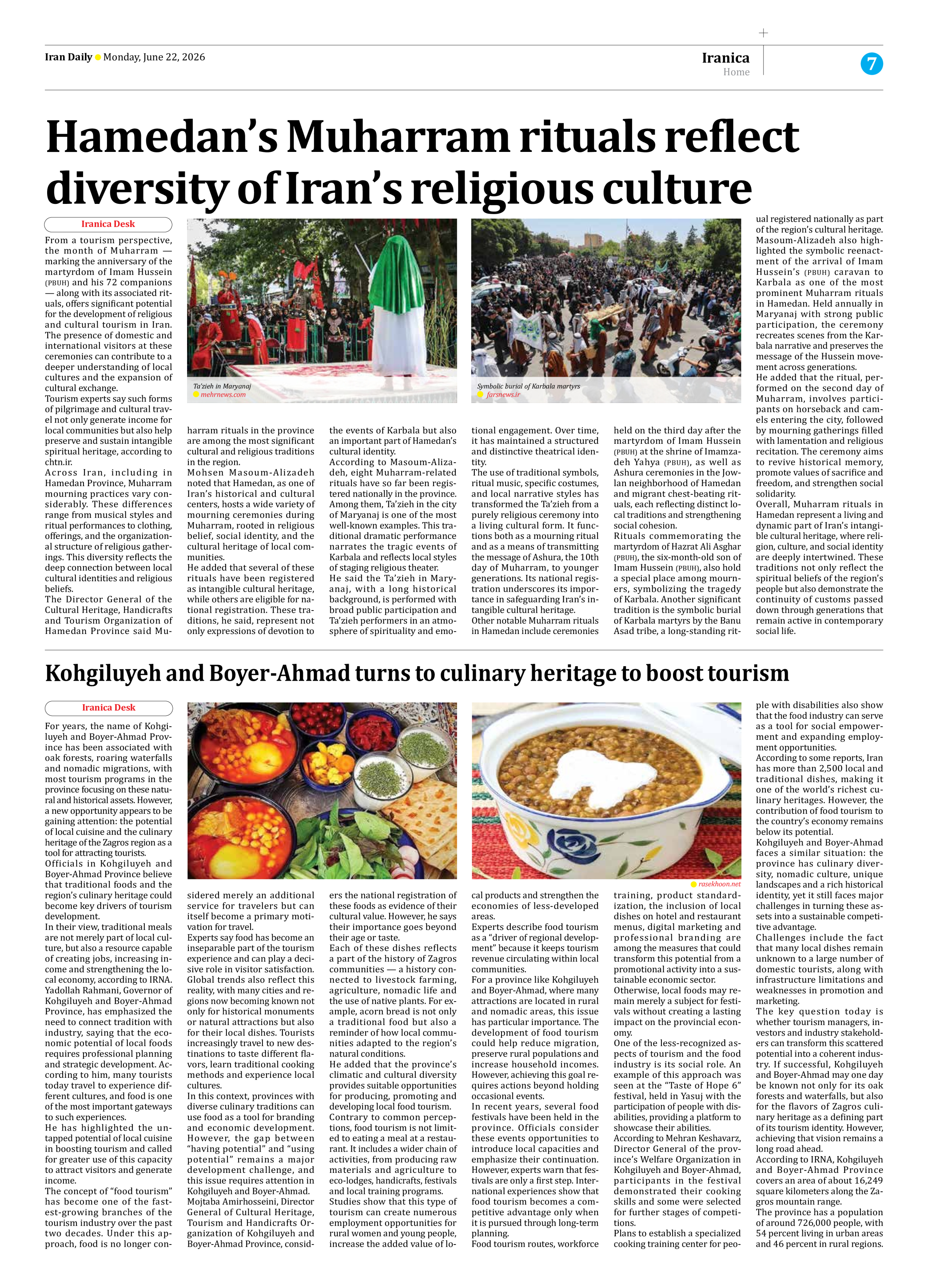
According to Masoum-Alizadeh, eight Muharram-related rituals have so far been registered nationally in the province. Among them, Ta’zieh in the city of Maryanaj is one of the most well-known examples. This traditional dramatic performance narrates the tragic events of Karbala and reflects local styles of staging religious theater.
He said the Ta’zieh in Maryanaj, with a long historical background, is performed with broad public participation and Ta’zieh performers in an atmosphere of spirituality and emotional engagement. Over time, it has maintained a structured and distinctive theatrical identity.
The use of traditional symbols, ritual music, specific costumes, and local narrative styles has transformed the Ta’zieh from a purely religious ceremony into a living cultural form. It functions both as a mourning ritual and as a means of transmitting the message of Ashura, the 10th day of Muharram, to younger generations. Its national registration underscores its importance in safeguarding Iran’s intangible cultural heritage.
Other notable Muharram rituals in Hamedan include ceremonies held on the third day after the martyrdom of Imam Hussein (PBUH) at the shrine of Imamzadeh Yahya (PBUH), as well as Ashura ceremonies in the Jowlan neighborhood of Hamedan and migrant chest-beating rituals, each reflecting distinct local traditions and strengthening social cohesion.
Rituals commemorating the martyrdom of Hazrat Ali Asghar (PBUH), the six-month-old son of Imam Hussein (PBUH), also hold a special place among mourners, symbolizing the tragedy of Karbala. Another significant tradition is the symbolic burial of Karbala martyrs by the Banu Asad tribe, a long-standing ritual registered nationally as part of the region’s cultural heritage.
Masoum-Alizadeh also highlighted the symbolic reenactment of the arrival of Imam Hussein’s (PBUH) caravan to Karbala as one of the most prominent Muharram rituals in Hamedan. Held annually in Maryanaj with strong public participation, the ceremony recreates scenes from the Karbala narrative and preserves the message of the Hussein movement across generations.
He added that the ritual, performed on the second day of Muharram, involves participants on horseback and camels entering the city, followed by mourning gatherings filled with lamentation and religious recitation. The ceremony aims to revive historical memory, promote values of sacrifice and freedom, and strengthen social solidarity.
Overall, Muharram rituals in Hamedan represent a living and dynamic part of Iran’s intangible cultural heritage, where religion, culture, and social identity are deeply intertwined. These traditions not only reflect the spiritual beliefs of the region’s people but also demonstrate the continuity of customs passed down through generations that remain active in contemporary social life.