







Iran’s oil industry to offer biggest opportunities for global investment in post-deal era: Paknejad
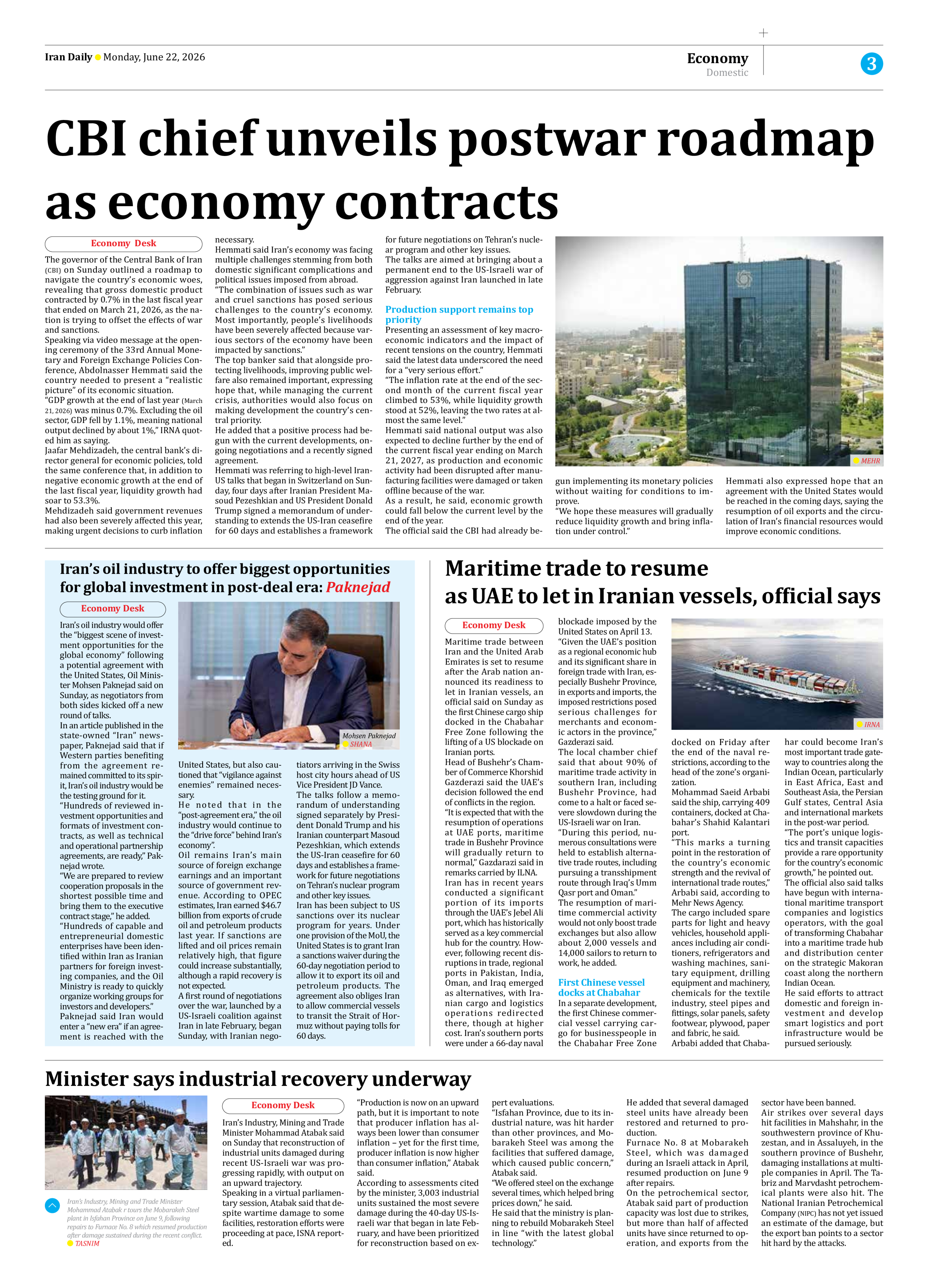
Iran’s oil industry would offer the “biggest scene of investment opportunities for the global economy” following a potential agreement with the United States, Oil Minister Mohsen Paknejad said on Sunday, as negotiators from both sides kicked off a new round of talks.
In an article published in the state-owned “Iran” newspaper, Paknejad said that if Western parties benefiting from the agreement remained committed to its spirit, Iran’s oil industry would be the testing ground for it.
“Hundreds of reviewed investment opportunities and formats of investment contracts, as well as technical and operational partnership agreements, are ready,” Paknejad wrote.
“We are prepared to review cooperation proposals in the shortest possible time and bring them to the executive contract stage,” he added.
“Hundreds of capable and entrepreneurial domestic enterprises have been identified within Iran as Iranian partners for foreign investing companies, and the Oil Ministry is ready to quickly organize working groups for investors and developers.”
Paknejad said Iran would enter a “new era” if an agreement is reached with the United States, but also cautioned that “vigilance against enemies” remained necessary.
He noted that in the “post-agreement era,” the oil industry would continue to the “drive force” behind Iran’s economy”.
Oil remains Iran’s main source of foreign exchange earnings and an important source of government revenue. According to OPEC estimates, Iran earned $46.7 billion from exports of crude oil and petroleum products last year. If sanctions are lifted and oil prices remain relatively high, that figure could increase substantially, although a rapid recovery is not expected.
A first round of negotiations over the war, launched by a US-Israeli coalition against Iran in late February, began Sunday, with Iranian negotiators arriving in the Swiss host city hours ahead of US Vice President JD Vance.
The talks follow a memorandum of understanding signed separately by President Donald Trump and his Iranian counterpart Masoud Pezeshkian, which extends the US-Iran ceasefire for 60 days and establishes a framework for future negotiations on Tehran’s nuclear program and other key issues.
Iran has been subject to US sanctions over its nuclear program for years. Under one provision of the MoU, the United States is to grant Iran a sanctions waiver during the 60-day negotiation period to allow it to export its oil and petroleum products. The agreement also obliges Iran to allow commercial vessels to transit the Strait of Hormuz without paying tolls for 60 days.