





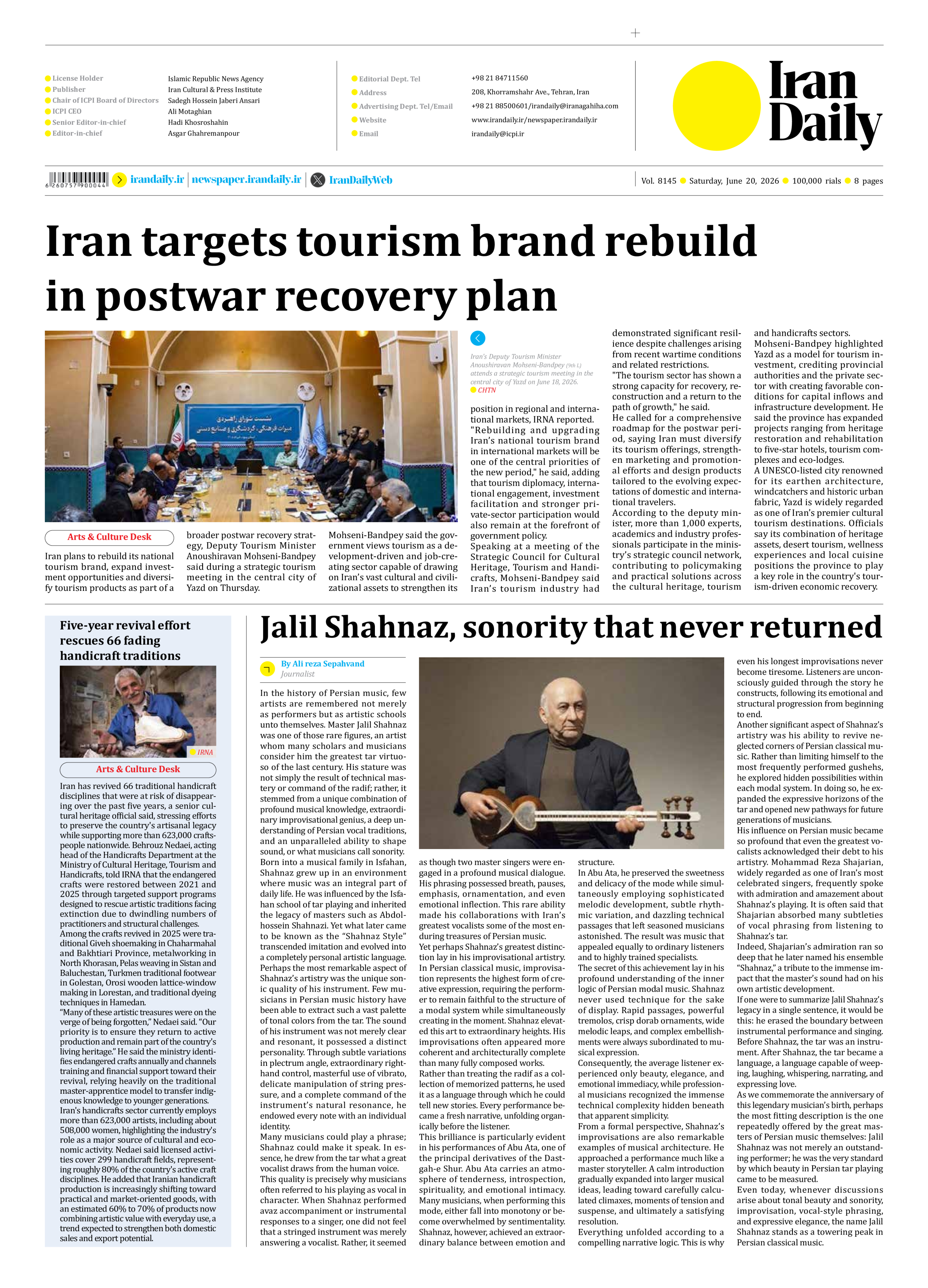


Five-year revival effort rescues 66 fading handicraft traditions
Iran has revived 66 traditional handicraft disciplines that were at risk of disappearing over the past five years, a senior cultural heritage official said, stressing efforts to preserve the country's artisanal legacy while supporting more than 623,000 craftspeople nationwide. Behrouz Nedaei, acting head of the Handicrafts Department at the Ministry of Cultural Heritage, Tourism and Handicrafts, told IRNA that the endangered crafts were restored between 2021 and 2025 through targeted support programs designed to rescue artistic traditions facing extinction due to dwindling numbers of practitioners and structural challenges.
Among the crafts revived in 2025 were traditional Giveh shoemaking in Chaharmahal and Bakhtiari Province, metalworking in North Khorasan, Pelas weaving in Sistan and Baluchestan, Turkmen traditional footwear in Golestan, Orosi wooden lattice-window making in Lorestan, and traditional dyeing techniques in Hamedan.
“Many of these artistic treasures were on the verge of being forgotten,” Nedaei said. “Our priority is to ensure they return to active production and remain part of the country's living heritage.” He said the ministry identifies endangered crafts annually and channels training and financial support toward their revival, relying heavily on the traditional master-apprentice model to transfer indigenous knowledge to younger generations.
Iran's handicrafts sector currently employs more than 623,000 artists, including about 508,000 women, highlighting the industry's role as a major source of cultural and economic activity. Nedaei said licensed activities cover 299 handicraft fields, representing roughly 80% of the country's active craft disciplines. He added that Iranian handicraft production is increasingly shifting toward practical and market-oriented goods, with an estimated 60% to 70% of products now combining artistic value with everyday use, a trend expected to strengthen both domestic sales and export potential.