







Tehran, Astana seal transit deals to boost East-West trade via joint hubs
Iran and Kazakhstan have finalized agreements to expand transit cooperation and will soon activate logistics hubs at key ports in both countries to capitalize on Iran's role as a gateway for cargo moving from China to Europe and to provide Kazakhstan with access to open waters, Iran's roads minister said.
Speaking in an exclusive interview with IRNA after a recent visit to Kazakhstan on Thursday, Roads and Urban Development Minister Farzaneh Sadeq Malvajerd said the trip followed President Masoud Pezeshkian's visit to Kazakhstan last year and was aimed at implementing the agreements reached during that visit.
Last December, Iran and Kazakhstan signed 14 memoranda of understanding in Astana during meeting between Pezeshkian and Kazakh President Kassym-Jomart Tokayev, in what the two sides described as a significant step toward expanding bilateral relations.
Sadeq Malvajerd said greater cooperation in transit and transportation would be the key driver of higher bilateral trade, particularly through the movement of goods via Iran and Kazakhstan, noting that the two countries could serve as a strategic link between East and West.
She said meetings were held with Kazakhstan's deputy prime minister as well as the ministers of economy, trade and integration, and transport, with all sides emphasizing the need to increase transit volumes and resolve existing rail and road freight transport bottlenecks.
China, cargo source; Iran, gateway to Europe
The minister said proposals discussed with Kazakhstan's transport minister envisioned China serving as the source of cargo shipped to Kazakhstan and onward to Iran, with Iran functioning as a gateway to Europe, Turkey and the South Caucasus. She added that Kazakhstan's access to open waters through Iran's Chabahar port was also discussed and welcomed by the Kazakh side.
She said the two countries also reached understandings on implementing the proposals and expanding rail and road transportation links between Iran and Kazakhstan, while stressing the importance of further strengthening transport connectivity.
Logistics hubs planned
Sadeq Malvajerd said another major focus of the visit was identifying locations for logistics hubs to store and redistribute goods along transit routes in both Kazakhstan and Iran.
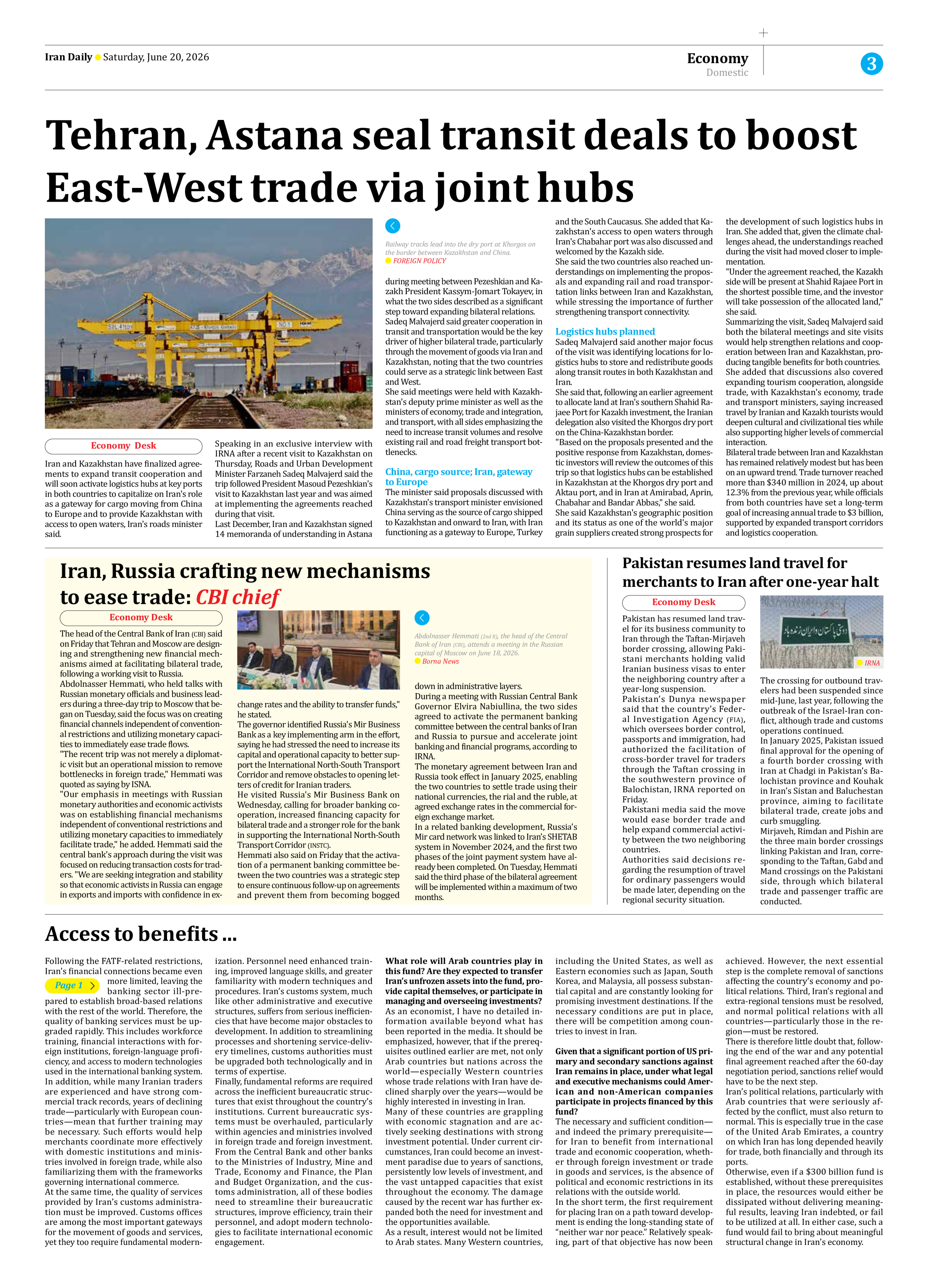
She said that, following an earlier agreement to allocate land at Iran's southern Shahid Rajaee Port for Kazakh investment, the Iranian delegation also visited the Khorgos dry port on the China-Kazakhstan border.
"Based on the proposals presented and the positive response from Kazakhstan, domestic investors will review the outcomes of this trip so that logistics hubs can be established in Kazakhstan at the Khorgos dry port and Aktau port, and in Iran at Amirabad, Aprin, Chabahar and Bandar Abbas," she said.
She said Kazakhstan's geographic position and its status as one of the world's major grain suppliers created strong prospects for the development of such logistics hubs in Iran. She added that, given the climate challenges ahead, the understandings reached during the visit had moved closer to implementation.
"Under the agreement reached, the Kazakh side will be present at Shahid Rajaee Port in the shortest possible time, and the investor will take possession of the allocated land," she said.
Summarizing the visit, Sadeq Malvajerd said both the bilateral meetings and site visits would help strengthen relations and cooperation between Iran and Kazakhstan, producing tangible benefits for both countries.
She added that discussions also covered expanding tourism cooperation, alongside trade, with Kazakhstan's economy, trade and transport ministers, saying increased travel by Iranian and Kazakh tourists would deepen cultural and civilizational ties while also supporting higher levels of commercial interaction.
Bilateral trade between Iran and Kazakhstan has remained relatively modest but has been on an upward trend. Trade turnover reached more than $340 million in 2024, up about 12.3% from the previous year, while officials from both countries have set a long-term goal of increasing annual trade to $3 billion, supported by expanded transport corridors and logistics cooperation.