







Zaleh-Zard; key wildlife refuge in Zagros region
Kermanshah Province, covering an area of 2.499 million hectares, is one of Iran’s regions with remarkable climatic and ecological diversity. Approximately 70 percent of the province consists of natural resource areas, including more than 527,000 hectares of forests and 1.192 million hectares of rangelands.
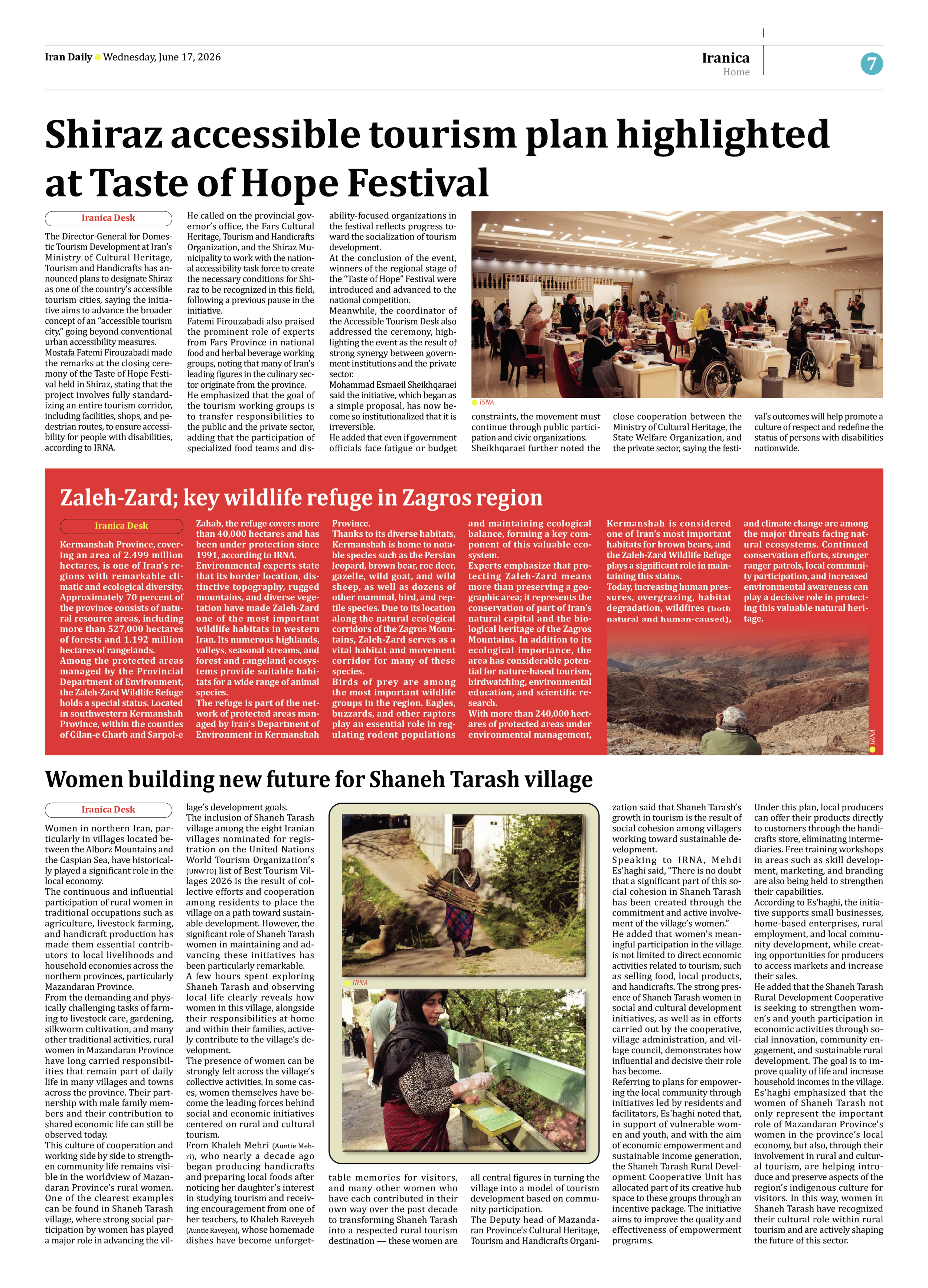
Among the protected areas managed by the Provincial Department of Environment, the Zaleh-Zard Wildlife Refuge holds a special status. Located in southwestern Kermanshah Province, within the counties of Gilan-e Gharb and Sarpol-e Zahab, the refuge covers more than 40,000 hectares and has been under protection since 1991, according to IRNA.
Environmental experts state that its border location, distinctive topography, rugged mountains, and diverse vegetation have made Zaleh-Zard one of the most important wildlife habitats in western Iran. Its numerous highlands, valleys, seasonal streams, and forest and rangeland ecosystems provide suitable habitats for a wide range of animal species.
The refuge is part of the network of protected areas managed by Iran’s Department of Environment in Kermanshah Province.
Thanks to its diverse habitats, Kermanshah is home to notable species such as the Persian leopard, brown bear, roe deer, gazelle, wild goat, and wild sheep, as well as dozens of other mammal, bird, and reptile species. Due to its location along the natural ecological corridors of the Zagros Mountains, Zaleh-Zard serves as a vital habitat and movement corridor for many of these species.
Birds of prey are among the most important wildlife groups in the region. Eagles, buzzards, and other raptors play an essential role in regulating rodent populations and maintaining ecological balance, forming a key component of this valuable ecosystem.
Experts emphasize that protecting Zaleh-Zard means more than preserving a geographic area; it represents the conservation of part of Iran’s natural capital and the biological heritage of the Zagros Mountains. In addition to its ecological importance, the area has considerable potential for nature-based tourism, birdwatching, environmental education, and scientific research.
With more than 240,000 hectares of protected areas under environmental management, Kermanshah is considered one of Iran’s most important habitats for brown bears, and the Zaleh-Zard Wildlife Refuge plays a significant role in maintaining this status.
Today, increasing human pressures, overgrazing, habitat degradation, wildfires (both natural and human-caused), and climate change are among the major threats facing natural ecosystems. Continued conservation efforts, stronger ranger patrols, local community participation, and increased environmental awareness can play a decisive role in protecting this valuable natural heritage.