







Iran mourns legendary radio voice Behrouz Razavi
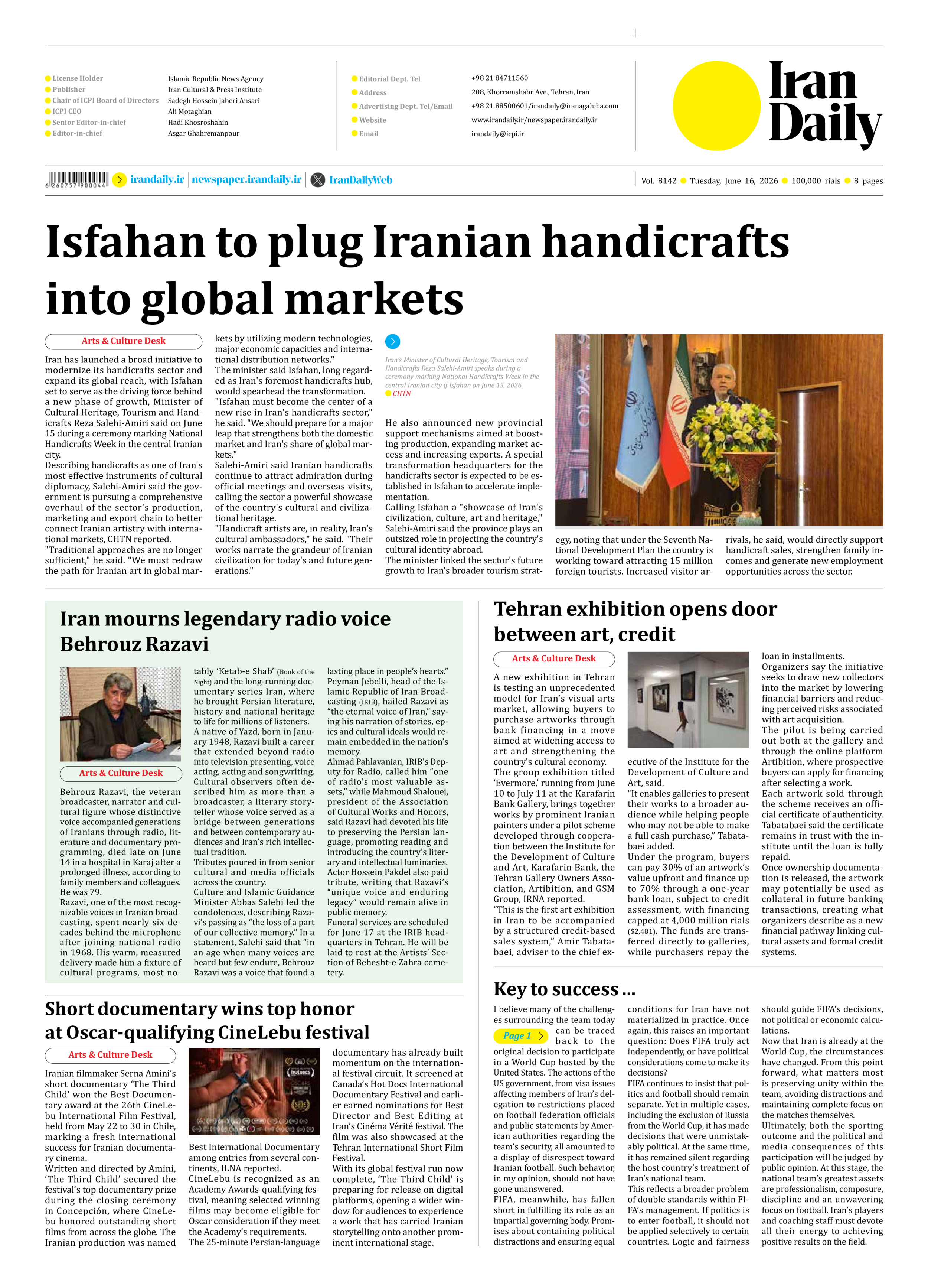
Behrouz Razavi, the veteran broadcaster, narrator and cultural figure whose distinctive voice accompanied generations of Iranians through radio, literature and documentary programming, died late on June 14 in a hospital in Karaj after a prolonged illness, according to family members and colleagues. He was 79.
Razavi, one of the most recognizable voices in Iranian broadcasting, spent nearly six decades behind the microphone after joining national radio in 1968. His warm, measured delivery made him a fixture of cultural programs, most notably ‘Ketab-e Shab’ (Book of the Night) and the long-running documentary series Iran, where he brought Persian literature, history and national heritage to life for millions of listeners.
A native of Yazd, born in January 1948, Razavi built a career that extended beyond radio into television presenting, voice acting, acting and songwriting. Cultural observers often described him as more than a broadcaster, a literary storyteller whose voice served as a bridge between generations and between contemporary audiences and Iran’s rich intellectual tradition.
Tributes poured in from senior cultural and media officials across the country.
Culture and Islamic Guidance Minister Abbas Salehi led the condolences, describing Razavi’s passing as “the loss of a part of our collective memory.” In a statement, Salehi said that “in an age when many voices are heard but few endure, Behrouz Razavi was a voice that found a lasting place in people’s hearts.”
Peyman Jebelli, head of the Islamic Republic of Iran Broadcasting (IRIB), hailed Razavi as “the eternal voice of Iran,” saying his narration of stories, epics and cultural ideals would remain embedded in the nation’s memory.
Ahmad Pahlavanian, IRIB’s Deputy for Radio, called him “one of radio’s most valuable assets,” while Mahmoud Shalouei, president of the Association of Cultural Works and Honors, said Razavi had devoted his life to preserving the Persian language, promoting reading and introducing the country’s literary and intellectual luminaries.
Actor Hossein Pakdel also paid tribute, writing that Razavi’s “unique voice and enduring legacy” would remain alive in public memory.
Funeral services are scheduled for June 17 at the IRIB headquarters in Tehran. He will be laid to rest at the Artists’ Section of Behesht-e Zahra cemetery.