







Tehran exhibition opens door between art, credit
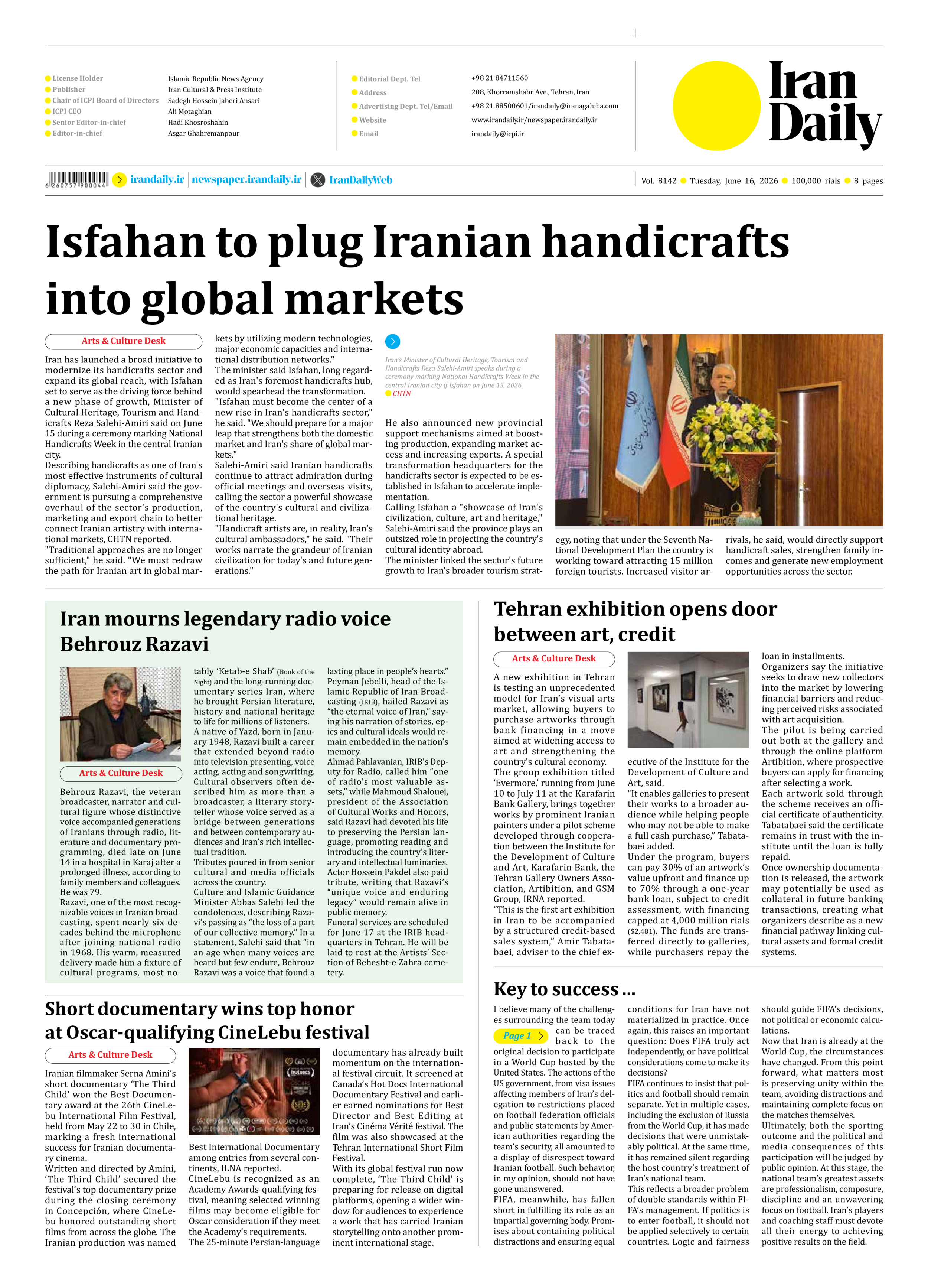
A new exhibition in Tehran is testing an unprecedented model for Iran’s visual arts market, allowing buyers to purchase artworks through bank financing in a move aimed at widening access to art and strengthening the country’s cultural economy.
The group exhibition titled ‘Evermore,’ running from June 10 to July 11 at the Karafarin Bank Gallery, brings together works by prominent Iranian painters under a pilot scheme developed through cooperation between the Institute for the Development of Culture and Art, Karafarin Bank, the Tehran Gallery Owners Association, Artibition, and GSM Group, IRNA reported.
“This is the first art exhibition in Iran to be accompanied by a structured credit-based sales system,” Amir Tabatabaei, adviser to the chief executive of the Institute for the Development of Culture and Art, said.
“It enables galleries to present their works to a broader audience while helping people who may not be able to make a full cash purchase,” Tabatabaei added.
Under the program, buyers can pay 30% of an artwork’s value upfront and finance up to 70% through a one-year bank loan, subject to credit assessment, with financing capped at 4,000 million rials ($2,481). The funds are transferred directly to galleries, while purchasers repay the loan in installments.
Organizers say the initiative seeks to draw new collectors into the market by lowering financial barriers and reducing perceived risks associated with art acquisition.
The pilot is being carried out both at the gallery and through the online platform Artibition, where prospective buyers can apply for financing after selecting a work.
Each artwork sold through the scheme receives an official certificate of authenticity. Tabatabaei said the certificate remains in trust with the institute until the loan is fully repaid.
Once ownership documentation is released, the artwork may potentially be used as collateral in future banking transactions, creating what organizers describe as a new financial pathway linking cultural assets and formal credit systems.