







NIPC touts postwar restoration of 38% of petchem capacity
About 38% of petrochemical production capacity that was knocked out or disrupted during a 40-day US-Israeli war of aggression is currently restored, a deputy oil minister said, adding that polymer and plastics markets have now stabilized.
In an interview with SHANA, Hassan Abbaszadeh, managing director of the National Iranian Petrochemical Company, said six workers were killed during the hostilities.
"Part of the damage during the war was related to gas refineries, which affected part of the petrochemical industry's feedstock, including natural gas and gas condensates," Abbaszadeh said.
"Some petrochemical ancillary facilities were directly hit, and power plants responsible for supplying electricity and steam to petrochemical complexes were targeted. Unfortunately, part of the power and steam generation capacity was affected," he added.
"Also, some petrochemical production units were directly struck and taken out of production," Abbaszadeh said.
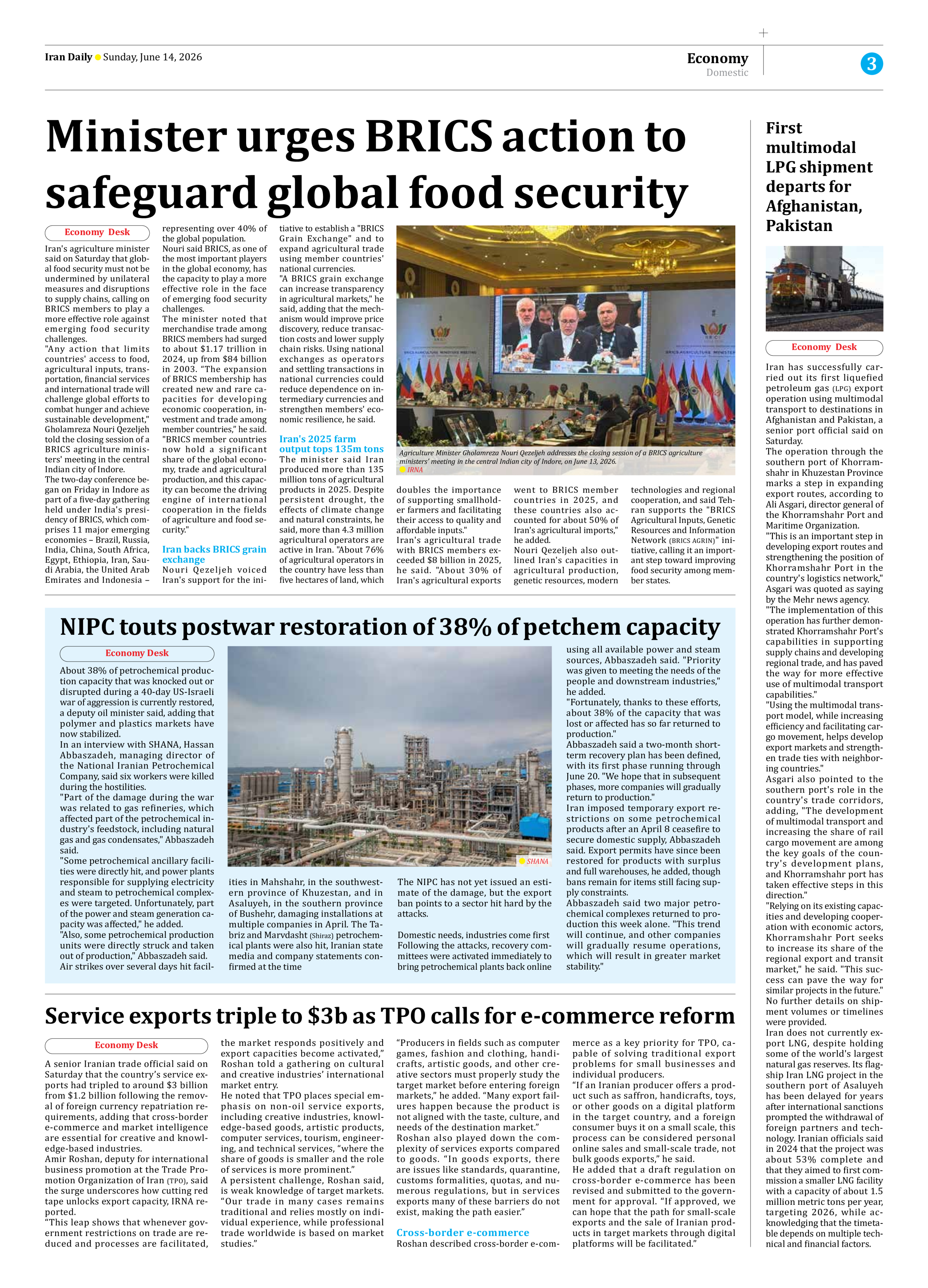
Air strikes over several days hit facilities in Mahshahr, in the southwestern province of Khuzestan, and in Asaluyeh, in the southern province of Bushehr, damaging installations at multiple companies in April. The Tabriz and Marvdasht (Shiraz) petrochemical plants were also hit, Iranian state media and company statements confirmed at the time
The NIPC has not yet issued an estimate of the damage, but the export ban points to a sector hit hard by the attacks.
Domestic needs, industries come first
Following the attacks, recovery committees were activated immediately to bring petrochemical plants back online using all available power and steam sources, Abbaszadeh said. "Priority was given to meeting the needs of the people and downstream industries," he added.
"Fortunately, thanks to these efforts, about 38% of the capacity that was lost or affected has so far returned to production."
Abbaszadeh said a two-month short-term recovery plan has been defined, with its first phase running through June 20. "We hope that in subsequent phases, more companies will gradually return to production."
Iran imposed temporary export restrictions on some petrochemical products after an April 8 ceasefire to secure domestic supply, Abbaszadeh said. Export permits have since been restored for products with surplus and full warehouses, he added, though bans remain for items still facing supply constraints.
Abbaszadeh said two major petrochemical complexes returned to production this week alone. "This trend will continue, and other companies will gradually resume operations, which will result in greater market stability."