







Gisoum’s journey to global tourism stage
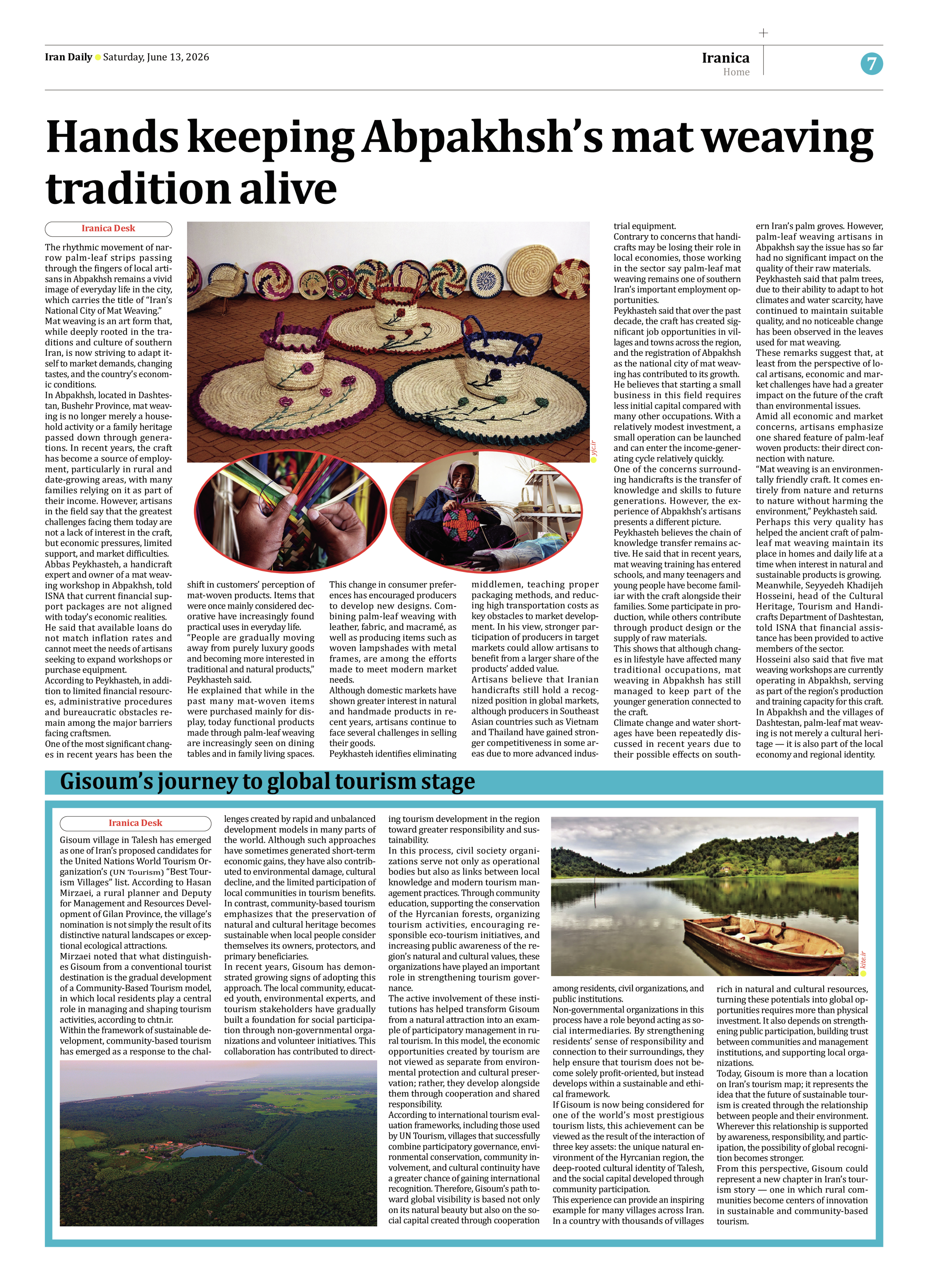
Gisoum village in Talesh has emerged as one of Iran’s proposed candidates for the United Nations World Tourism Organization’s (UN Tourism) “Best Tourism Villages” list. According to Hasan Mirzaei, a rural planner and Deputy for Management and Resources Development of Gilan Province, the village’s nomination is not simply the result of its distinctive natural landscapes or exceptional ecological attractions.
Mirzaei noted that what distinguishes Gisoum from a conventional tourist destination is the gradual development of a Community-Based Tourism model, in which local residents play a central role in managing and shaping tourism activities, according to chtn.ir.
Within the framework of sustainable development, community-based tourism has emerged as a response to the challenges created by rapid and unbalanced development models in many parts of the world. Although such approaches have sometimes generated short-term economic gains, they have also contributed to environmental damage, cultural decline, and the limited participation of local communities in tourism benefits. In contrast, community-based tourism emphasizes that the preservation of natural and cultural heritage becomes sustainable when local people consider themselves its owners, protectors, and primary beneficiaries.
In recent years, Gisoum has demonstrated growing signs of adopting this approach. The local community, educated youth, environmental experts, and tourism stakeholders have gradually built a foundation for social participation through non-governmental organizations and volunteer initiatives. This collaboration has contributed to directing tourism development in the region toward greater responsibility and sustainability.
In this process, civil society organizations serve not only as operational bodies but also as links between local knowledge and modern tourism management practices. Through community education, supporting the conservation of the Hyrcanian forests, organizing tourism activities, encouraging responsible eco-tourism initiatives, and increasing public awareness of the region’s natural and cultural values, these organizations have played an important role in strengthening tourism governance.
The active involvement of these institutions has helped transform Gisoum from a natural attraction into an example of participatory management in rural tourism. In this model, the economic opportunities created by tourism are not viewed as separate from environmental protection and cultural preservation; rather, they develop alongside them through cooperation and shared responsibility.
According to international tourism evaluation frameworks, including those used by UN Tourism, villages that successfully combine participatory governance, environmental conservation, community involvement, and cultural continuity have a greater chance of gaining international recognition. Therefore, Gisoum’s path toward global visibility is based not only on its natural beauty but also on the social capital created through cooperation among residents, civil organizations, and public institutions.
Non-governmental organizations in this process have a role beyond acting as social intermediaries. By strengthening residents’ sense of responsibility and connection to their surroundings, they help ensure that tourism does not become solely profit-oriented, but instead develops within a sustainable and ethical framework.
If Gisoum is now being considered for one of the world’s most prestigious tourism lists, this achievement can be viewed as the result of the interaction of three key assets: the unique natural environment of the Hyrcanian region, the deep-rooted cultural identity of Talesh, and the social capital developed through community participation.
This experience can provide an inspiring example for many villages across Iran. In a country with thousands of villages rich in natural and cultural resources, turning these potentials into global opportunities requires more than physical investment. It also depends on strengthening public participation, building trust between communities and management institutions, and supporting local organizations.
Today, Gisoum is more than a location on Iran’s tourism map; it represents the idea that the future of sustainable tourism is created through the relationship between people and their environment. Wherever this relationship is supported by awareness, responsibility, and participation, the possibility of global recognition becomes stronger.
From this perspective, Gisoum could represent a new chapter in Iran’s tourism story — one in which rural communities become centers of innovation in sustainable and community-based tourism.