





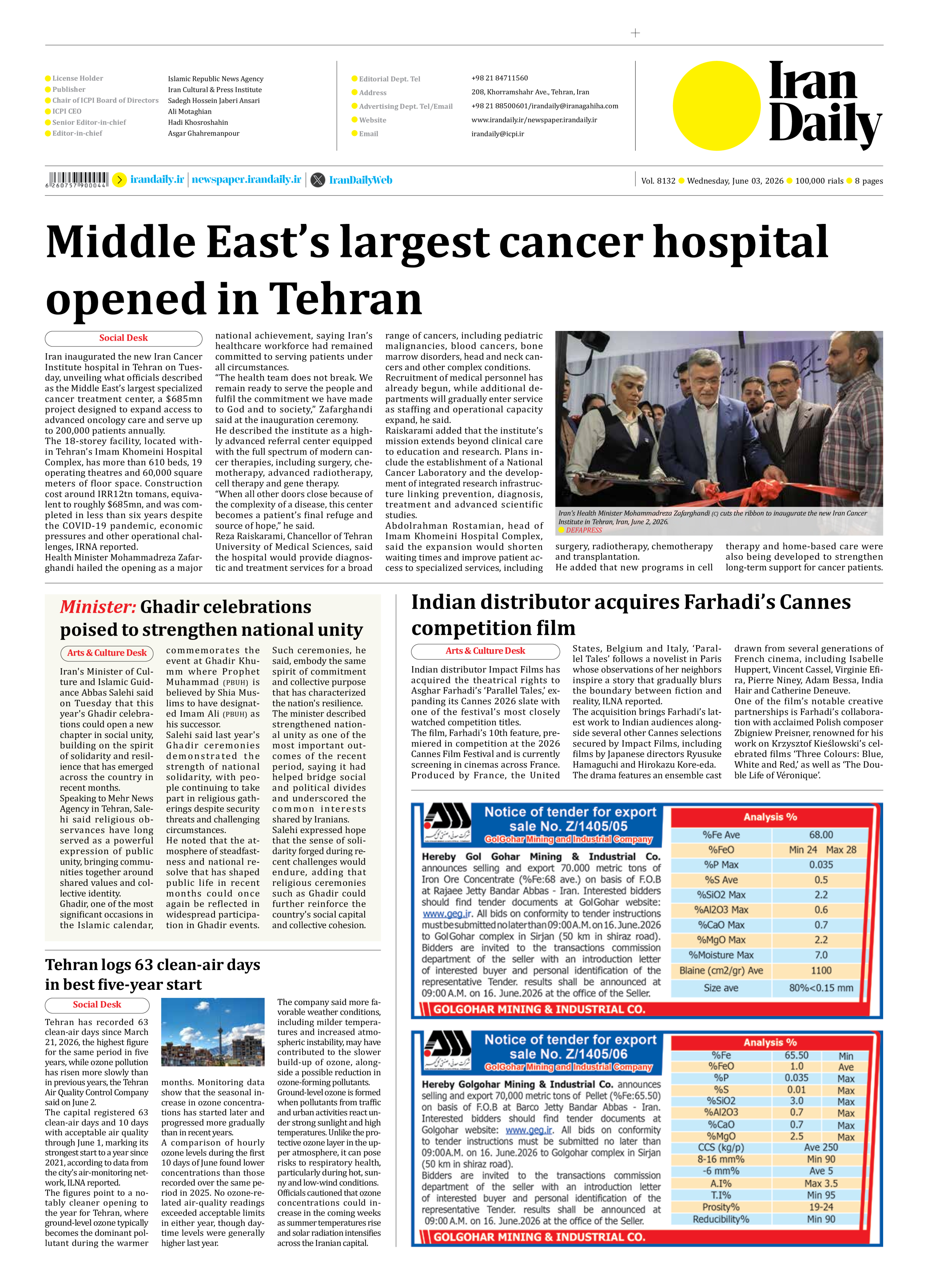


Middle East’s largest cancer hospital opened in Tehran
Iran inaugurated the new Iran Cancer Institute hospital in Tehran on Tuesday, unveiling what officials described as the Middle East’s largest specialized cancer treatment center, a $685mn project designed to expand access to advanced oncology care and serve up to 200,000 patients annually.
The 18-storey facility, located within Tehran’s Imam Khomeini Hospital Complex, has more than 610 beds, 19 operating theatres and 60,000 square meters of floor space. Construction cost around IRR12tn tomans, equivalent to roughly $685mn, and was completed in less than six years despite the COVID-19 pandemic, economic pressures and other operational challenges, IRNA reported.
Health Minister Mohammadreza Zafarghandi hailed the opening as a major national achievement, saying Iran’s healthcare workforce had remained committed to serving patients under all circumstances.
“The health team does not break. We remain ready to serve the people and fulfil the commitment we have made to God and to society,” Zafarghandi said at the inauguration ceremony.
He described the institute as a highly advanced referral center equipped with the full spectrum of modern cancer therapies, including surgery, chemotherapy, advanced radiotherapy, cell therapy and gene therapy.
“When all other doors close because of the complexity of a disease, this center becomes a patient’s final refuge and source of hope,” he said.
Reza Raiskarami, Chancellor of Tehran University of Medical Sciences, said the hospital would provide diagnostic and treatment services for a broad range of cancers, including pediatric malignancies, blood cancers, bone marrow disorders, head and neck cancers and other complex conditions.
Recruitment of medical personnel has already begun, while additional departments will gradually enter service as staffing and operational capacity expand, he said.
Raiskarami added that the institute’s mission extends beyond clinical care to education and research. Plans include the establishment of a National Cancer Laboratory and the development of integrated research infrastructure linking prevention, diagnosis, treatment and advanced scientific studies.
Abdolrahman Rostamian, head of Imam Khomeini Hospital Complex, said the expansion would shorten waiting times and improve patient access to specialized services, including surgery, radiotherapy, chemotherapy and transplantation.
He added that new programs in cell therapy and home-based care were also being developed to strengthen long-term support for cancer patients.