





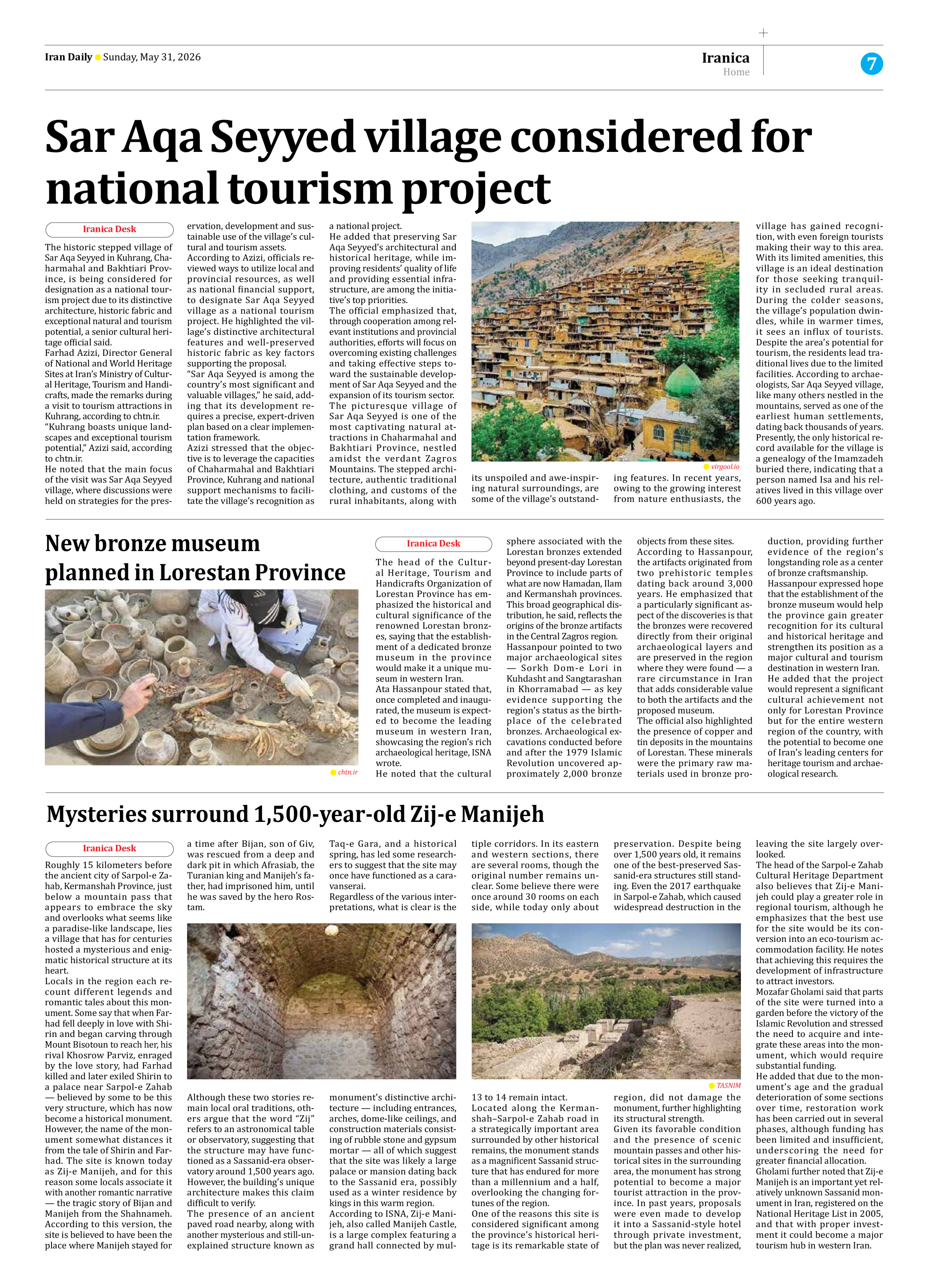


New bronze museum planned in Lorestan Province
The head of the Cultural Heritage, Tourism and Handicrafts Organization of Lorestan Province has emphasized the historical and cultural significance of the renowned Lorestan bronzes, saying that the establishment of a dedicated bronze museum in the province would make it a unique museum in western Iran.
Ata Hassanpour stated that, once completed and inaugurated, the museum is expected to become the leading museum in western Iran, showcasing the region’s rich archaeological heritage, ISNA wrote.
He noted that the cultural sphere associated with the Lorestan bronzes extended beyond present-day Lorestan Province to include parts of what are now Hamadan, Ilam and Kermanshah provinces. This broad geographical distribution, he said, reflects the origins of the bronze artifacts in the Central Zagros region.
Hassanpour pointed to two major archaeological sites — Sorkh Dom-e Lori in Kuhdasht and Sangtarashan in Khorramabad — as key evidence supporting the region’s status as the birthplace of the celebrated bronzes. Archaeological excavations conducted before and after the 1979 Islamic Revolution uncovered approximately 2,000 bronze objects from these sites.
According to Hassanpour, the artifacts originated from two prehistoric temples dating back around 3,000 years. He emphasized that a particularly significant aspect of the discoveries is that the bronzes were recovered directly from their original archaeological layers and are preserved in the region where they were found — a rare circumstance in Iran that adds considerable value to both the artifacts and the proposed museum.
The official also highlighted the presence of copper and tin deposits in the mountains of Lorestan. These minerals were the primary raw materials used in bronze production, providing further evidence of the region’s longstanding role as a center of bronze craftsmanship.
Hassanpour expressed hope that the establishment of the bronze museum would help the province gain greater recognition for its cultural and historical heritage and strengthen its position as a major cultural and tourism destination in western Iran.
He added that the project would represent a significant cultural achievement not only for Lorestan Province but for the entire western region of the country, with the potential to become one of Iran’s leading centers for heritage tourism and archaeological research.