





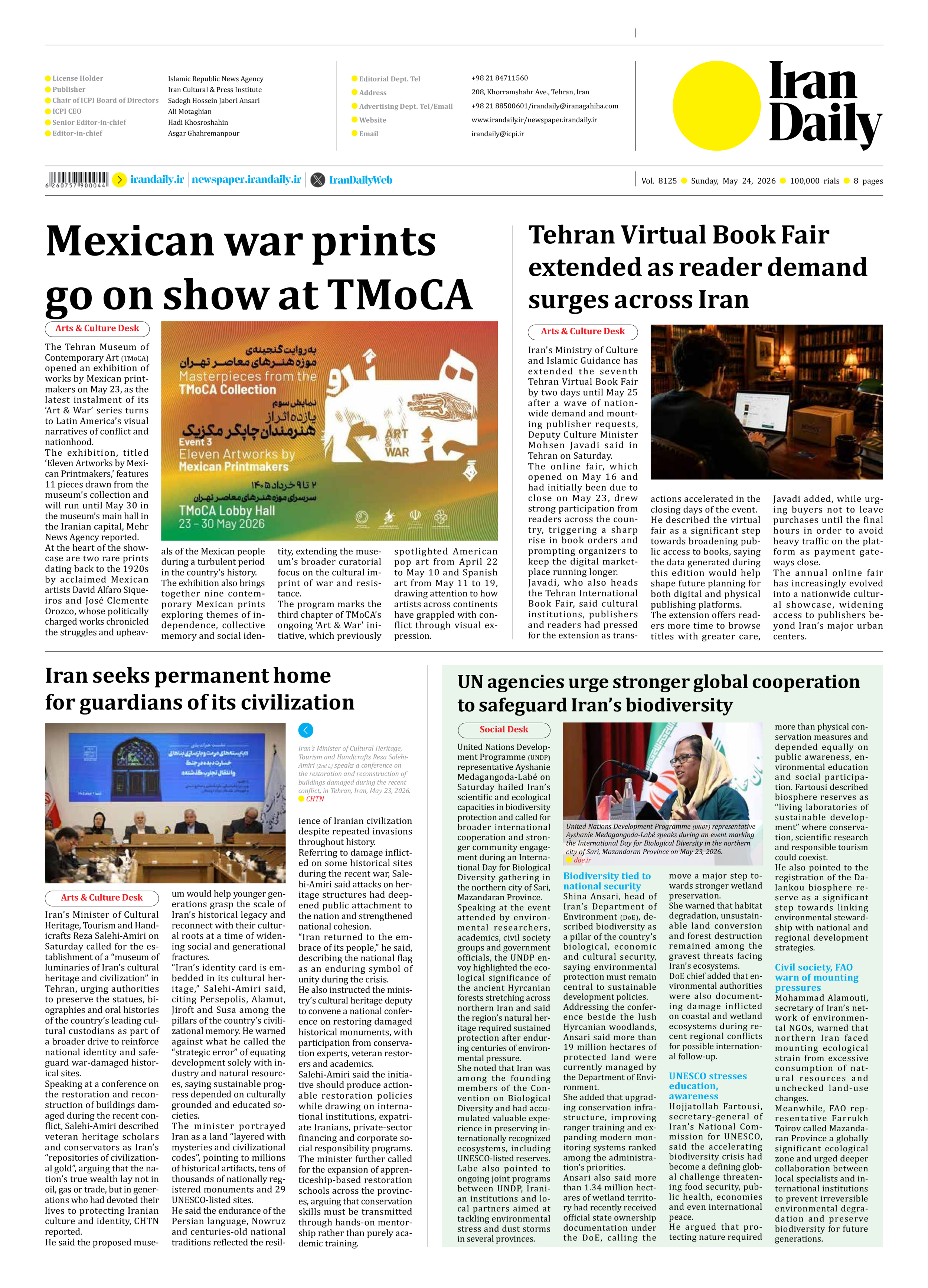


Iran seeks permanent home for guardians of its civilization
Iran’s Minister of Cultural Heritage, Tourism and Handicrafts Reza Salehi-Amiri on Saturday called for the establishment of a “museum of luminaries of Iran’s cultural heritage and civilization” in Tehran, urging authorities to preserve the statues, biographies and oral histories of the country’s leading cultural custodians as part of a broader drive to reinforce national identity and safeguard war-damaged historical sites.
Speaking at a conference on the restoration and reconstruction of buildings damaged during the recent conflict, Salehi-Amiri described veteran heritage scholars and conservators as Iran’s “repositories of civilizational gold”, arguing that the nation’s true wealth lay not in oil, gas or trade, but in generations who had devoted their lives to protecting Iranian culture and identity, CHTN reported.
He said the proposed museum would help younger generations grasp the scale of Iran’s historical legacy and reconnect with their cultural roots at a time of widening social and generational fractures.
“Iran’s identity card is embedded in its cultural heritage,” Salehi-Amiri said, citing Persepolis, Alamut, Jiroft and Susa among the pillars of the country’s civilizational memory. He warned against what he called the “strategic error” of equating development solely with industry and natural resources, saying sustainable progress depended on culturally grounded and educated societies.
The minister portrayed Iran as a land “layered with mysteries and civilizational codes”, pointing to millions of historical artifacts, tens of thousands of nationally registered monuments and 29 UNESCO-listed sites.
He said the endurance of the Persian language, Nowruz and centuries-old national traditions reflected the resilience of Iranian civilization despite repeated invasions throughout history.
Referring to damage inflicted on some historical sites during the recent war, Salehi-Amiri said attacks on heritage structures had deepened public attachment to the nation and strengthened national cohesion.
“Iran returned to the embrace of its people,” he said, describing the national flag as an enduring symbol of unity during the crisis.
He also instructed the ministry’s cultural heritage deputy to convene a national conference on restoring damaged historical monuments, with participation from conservation experts, veteran restorers and academics.
Salehi-Amiri said the initiative should produce actionable restoration policies while drawing on international institutions, expatriate Iranians, private-sector financing and corporate social responsibility programs.
The minister further called for the expansion of apprenticeship-based restoration schools across the provinces, arguing that conservation skills must be transmitted through hands-on mentorship rather than purely academic training.