







Iranian cultural heritage is key to national identity
The director of the Iranian Association for Cooperation with UNESCO has stressed the need to transform traditional endowments into modern forms in order to safeguard Iran’s national identity.
Speaking at a gathering of the South Khorasan Province’s Association of Cultural Heritage Benefactors attended by intellectuals and cultural figures, Mohammadreza Majidi, a faculty member at the University of Tehran, highlighted the strategic importance of Iran’s civilizational heritage in the contemporary world, according to chtn.ir.
Rejecting what he described as a “museum-only” view of ancient artifacts, Majidi said cultural heritage should not be regarded merely as relics for display. “These works constitute the cultural backbone and a primary source of security and identity for Iranians, especially younger generations,” he said. “We live in a world where identities are increasingly fragile, and our heritage serves as a national anchor.”
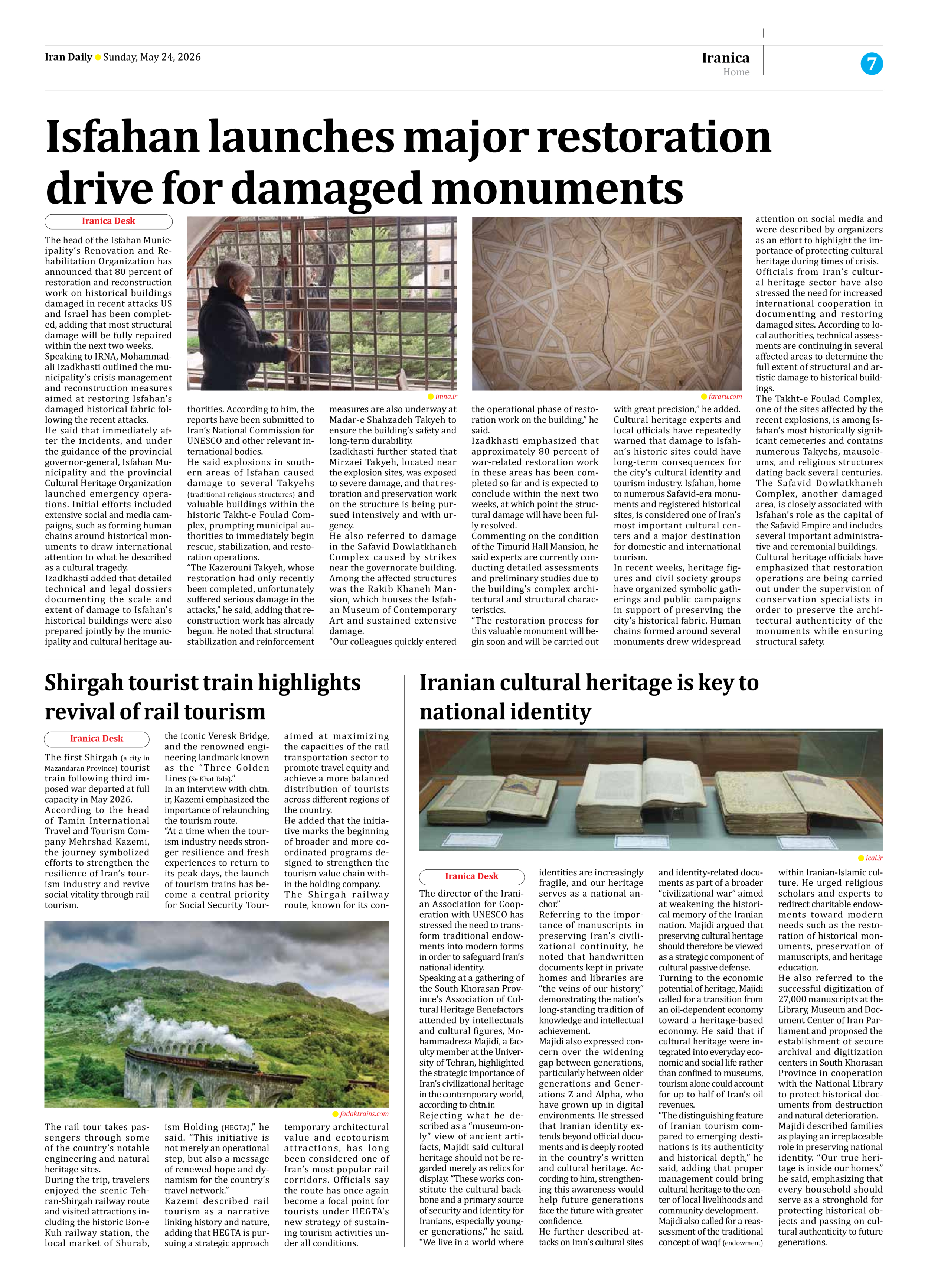
Referring to the importance of manuscripts in preserving Iran’s civilizational continuity, he noted that handwritten documents kept in private homes and libraries are “the veins of our history,” demonstrating the nation’s long-standing tradition of knowledge and intellectual achievement.
Majidi also expressed concern over the widening gap between generations, particularly between older generations and Generations Z and Alpha, who have grown up in digital environments. He stressed that Iranian identity extends beyond official documents and is deeply rooted in the country’s written and cultural heritage. According to him, strengthening this awareness would help future generations face the future with greater confidence.
He further described attacks on Iran’s cultural sites and identity-related documents as part of a broader “civilizational war” aimed at weakening the historical memory of the Iranian nation. Majidi argued that preserving cultural heritage should therefore be viewed as a strategic component of cultural passive defense.
Turning to the economic potential of heritage, Majidi called for a transition from an oil-dependent economy toward a heritage-based economy. He said that if cultural heritage were integrated into everyday economic and social life rather than confined to museums, tourism alone could account for up to half of Iran’s oil revenues.
“The distinguishing feature of Iranian tourism compared to emerging destinations is its authenticity and historical depth,” he said, adding that proper management could bring cultural heritage to the center of local livelihoods and community development.
Majidi also called for a reassessment of the traditional concept of waqf (endowment) within Iranian-Islamic culture. He urged religious scholars and experts to redirect charitable endowments toward modern needs such as the restoration of historical monuments, preservation of manuscripts, and heritage education.
He also referred to the successful digitization of 27,000 manuscripts at the Library, Museum and Document Center of Iran Parliament and proposed the establishment of secure archival and digitization centers in South Khorasan Province in cooperation with the National Library to protect historical documents from destruction and natural deterioration.
Majidi described families as playing an irreplaceable role in preserving national identity. “Our true heritage is inside our homes,” he said, emphasizing that every household should serve as a stronghold for protecting historical objects and passing on cultural authenticity to future generations.