







Dashkasan Temple reveals Iran’s artistic legacy
In the heart of Zanjan Province, near the historic city of Soltaniyeh, stands the remarkable Dashkasan Temple, one of Iran’s most striking examples of rock-cut architecture. Often referred to as the “Dragon Temple,” Dashkasan is considered among the province’s most important historical landmarks. Located about 15 kilometers southeast of Soltaniyeh, the site takes its name from a Turkish term meaning “stone cutter,” reflecting its carved stone structure. Registered on Iran’s National Heritage List, Dashkasan is regarded as a rare fusion of Iranian artistic traditions and East Asian decorative elements dating back to the Ilkhanid era.
Carved directly into the mountainside, the temple is surrounded by a dramatic natural landscape that enhances both its historical significance and tourism appeal. During the reign of Oljeitu (Sultan Mohammad Khodabandeh), the region gained major political and religious importance as nearby Soltaniyeh flourished as the capital of the Ilkhanids. Dashkasan’s distinctive features, particularly its monumental dragon reliefs, provide valuable insight into the cultural exchanges between Iran and East Asia during the Mongol period.
Set among limestone mountains, the site reflects the essence of rock-cut architecture while offering a striking natural setting. Its proximity to Soltaniyeh, the grand Ilkhanid capital, underscores the historical and strategic importance of the complex during that era. The surrounding rocky terrain and mountain scenery further enhance its appeal, creating a unique cultural and natural experience for visitors.
Researchers believe the complex may originally have been intended as a Buddhist-inspired temple, part of a larger ceremonial complex, or even an unfinished royal palace or sanctuary. Some historians attribute the dragon motifs to the presence of Chinese artists at the Ilkhanid court, whose artistic influence shaped parts of the site’s decorative program.
Archaeological studies date Dashkasan to the Ilkhanid period, particularly the reign of Oljeitu in the 14th century — a time marked by the flourishing of Persian art and architecture, exemplified by monumental structures such as the Soltaniyeh, Dome. Although the exact purpose of Dashkasan remains uncertain, scholars generally agree that the site reflects the broader cultural and artistic transformations that took place in Iran following the Mongol conquest.
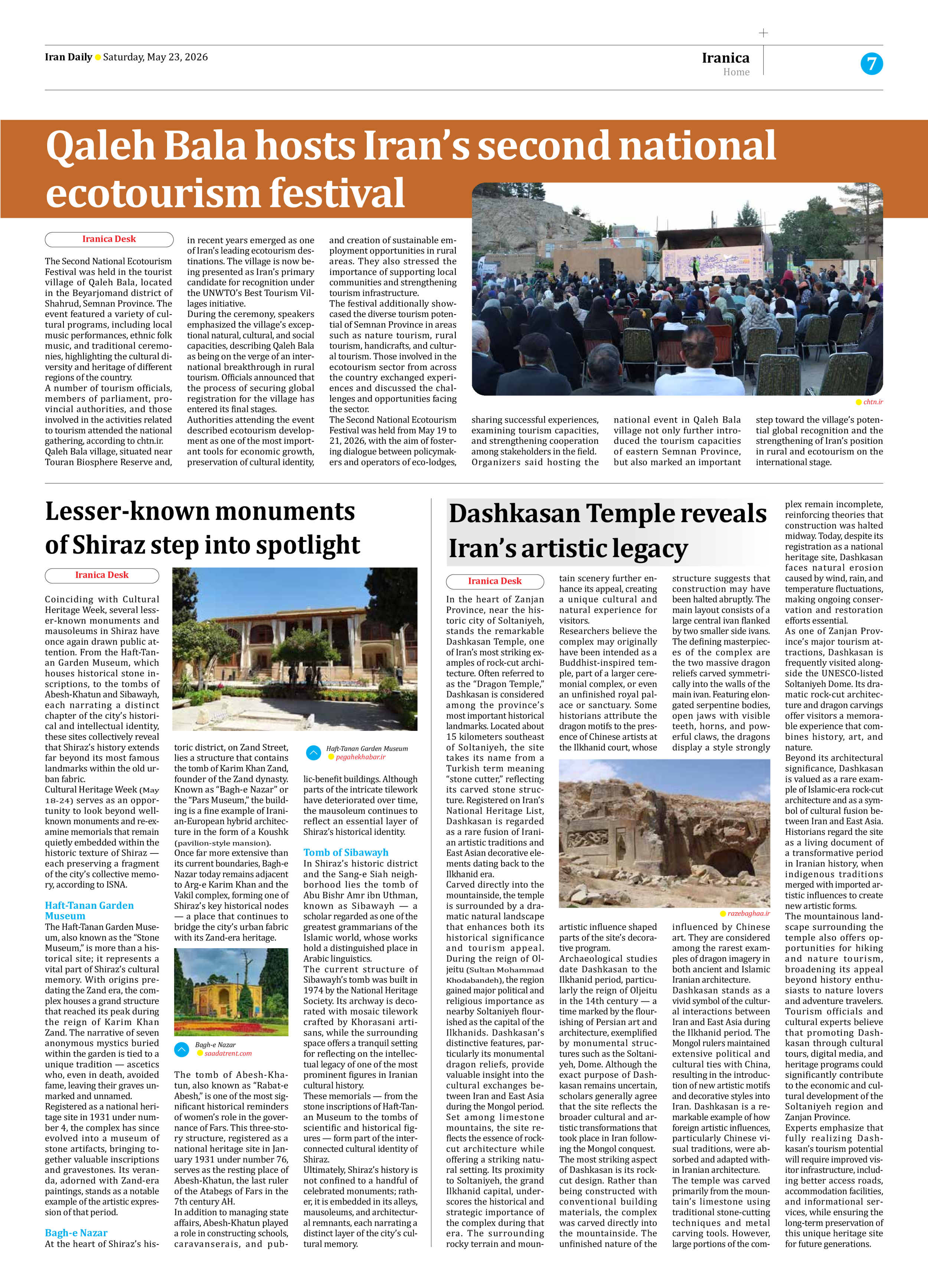
The most striking aspect of Dashkasan is its rock-cut design. Rather than being constructed with conventional building materials, the complex was carved directly into the mountainside. The unfinished nature of the structure suggests that construction may have been halted abruptly. The main layout consists of a large central ivan flanked by two smaller side ivans.
The defining masterpieces of the complex are the two massive dragon reliefs carved symmetrically into the walls of the main ivan. Featuring elongated serpentine bodies, open jaws with visible teeth, horns, and powerful claws, the dragons display a style strongly influenced by Chinese art. They are considered among the rarest examples of dragon imagery in both ancient and Islamic Iranian architecture.
Dashkasan stands as a vivid symbol of the cultural interactions between Iran and East Asia during the Ilkhanid period. The Mongol rulers maintained extensive political and cultural ties with China, resulting in the introduction of new artistic motifs and decorative styles into Iran. Dashkasan is a remarkable example of how foreign artistic influences, particularly Chinese visual traditions, were absorbed and adapted within Iranian architecture.
The temple was carved primarily from the mountain’s limestone using traditional stone-cutting techniques and metal carving tools. However, large portions of the complex remain incomplete, reinforcing theories that construction was halted midway. Today, despite its registration as a national heritage site, Dashkasan faces natural erosion caused by wind, rain, and temperature fluctuations, making ongoing conservation and restoration efforts essential.
As one of Zanjan Province’s major tourism attractions, Dashkasan is frequently visited alongside the UNESCO-listed Soltaniyeh Dome. Its dramatic rock-cut architecture and dragon carvings offer visitors a memorable experience that combines history, art, and nature.
Beyond its architectural significance, Dashkasan is valued as a rare example of Islamic-era rock-cut architecture and as a symbol of cultural fusion between Iran and East Asia. Historians regard the site as a living document of a transformative period in Iranian history, when indigenous traditions merged with imported artistic influences to create new artistic forms.
The mountainous landscape surrounding the temple also offers opportunities for hiking and nature tourism, broadening its appeal beyond history enthusiasts to nature lovers and adventure travelers. Tourism officials and cultural experts believe that promoting Dashkasan through cultural tours, digital media, and heritage programs could significantly contribute to the economic and cultural development of the Soltaniyeh region and Zanjan Province.
Experts emphasize that fully realizing Dashkasan’s tourism potential will require improved visitor infrastructure, including better access roads, accommodation facilities, and informational services, while ensuring the long-term preservation of this unique heritage site for future generations.