







Pezeshkian urges nationwide curb on fuel waste to boost public welfare
President Masoud Pezeshkian said on Wednesday the government’s top priority is supporting household livelihoods and directing national resources toward productive and essential sectors of the economy, adding that Iran cannot allocate resources to importing fuel for “non-essential consumption.”
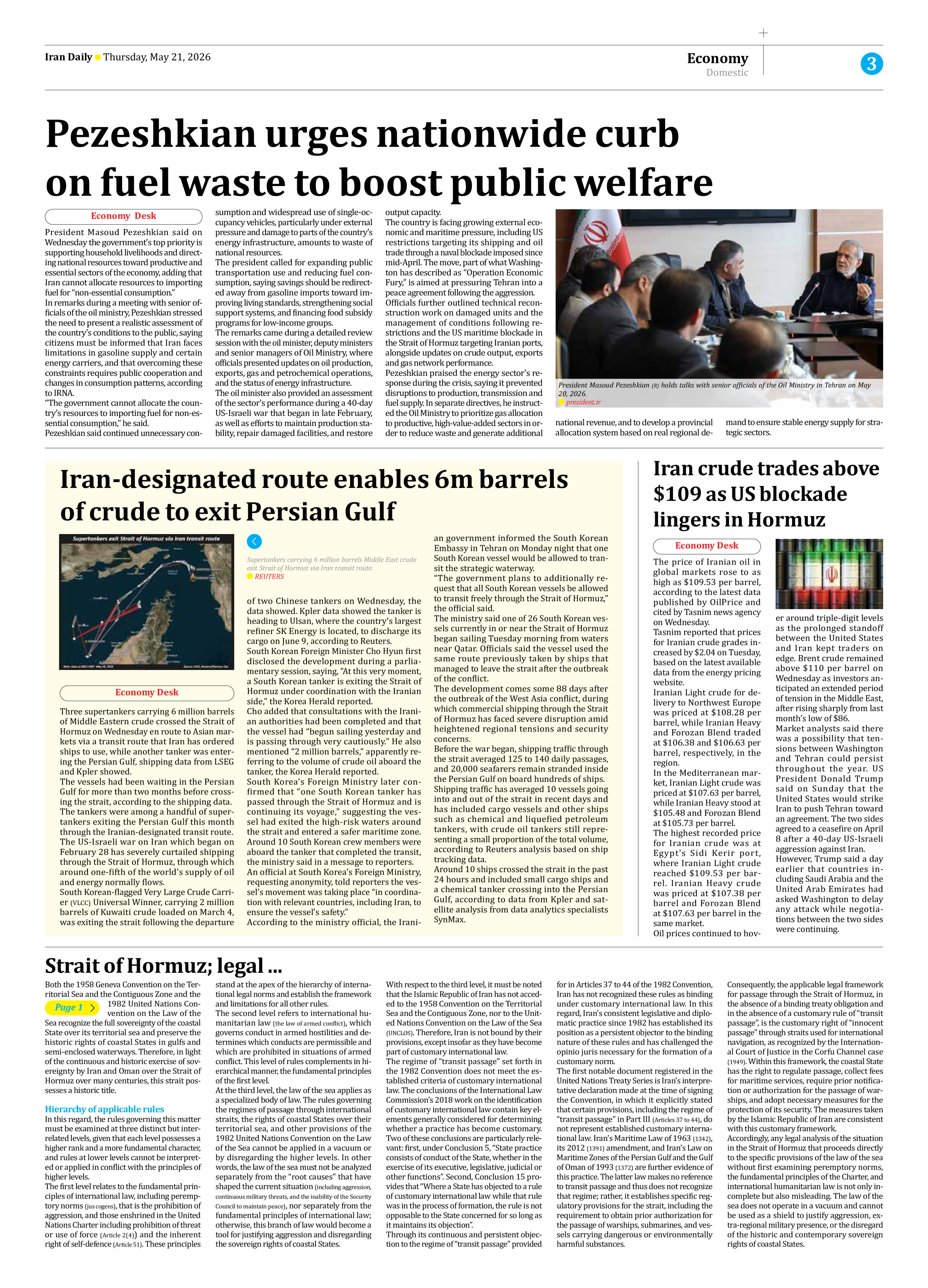
In remarks during a meeting with senior officials of the oil ministry, Pezeshkian stressed the need to present a realistic assessment of the country’s conditions to the public, saying citizens must be informed that Iran faces limitations in gasoline supply and certain energy carriers, and that overcoming these constraints requires public cooperation and changes in consumption patterns, according to IRNA.
“The government cannot allocate the country’s resources to importing fuel for non-essential consumption,” he said.
Pezeshkian said continued unnecessary consumption and widespread use of single-occupancy vehicles, particularly under external pressure and damage to parts of the country’s energy infrastructure, amounts to waste of national resources.
The president called for expanding public transportation use and reducing fuel consumption, saying savings should be redirected away from gasoline imports toward improving living standards, strengthening social support systems, and financing food subsidy programs for low-income groups.
The remarks came during a detailed review session with the oil minister, deputy ministers and senior managers of Oil Ministry, where officials presented updates on oil production, exports, gas and petrochemical operations, and the status of energy infrastructure.
The oil minister also provided an assessment of the sector’s performance during a 40-day US-Israeli war that began in late February, as well as efforts to maintain production stability, repair damaged facilities, and restore output capacity.
The country is facing growing external economic and maritime pressure, including US restrictions targeting its shipping and oil trade through a naval blockade imposed since mid-April. The move, part of what Washington has described as “Operation Economic Fury,” is aimed at pressuring Tehran into a peace agreement following the aggression.
Officials further outlined technical reconstruction work on damaged units and the management of conditions following restrictions and the US maritime blockade in the Strait of Hormuz targeting Iranian ports, alongside updates on crude output, exports and gas network performance.
Pezeshkian praised the energy sector’s response during the crisis, saying it prevented disruptions to production, transmission and fuel supply. In separate directives, he instructed the Oil Ministry to prioritize gas allocation to productive, high-value-added sectors in order to reduce waste and generate additional national revenue, and to develop a provincial allocation system based on real regional demand to ensure stable energy supply for strategic sectors.