







Ancient Khuttal symposium traces Persian roots linking Iran, Central Asia
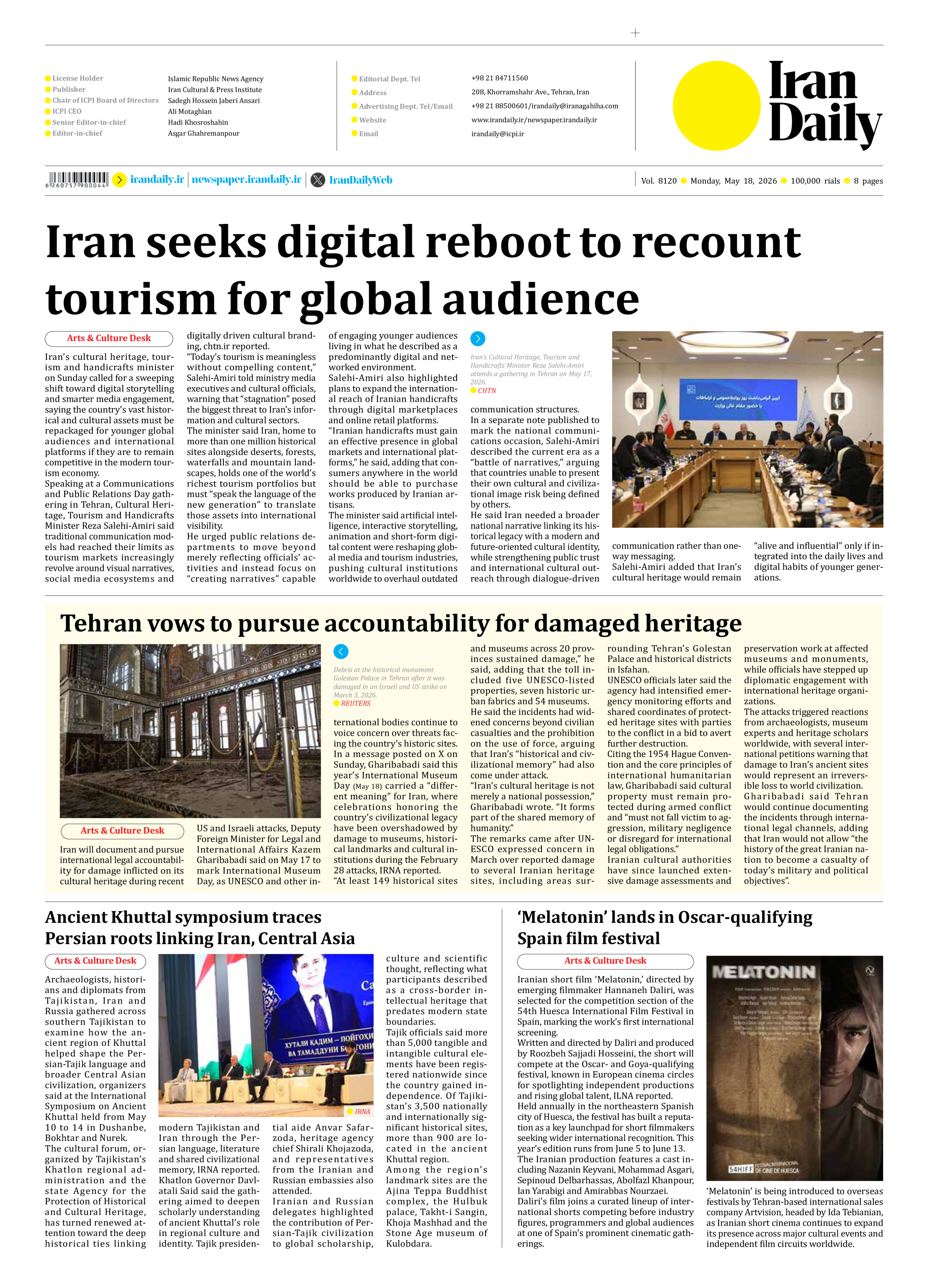
Archaeologists, historians and diplomats from Tajikistan, Iran and Russia gathered across southern Tajikistan to examine how the ancient region of Khuttal helped shape the Persian-Tajik language and broader Central Asian civilization, organizers said at the International Symposium on Ancient Khuttal held from May 10 to 14 in Dushanbe, Bokhtar and Nurek.
The cultural forum, organized by Tajikistan’s Khatlon regional administration and the state Agency for the Protection of Historical and Cultural Heritage, has turned renewed attention toward the deep historical ties linking modern Tajikistan and Iran through the Persian language, literature and shared civilizational memory, IRNA reported.
Khatlon Governor Davlatali Said said the gathering aimed to deepen scholarly understanding of ancient Khuttal’s role in regional culture and identity. Tajik presidential aide Anvar Safarzoda, heritage agency chief Shirali Khojazoda, and representatives from the Iranian and Russian embassies also attended.
Iranian and Russian delegates highlighted the contribution of Persian-Tajik civilization to global scholarship, culture and scientific thought, reflecting what participants described as a cross-border intellectual heritage that predates modern state boundaries.
Tajik officials said more than 5,000 tangible and intangible cultural elements have been registered nationwide since the country gained independence. Of Tajikistan’s 3,500 nationally and internationally significant historical sites, more than 900 are located in the ancient Khuttal region.
Among the region’s landmark sites are the Ajina Teppa Buddhist complex, the Hulbuk palace, Takht-i Sangin, Khoja Mashhad and the Stone Age museum of Kulobdara.