







Iran seeks digital reboot to recount tourism for global audience
Iran’s cultural heritage, tourism and handicrafts minister on Sunday called for a sweeping shift toward digital storytelling and smarter media engagement, saying the country’s vast historical and cultural assets must be repackaged for younger global audiences and international platforms if they are to remain competitive in the modern tourism economy.
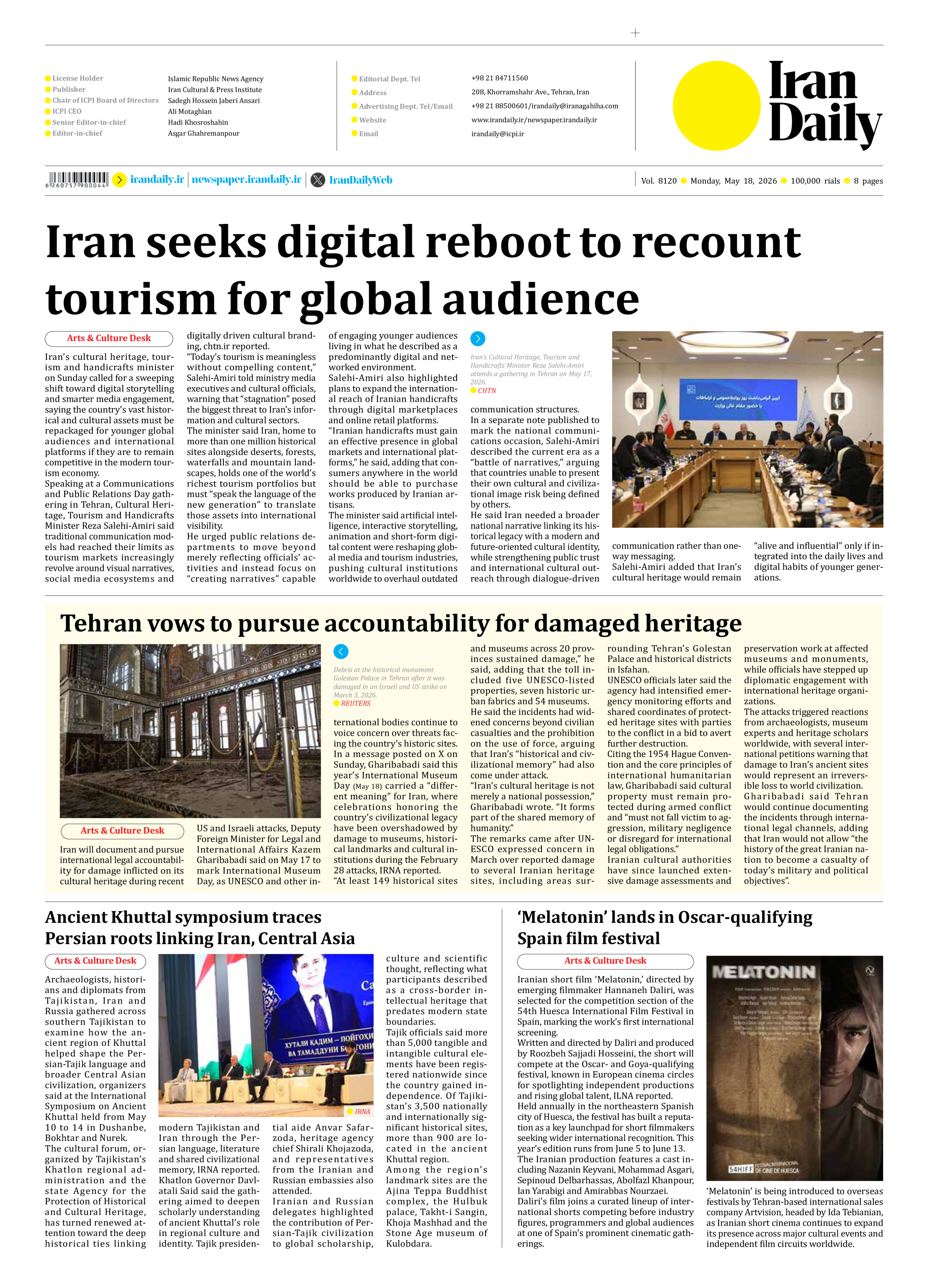
Speaking at a Communications and Public Relations Day gathering in Tehran, Cultural Heritage, Tourism and Handicrafts Minister Reza Salehi-Amiri said traditional communication models had reached their limits as tourism markets increasingly revolve around visual narratives, social media ecosystems and digitally driven cultural branding, chtn.ir reported.
“Today’s tourism is meaningless without compelling content,” Salehi-Amiri told ministry media executives and cultural officials, warning that “stagnation” posed the biggest threat to Iran’s information and cultural sectors.
The minister said Iran, home to more than one million historical sites alongside deserts, forests, waterfalls and mountain landscapes, holds one of the world’s richest tourism portfolios but must “speak the language of the new generation” to translate those assets into international visibility.
He urged public relations departments to move beyond merely reflecting officials’ activities and instead focus on “creating narratives” capable of engaging younger audiences living in what he described as a predominantly digital and networked environment.
Salehi-Amiri also highlighted plans to expand the international reach of Iranian handicrafts through digital marketplaces and online retail platforms.
“Iranian handicrafts must gain an effective presence in global markets and international platforms,” he said, adding that consumers anywhere in the world should be able to purchase works produced by Iranian artisans.
The minister said artificial intelligence, interactive storytelling, animation and short-form digital content were reshaping global media and tourism industries, pushing cultural institutions worldwide to overhaul outdated communication structures.
In a separate note published to mark the national communications occasion, Salehi-Amiri described the current era as a “battle of narratives,” arguing that countries unable to present their own cultural and civilizational image risk being defined by others.
He said Iran needed a broader national narrative linking its historical legacy with a modern and future-oriented cultural identity, while strengthening public trust and international cultural outreach through dialogue-driven communication rather than one-way messaging.
Salehi-Amiri added that Iran’s cultural heritage would remain “alive and influential” only if integrated into the daily lives and digital habits of younger generations.