







Pezeshkian urges stricter energy controls in postwar strains
Iranian President Masoud Pezeshkian called for swift measures to curb energy consumption, saying the country must make consumption management a national priority to strengthen resilience and navigate wartime conditions and mounting foreign pressure.
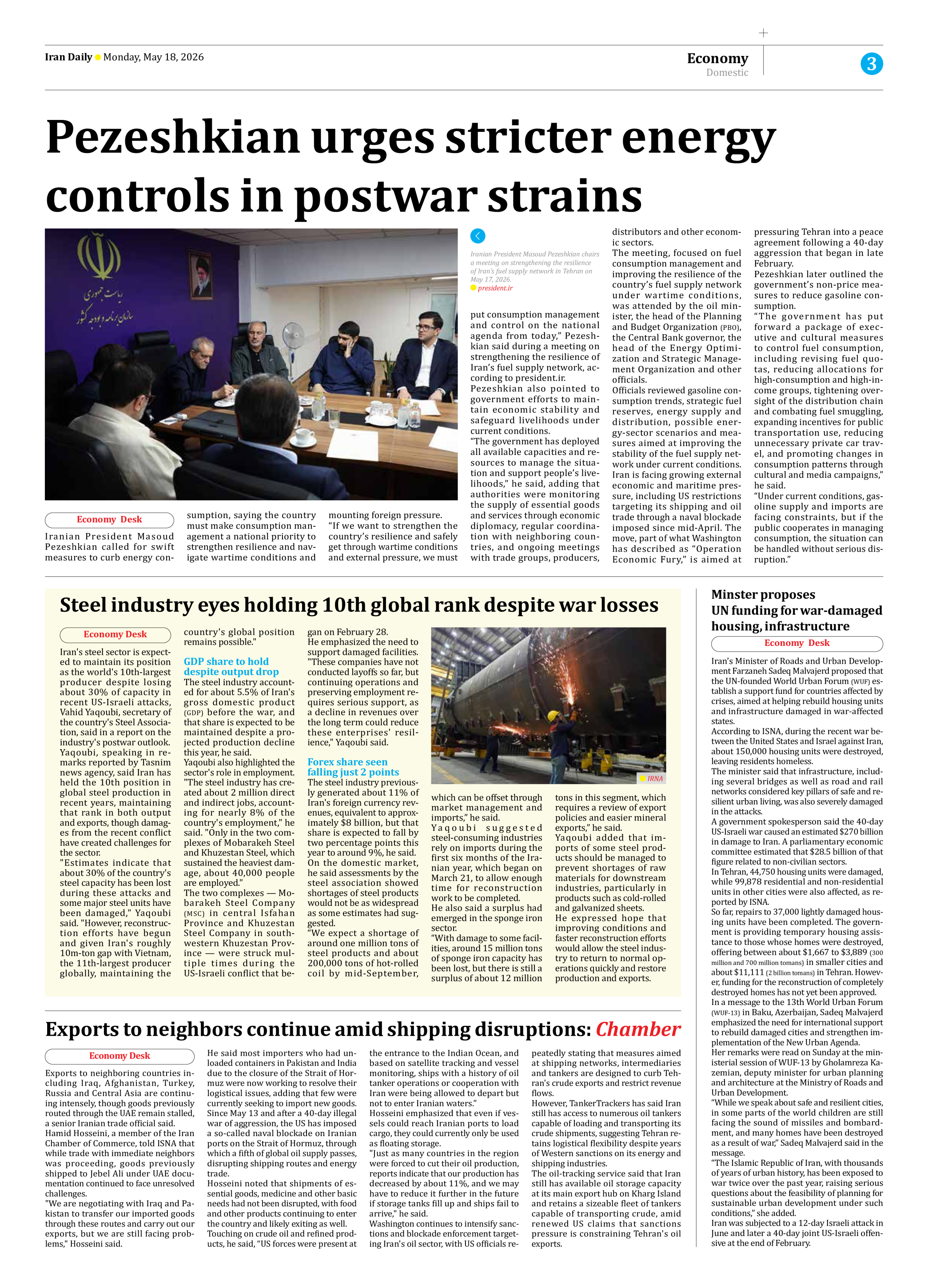
“If we want to strengthen the country’s resilience and safely get through wartime conditions and external pressure, we must put consumption management and control on the national agenda from today,” Pezeshkian said during a meeting on strengthening the resilience of Iran’s fuel supply network, according to president.ir.
Pezeshkian also pointed to government efforts to maintain economic stability and safeguard livelihoods under current conditions.
“The government has deployed all available capacities and resources to manage the situation and support people’s livelihoods,” he said, adding that authorities were monitoring the supply of essential goods and services through economic diplomacy, regular coordination with neighboring countries, and ongoing meetings with trade groups, producers, distributors and other economic sectors.
The meeting, focused on fuel consumption management and improving the resilience of the country’s fuel supply network under wartime conditions, was attended by the oil minister, the head of the Planning and Budget Organization (PBO), the Central Bank governor, the head of the Energy Optimization and Strategic Management Organization and other officials.
Officials reviewed gasoline consumption trends, strategic fuel reserves, energy supply and distribution, possible energy-sector scenarios and measures aimed at improving the stability of the fuel supply network under current conditions.
Iran is facing growing external economic and maritime pressure, including US restrictions targeting its shipping and oil trade through a naval blockade imposed since mid-April. The move, part of what Washington has described as “Operation Economic Fury,” is aimed at pressuring Tehran into a peace agreement following a 40-day aggression that began in late February.
Pezeshkian later outlined the government’s non-price measures to reduce gasoline consumption.
“The government has put forward a package of executive and cultural measures to control fuel consumption, including revising fuel quotas, reducing allocations for high-consumption and high-income groups, tightening oversight of the distribution chain and combating fuel smuggling, expanding incentives for public transportation use, reducing unnecessary private car travel, and promoting changes in consumption patterns through cultural and media campaigns,” he said.
“Under current conditions, gasoline supply and imports are facing constraints, but if the public cooperates in managing consumption, the situation can be handled without serious disruption.”