







Crown imperial blooms transform Iran’s highlands each spring
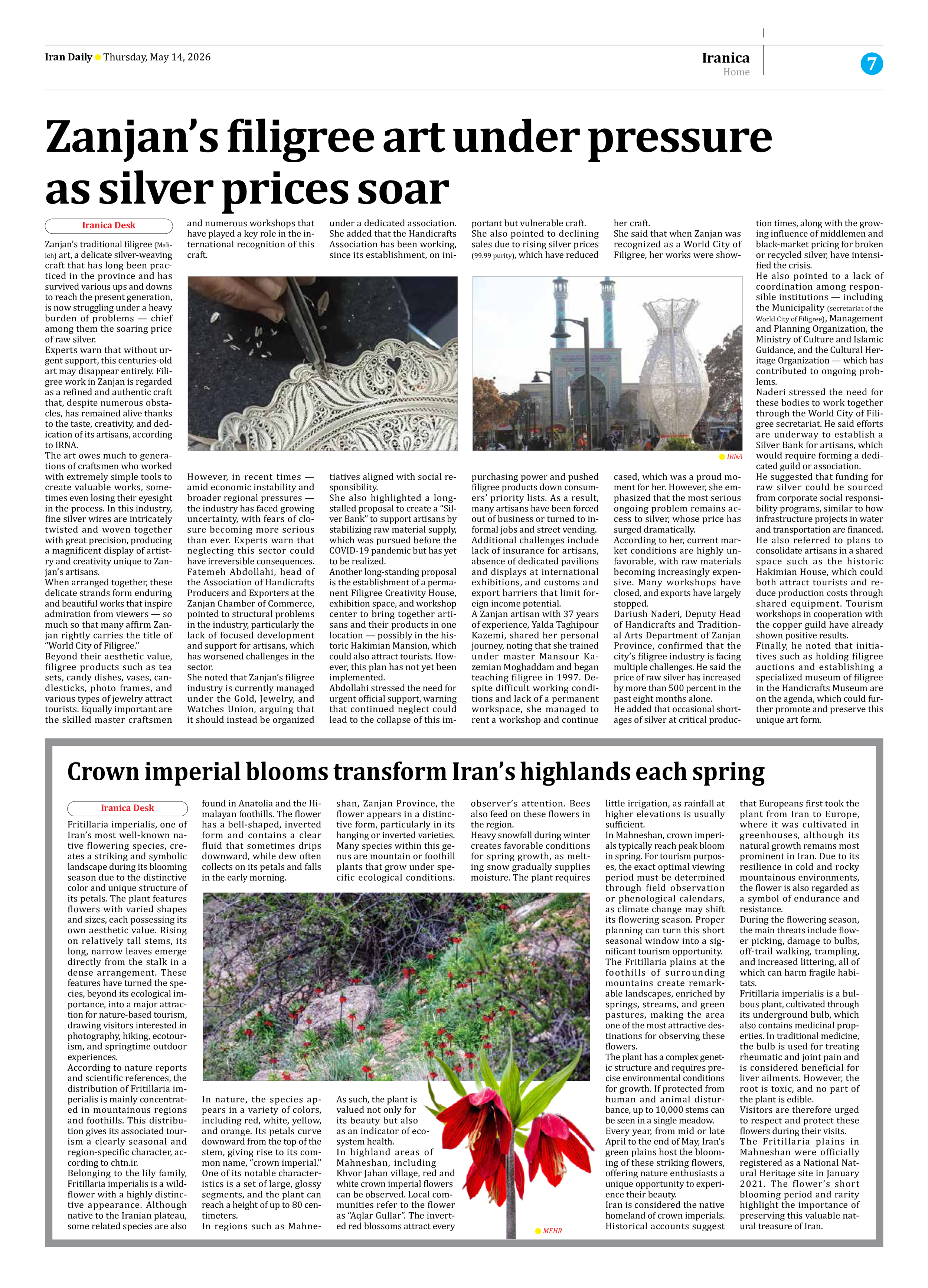
Fritillaria imperialis, one of Iran’s most well-known native flowering species, creates a striking and symbolic landscape during its blooming season due to the distinctive color and unique structure of its petals. The plant features flowers with varied shapes and sizes, each possessing its own aesthetic value. Rising on relatively tall stems, its long, narrow leaves emerge directly from the stalk in a dense arrangement. These features have turned the species, beyond its ecological importance, into a major attraction for nature-based tourism, drawing visitors interested in photography, hiking, ecotourism, and springtime outdoor experiences.
According to nature reports and scientific references, the distribution of Fritillaria imperialis is mainly concentrated in mountainous regions and foothills. This distribution gives its associated tourism a clearly seasonal and region-specific character, according to chtn.ir.
Belonging to the lily family, Fritillaria imperialis is a wildflower with a highly distinctive appearance. Although native to the Iranian plateau, some related species are also found in Anatolia and the Himalayan foothills. The flower has a bell-shaped, inverted form and contains a clear fluid that sometimes drips downward, while dew often collects on its petals and falls in the early morning.
In nature, the species appears in a variety of colors, including red, white, yellow, and orange. Its petals curve downward from the top of the stem, giving rise to its common name, “crown imperial.” One of its notable characteristics is a set of large, glossy segments, and the plant can reach a height of up to 80 centimeters.
In regions such as Mahneshan, Zanjan Province, the flower appears in a distinctive form, particularly in its hanging or inverted varieties. Many species within this genus are mountain or foothill plants that grow under specific ecological conditions. As such, the plant is valued not only for its beauty but also as an indicator of ecosystem health.
In highland areas of Mahneshan, including Khvor Jahan village, red and white crown imperial flowers can be observed. Local communities refer to the flower as “Aqlar Gullar”. The inverted red blossoms attract every observer’s attention. Bees also feed on these flowers in the region.
Heavy snowfall during winter creates favorable conditions for spring growth, as melting snow gradually supplies moisture. The plant requires little irrigation, as rainfall at higher elevations is usually sufficient.
In Mahneshan, crown imperials typically reach peak bloom in spring. For tourism purposes, the exact optimal viewing period must be determined through field observation or phenological calendars, as climate change may shift its flowering season. Proper planning can turn this short seasonal window into a significant tourism opportunity.
The Fritillaria plains at the foothills of surrounding mountains create remarkable landscapes, enriched by springs, streams, and green pastures, making the area one of the most attractive destinations for observing these flowers.
The plant has a complex genetic structure and requires precise environmental conditions for growth. If protected from human and animal disturbance, up to 10,000 stems can be seen in a single meadow.
Every year, from mid or late April to the end of May, Iran’s green plains host the blooming of these striking flowers, offering nature enthusiasts a unique opportunity to experience their beauty.
Iran is considered the native homeland of crown imperials. Historical accounts suggest that Europeans first took the plant from Iran to Europe, where it was cultivated in greenhouses, although its natural growth remains most prominent in Iran. Due to its resilience in cold and rocky mountainous environments, the flower is also regarded as a symbol of endurance and resistance.
During the flowering season, the main threats include flower picking, damage to bulbs, off-trail walking, trampling, and increased littering, all of which can harm fragile habitats.
Fritillaria imperialis is a bulbous plant, cultivated through its underground bulb, which also contains medicinal properties. In traditional medicine, the bulb is used for treating rheumatic and joint pain and is considered beneficial for liver ailments. However, the root is toxic, and no part of the plant is edible.
Visitors are therefore urged to respect and protect these flowers during their visits.
The Fritillaria plains in Mahneshan were officially registered as a National Natural Heritage site in January 2021. The flower’s short blooming period and rarity highlight the importance of preserving this valuable natural treasure of Iran.