







Copy in clipboard...
TPO: Iran eyes $10b trade with Pakistan via barter, transit expansion
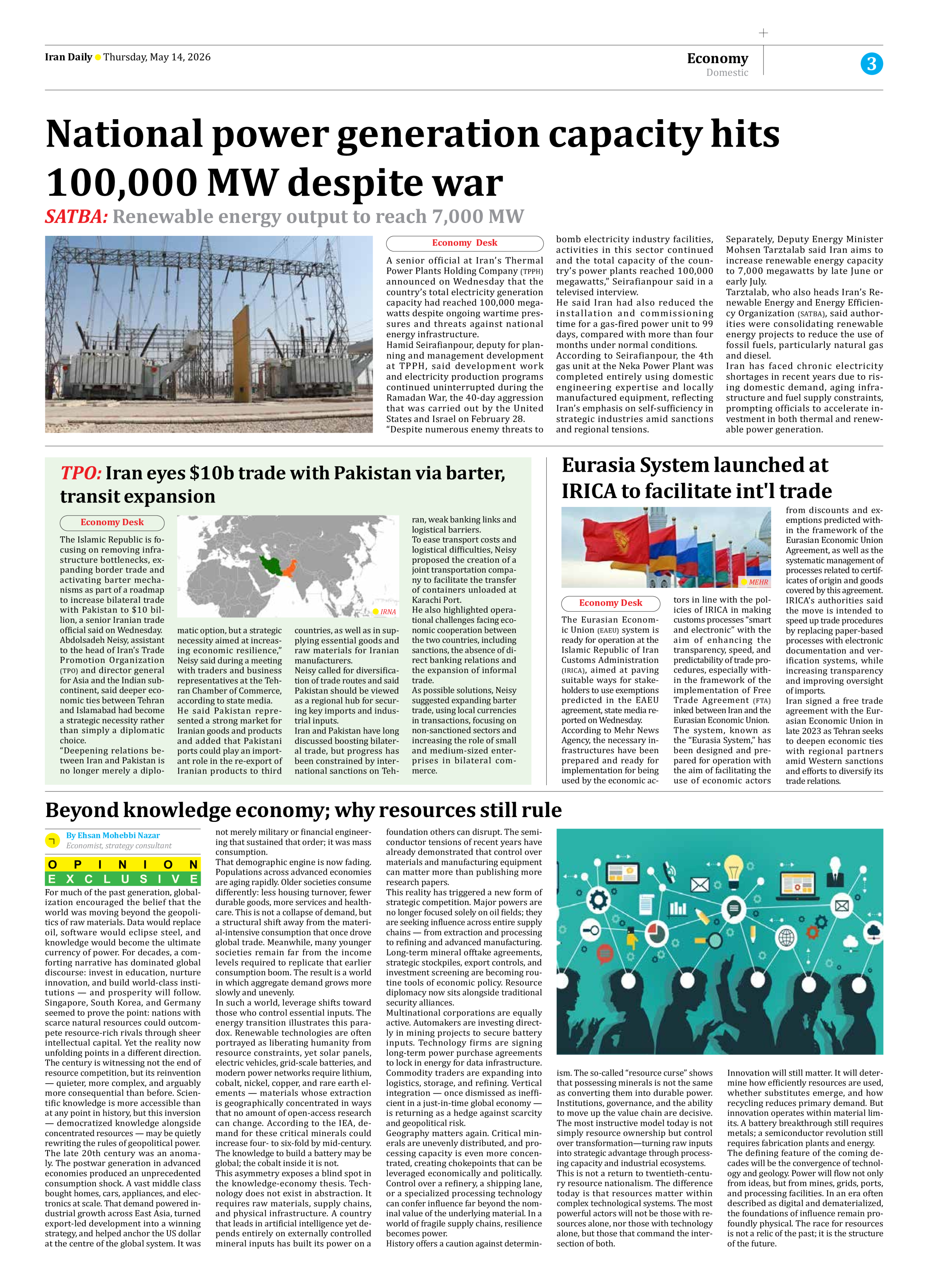
The Islamic Republic is focusing on removing infrastructure bottlenecks, expanding border trade and activating barter mechanisms as part of a roadmap to increase bilateral trade with Pakistan to $10 billion, a senior Iranian trade official said on Wednesday.
Abdolsadeh Neisy, assistant to the head of Iran’s Trade Promotion Organization (TPO) and director general for Asia and the Indian subcontinent, said deeper economic ties between Tehran and Islamabad had become a strategic necessity rather than simply a diplomatic choice.
“Deepening relations between Iran and Pakistan is no longer merely a diplomatic option, but a strategic necessity aimed at increasing economic resilience,” Neisy said during a meeting with traders and business representatives at the Tehran Chamber of Commerce, according to state media.
He said Pakistan represented a strong market for Iranian goods and products and added that Pakistani ports could play an important role in the re-export of Iranian products to third countries, as well as in supplying essential goods and raw materials for Iranian manufacturers.
Neisy called for diversification of trade routes and said Pakistan should be viewed as a regional hub for securing key imports and industrial inputs.
Iran and Pakistan have long discussed boosting bilateral trade, but progress has been constrained by international sanctions on Tehran, weak banking links and logistical barriers.
To ease transport costs and logistical difficulties, Neisy proposed the creation of a joint transportation company to facilitate the transfer of containers unloaded at Karachi Port.
He also highlighted operational challenges facing economic cooperation between the two countries, including sanctions, the absence of direct banking relations and the expansion of informal trade.
As possible solutions, Neisy suggested expanding barter trade, using local currencies in transactions, focusing on non-sanctioned sectors and increasing the role of small and medium-sized enterprises in bilateral commerce.