







National power generation capacity hits 100,000 MW despite war
SATBA: Renewable energy output to reach 7,000 MW
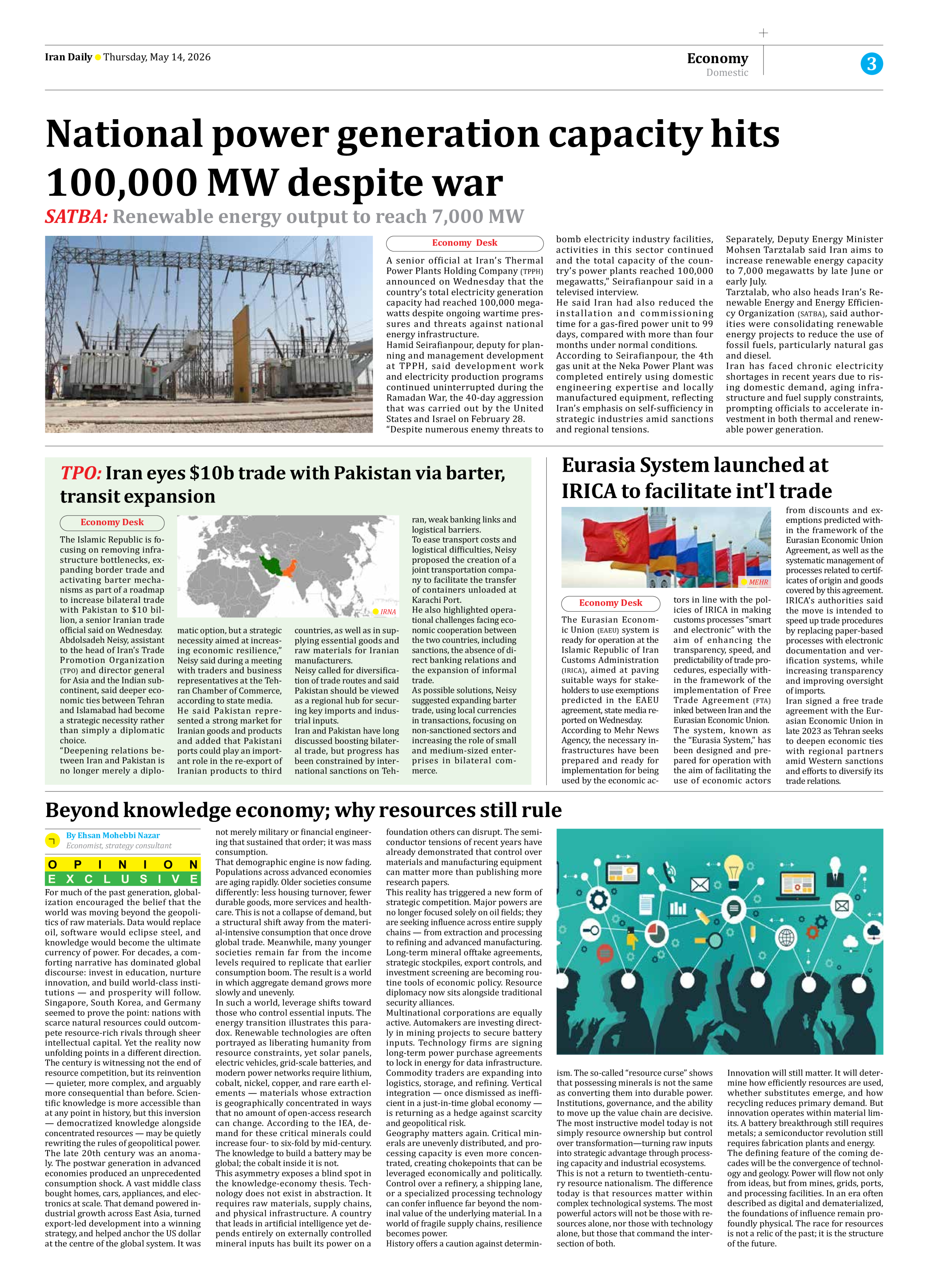
A senior official at Iran’s Thermal Power Plants Holding Company (TPPH) announced on Wednesday that the country’s total electricity generation capacity had reached 100,000 megawatts despite ongoing wartime pressures and threats against national energy infrastructure.
Hamid Seirafianpour, deputy for planning and management development at TPPH, said development work and electricity production programs continued uninterrupted during the Ramadan War, the 40-day aggression that was carried out by the United States and Israel on February 28.
“Despite numerous enemy threats to bomb electricity industry facilities, activities in this sector continued and the total capacity of the country’s power plants reached 100,000 megawatts,” Seirafianpour said in a televised interview.
He said Iran had also reduced the installation and commissioning time for a gas-fired power unit to 99 days, compared with more than four months under normal conditions.
According to Seirafianpour, the 4th gas unit at the Neka Power Plant was completed entirely using domestic engineering expertise and locally manufactured equipment, reflecting Iran’s emphasis on self-sufficiency in strategic industries amid sanctions and regional tensions.
Separately, Deputy Energy Minister Mohsen Tarztalab said Iran aims to increase renewable energy capacity to 7,000 megawatts by late June or early July.
Tarztalab, who also heads Iran’s Renewable Energy and Energy Efficiency Organization (SATBA), said authorities were consolidating renewable energy projects to reduce the use of fossil fuels, particularly natural gas and diesel.
Iran has faced chronic electricity shortages in recent years due to rising domestic demand, aging infrastructure and fuel supply constraints, prompting officials to accelerate investment in both thermal and renewable power generation.