







100K tons of extraterrestrial yields imported to ensure food security
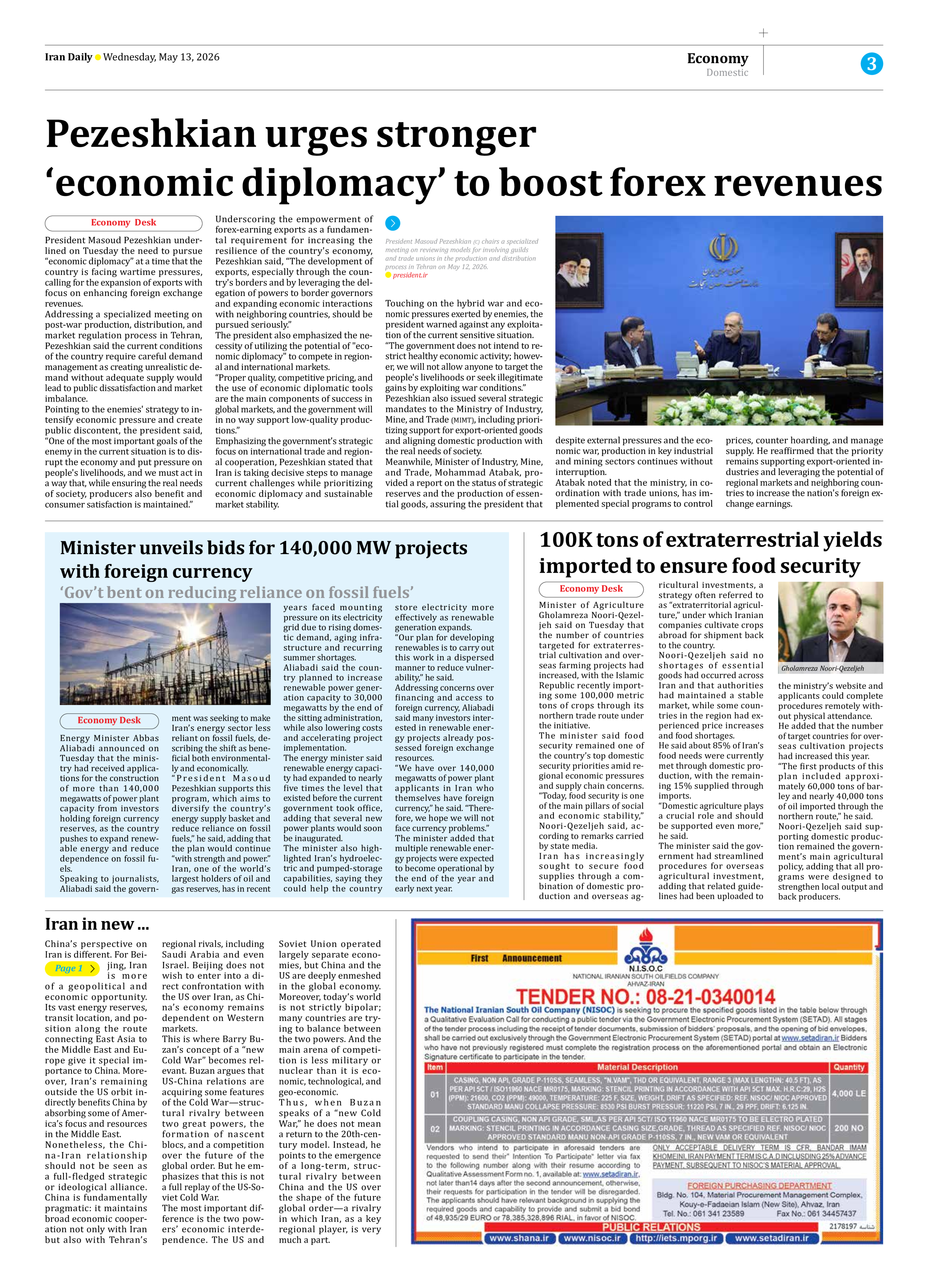
Minister of Agriculture Gholamreza Noori-Qezeljeh said on Tuesday that the number of countries targeted for extraterrestrial cultivation and overseas farming projects had increased, with the Islamic Republic recently importing some 100,000 metric tons of crops through its northern trade route under the initiative.
The minister said food security remained one of the country’s top domestic security priorities amid regional economic pressures and supply chain concerns.
“Today, food security is one of the main pillars of social and economic stability,” Noori-Qezeljeh said, according to remarks carried by state media.
Iran has increasingly sought to secure food supplies through a combination of domestic production and overseas agricultural investments, a strategy often referred to as “extraterritorial agriculture,” under which Iranian companies cultivate crops abroad for shipment back to the country.
Noori-Qezeljeh said no shortages of essential goods had occurred across Iran and that authorities had maintained a stable market, while some countries in the region had experienced price increases and food shortages.
He said about 85% of Iran’s food needs were currently met through domestic production, with the remaining 15% supplied through imports.
“Domestic agriculture plays a crucial role and should be supported even more,” he said.
The minister said the government had streamlined procedures for overseas agricultural investment, adding that related guidelines had been uploaded to the ministry’s website and applicants could complete procedures remotely without physical attendance.
He added that the number of target countries for overseas cultivation projects had increased this year.
“The first products of this plan included approximately 60,000 tons of barley and nearly 40,000 tons of oil imported through the northern route,” he said.
Noori-Qezeljeh said supporting domestic production remained the government’s main agricultural policy, adding that all programs were designed to strengthen local output and back producers.