







Tehran faces deepening water strain as dams drop to 22% amid uneven rainfall
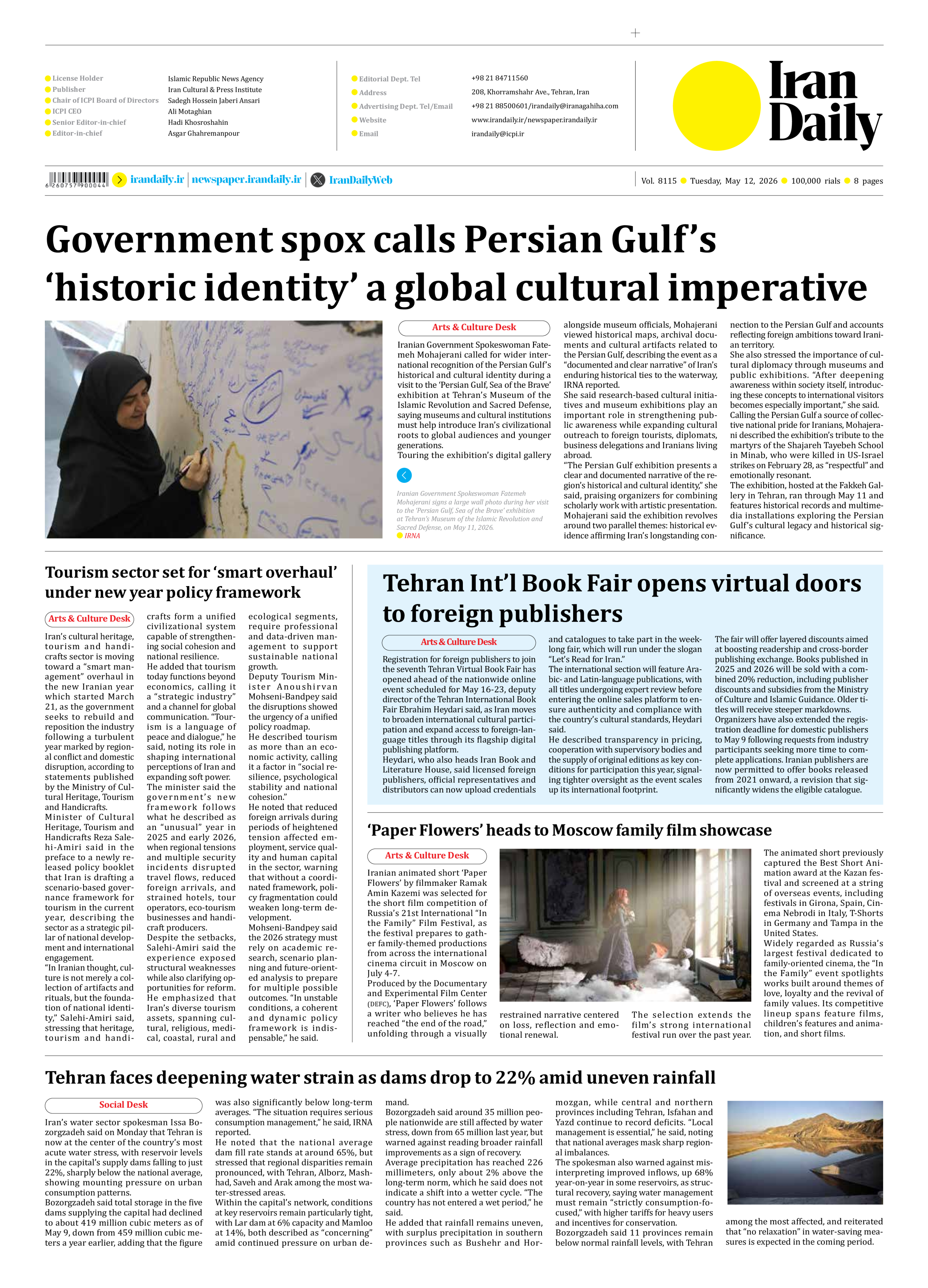
Iran’s water sector spokesman Issa Bozorgzadeh said on Monday that Tehran is now at the center of the country’s most acute water stress, with reservoir levels in the capital’s supply dams falling to just 22%, sharply below the national average, showing mounting pressure on urban consumption patterns.
Bozorgzadeh said total storage in the five dams supplying the capital had declined to about 419 million cubic meters as of May 9, down from 459 million cubic meters a year earlier, adding that the figure was also significantly below long-term averages. “The situation requires serious consumption management,” he said, IRNA reported.
He noted that the national average dam fill rate stands at around 65%, but stressed that regional disparities remain pronounced, with Tehran, Alborz, Mashhad, Saveh and Arak among the most water-stressed areas.
Within the capital’s network, conditions at key reservoirs remain particularly tight, with Lar dam at 6% capacity and Mamloo at 14%, both described as “concerning” amid continued pressure on urban demand.
Bozorgzadeh said around 35 million people nationwide are still affected by water stress, down from 65 million last year, but warned against reading broader rainfall improvements as a sign of recovery.
Average precipitation has reached 226 millimeters, only about 2% above the long-term norm, which he said does not indicate a shift into a wetter cycle. “The country has not entered a wet period,” he said.
He added that rainfall remains uneven, with surplus precipitation in southern provinces such as Bushehr and Hormozgan, while central and northern provinces including Tehran, Isfahan and Yazd continue to record deficits. “Local management is essential,” he said, noting that national averages mask sharp regional imbalances.
The spokesman also warned against misinterpreting improved inflows, up 68% year-on-year in some reservoirs, as structural recovery, saying water management must remain “strictly consumption-focused,” with higher tariffs for heavy users and incentives for conservation.
Bozorgzadeh said 11 provinces remain below normal rainfall levels, with Tehran among the most affected, and reiterated that “no relaxation” in water-saving measures is expected in the coming period.