







Government spox calls Persian Gulf’s ‘historic identity’ a global cultural imperative
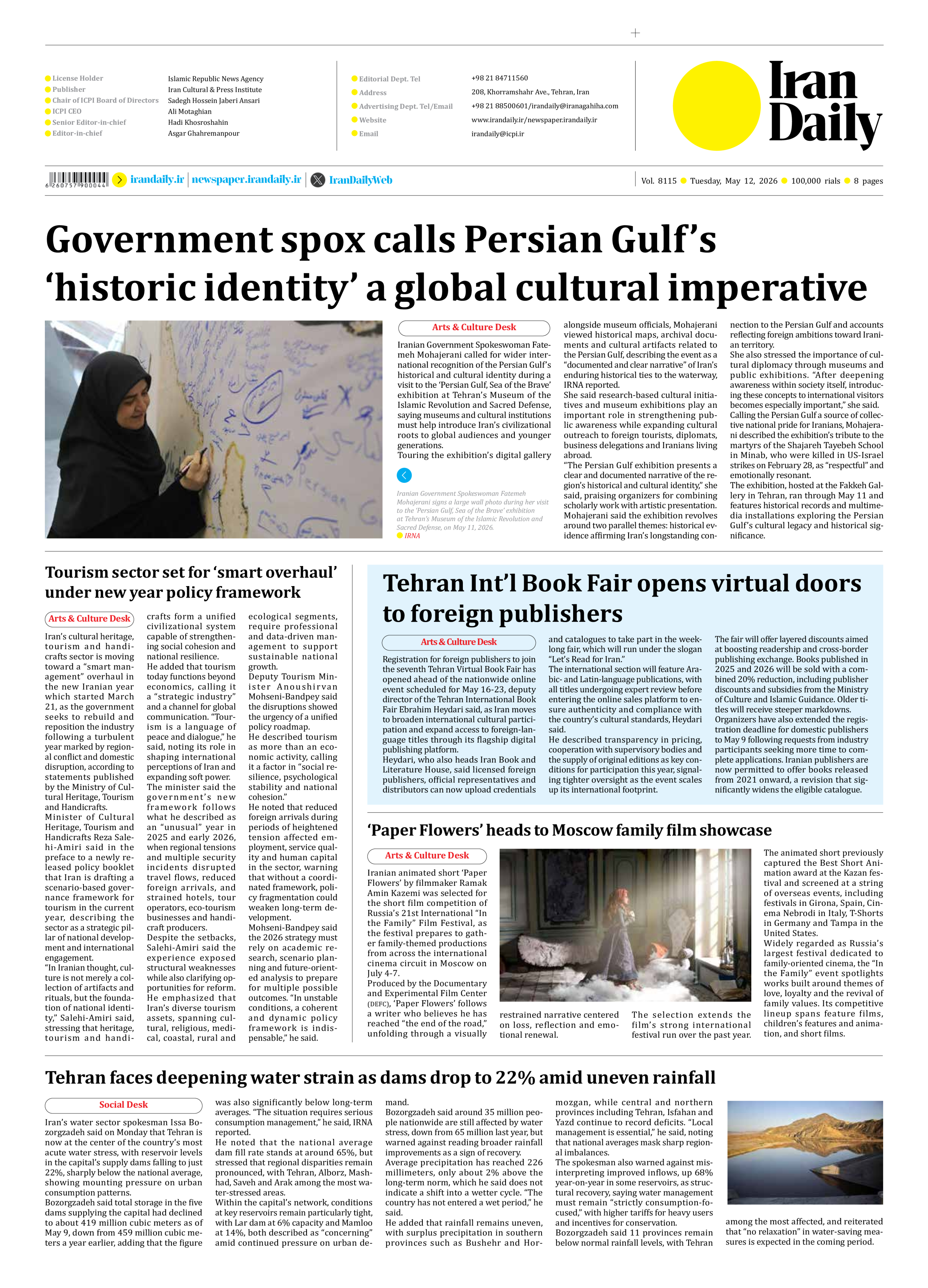
Iranian Government Spokeswoman Fatemeh Mohajerani called for wider international recognition of the Persian Gulf’s historical and cultural identity during a visit to the ‘Persian Gulf, Sea of the Brave’ exhibition at Tehran’s Museum of the Islamic Revolution and Sacred Defense, saying museums and cultural institutions must help introduce Iran’s civilizational roots to global audiences and younger generations.
Touring the exhibition’s digital gallery alongside museum officials, Mohajerani viewed historical maps, archival documents and cultural artifacts related to the Persian Gulf, describing the event as a “documented and clear narrative” of Iran’s enduring historical ties to the waterway, IRNA reported.
She said research-based cultural initiatives and museum exhibitions play an important role in strengthening public awareness while expanding cultural outreach to foreign tourists, diplomats, business delegations and Iranians living abroad.
“The Persian Gulf exhibition presents a clear and documented narrative of the region’s historical and cultural identity,” she said, praising organizers for combining scholarly work with artistic presentation.
Mohajerani said the exhibition revolves around two parallel themes: historical evidence affirming Iran’s longstanding connection to the Persian Gulf and accounts reflecting foreign ambitions toward Iranian territory.
She also stressed the importance of cultural diplomacy through museums and public exhibitions. “After deepening awareness within society itself, introducing these concepts to international visitors becomes especially important,” she said.
Calling the Persian Gulf a source of collective national pride for Iranians, Mohajerani described the exhibition’s tribute to the martyrs of the Shajareh Tayebeh School in Minab, who were killed in US-Israel strikes on February 28, as “respectful” and emotionally resonant.
The exhibition, hosted at the Fakkeh Gallery in Tehran, ran through May 11 and features historical records and multimedia installations exploring the Persian Gulf’s cultural legacy and historical significance.