







Iran maps out post-war tourism surge with hotels, airlines push
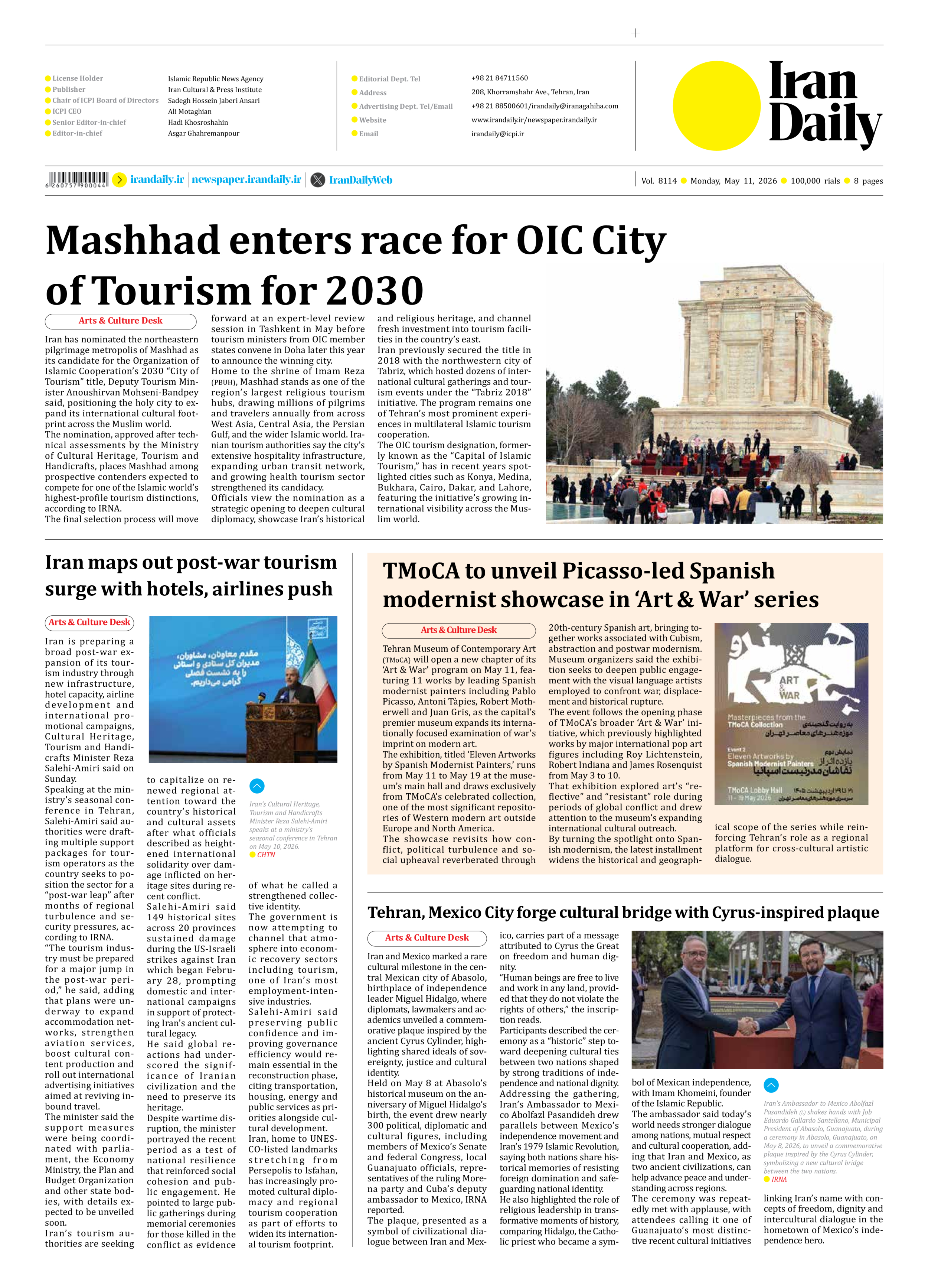
Iran is preparing a broad post-war expansion of its tourism industry through new infrastructure, hotel capacity, airline development and international promotional campaigns, Cultural Heritage, Tourism and Handicrafts Minister Reza Salehi-Amiri said on Sunday.
Speaking at the ministry’s seasonal conference in Tehran, Salehi-Amiri said authorities were drafting multiple support packages for tourism operators as the country seeks to position the sector for a “post-war leap” after months of regional turbulence and security pressures, according to IRNA.
“The tourism industry must be prepared for a major jump in the post-war period,” he said, adding that plans were underway to expand accommodation networks, strengthen aviation services, boost cultural content production and roll out international advertising initiatives aimed at reviving inbound travel.
The minister said the support measures were being coordinated with parliament, the Economy Ministry, the Plan and Budget Organization and other state bodies, with details expected to be unveiled soon.
Iran’s tourism authorities are seeking to capitalize on renewed regional attention toward the country’s historical and cultural assets after what officials described as heightened international solidarity over damage inflicted on heritage sites during recent conflict.
Salehi-Amiri said 149 historical sites across 20 provinces sustained damage during the US-Israeli strikes against Iran which began February 28, prompting domestic and international campaigns in support of protecting Iran’s ancient cultural legacy.
He said global reactions had underscored the significance of Iranian civilization and the need to preserve its heritage.
Despite wartime disruption, the minister portrayed the recent period as a test of national resilience that reinforced social cohesion and public engagement. He pointed to large public gatherings during memorial ceremonies for those killed in the conflict as evidence of what he called a strengthened collective identity.
The government is now attempting to channel that atmosphere into economic recovery sectors including tourism, one of Iran’s most employment-intensive industries.
Salehi-Amiri said preserving public confidence and improving governance efficiency would remain essential in the reconstruction phase, citing transportation, housing, energy and public services as priorities alongside cultural development.
Iran, home to UNESCO-listed landmarks stretching from Persepolis to Isfahan, has increasingly promoted cultural diplomacy and regional tourism cooperation as part of efforts to widen its international tourism footprint.