







Yazdi coffee; a ritual drink brewed in tradition, faith
In the historic fabric of Yazd, where many ancient rituals and traditions remain an active part of daily life, coffee is far more than an ordinary beverage. Yazdi coffee is considered an integral element of the city’s social and religious culture — a tradition that holds a special place in various ceremonies, particularly mourning rituals and traditional gatherings. Beyond hospitality, it functions as a form of collective cultural practice, often symbolizing respect, participation, and solidarity.
The tradition of coffee serving is most visible in the old districts of Yazd, such as Fahadan, Shah Abu’l-Qasem, and Chaharmenar, as well as in historic Husseiniyehs and Tekyehs across the city. During the lunar months of Muharram and Safar, especially in mourning ceremonies held to commemorate the martyrdom of Imam Hussein (PBUH) and his companions, the preparation and distribution of coffee form part of the hospitality arrangements. Those responsible for preparing it are usually experienced practitioners, and in some ceremonies, the process follows specific rituals and is carried out collectively.
Yazdi coffee differs from common types of coffee both in taste and preparation. It is typically made with a blend of coffee, cardamom, rock candy (nabat), and sometimes aromatic spices, resulting in a sweet and spicy flavor profile. Cardamom is one of its defining ingredients, and its aroma plays a central role in shaping the identity of the drink. The coffee is usually prepared in large pots and then served in small cups to guests.
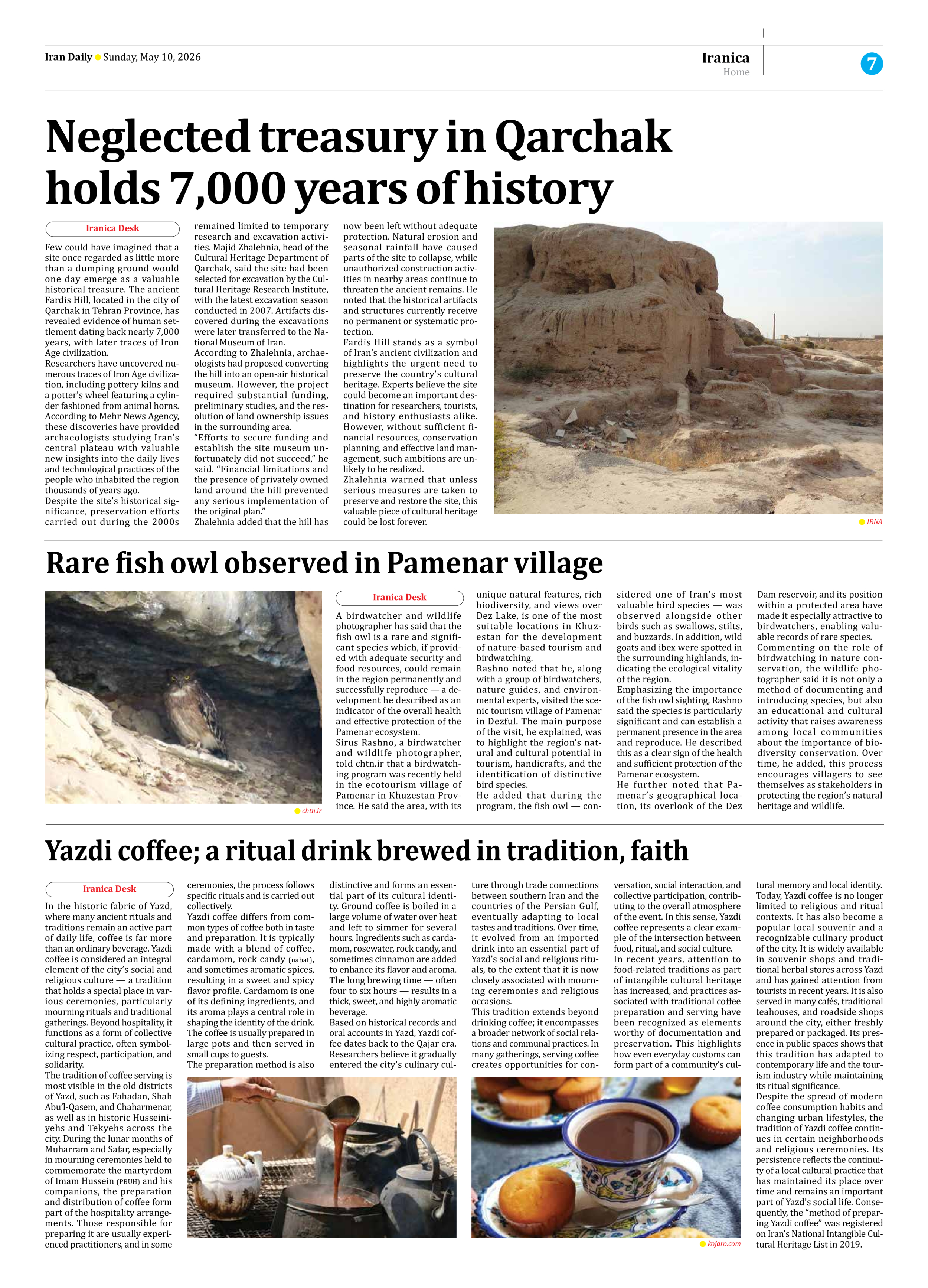
The preparation method is also distinctive and forms an essential part of its cultural identity. Ground coffee is boiled in a large volume of water over heat and left to simmer for several hours. Ingredients such as cardamom, rosewater, rock candy, and sometimes cinnamon are added to enhance its flavor and aroma. The long brewing time — often four to six hours — results in a thick, sweet, and highly aromatic beverage.
Based on historical records and oral accounts in Yazd, Yazdi coffee dates back to the Qajar era. Researchers believe it gradually entered the city’s culinary culture through trade connections between southern Iran and the countries of the Persian Gulf, eventually adapting to local tastes and traditions. Over time, it evolved from an imported drink into an essential part of Yazd’s social and religious rituals, to the extent that it is now closely associated with mourning ceremonies and religious occasions.
This tradition extends beyond drinking coffee; it encompasses a broader network of social relations and communal practices. In many gatherings, serving coffee creates opportunities for conversation, social interaction, and collective participation, contributing to the overall atmosphere of the event. In this sense, Yazdi coffee represents a clear example of the intersection between food, ritual, and social culture.
In recent years, attention to food-related traditions as part of intangible cultural heritage has increased, and practices associated with traditional coffee preparation and serving have been recognized as elements worthy of documentation and preservation. This highlights how even everyday customs can form part of a community’s cultural memory and local identity.
Today, Yazdi coffee is no longer limited to religious and ritual contexts. It has also become a popular local souvenir and a recognizable culinary product of the city. It is widely available in souvenir shops and traditional herbal stores across Yazd and has gained attention from tourists in recent years. It is also served in many cafés, traditional teahouses, and roadside shops around the city, either freshly prepared or packaged. Its presence in public spaces shows that this tradition has adapted to contemporary life and the tourism industry while maintaining its ritual significance.
Despite the spread of modern coffee consumption habits and changing urban lifestyles, the tradition of Yazdi coffee continues in certain neighborhoods and religious ceremonies. Its persistence reflects the continuity of a local cultural practice that has maintained its place over time and remains an important part of Yazd’s social life. Consequently, the “method of preparing Yazdi coffee” was registered on Iran’s National Intangible Cultural Heritage List in 2019.