







Neglected treasury in Qarchak holds 7,000 years of history
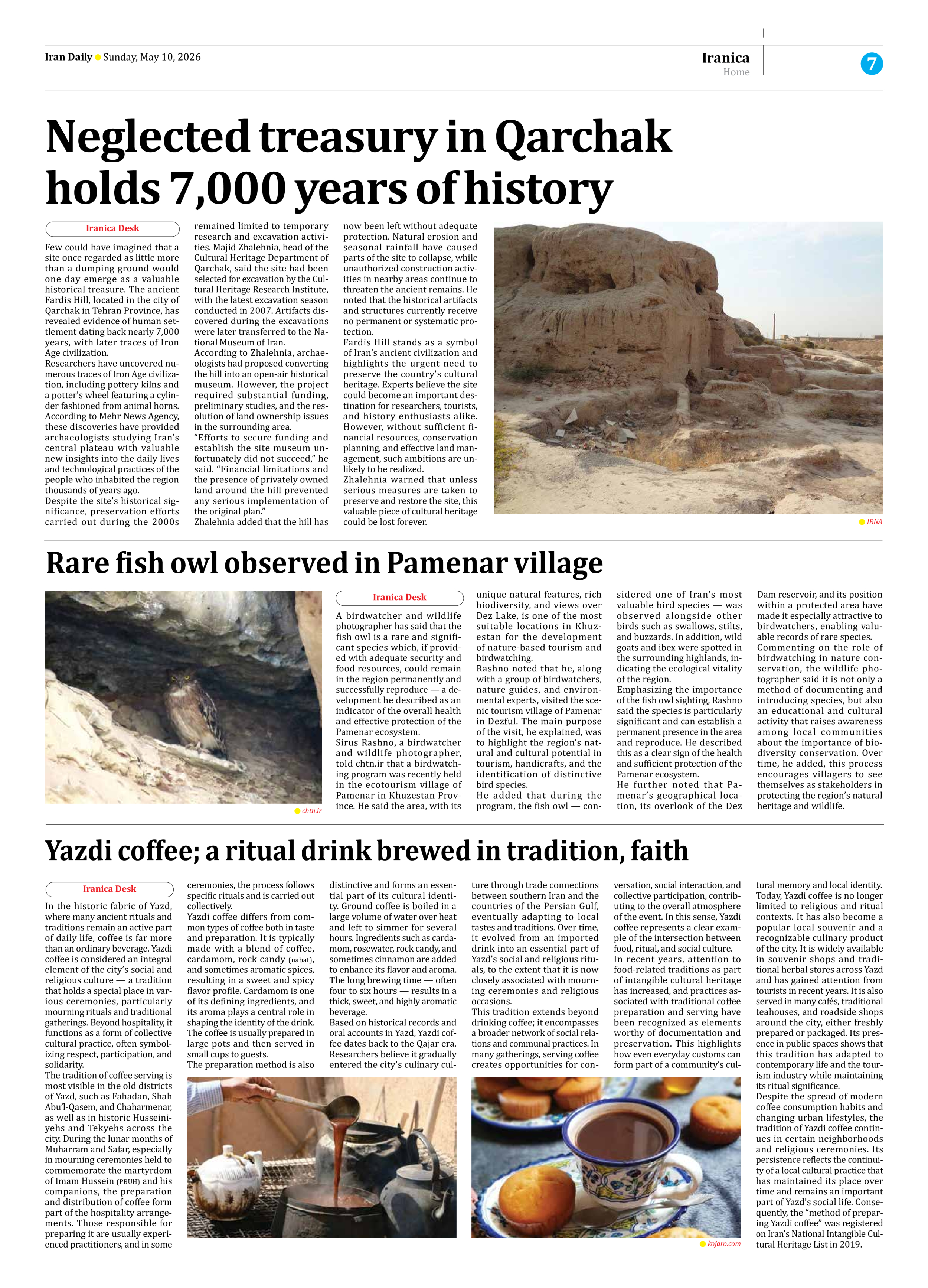
Few could have imagined that a site once regarded as little more than a dumping ground would one day emerge as a valuable historical treasure. The ancient Fardis Hill, located in the city of Qarchak in Tehran Province, has revealed evidence of human settlement dating back nearly 7,000 years, with later traces of Iron Age civilization.
Researchers have uncovered numerous traces of Iron Age civilization, including pottery kilns and a potter’s wheel featuring a cylinder fashioned from animal horns.
According to Mehr News Agency, these discoveries have provided archaeologists studying Iran’s central plateau with valuable new insights into the daily lives and technological practices of the people who inhabited the region thousands of years ago.
Despite the site’s historical significance, preservation efforts carried out during the 2000s remained limited to temporary research and excavation activities. Majid Zhalehnia, head of the Cultural Heritage Department of Qarchak, said the site had been selected for excavation by the Cultural Heritage Research Institute, with the latest excavation season conducted in 2007. Artifacts discovered during the excavations were later transferred to the National Museum of Iran.
According to Zhalehnia, archaeologists had proposed converting the hill into an open-air historical museum. However, the project required substantial funding, preliminary studies, and the resolution of land ownership issues in the surrounding area.
“Efforts to secure funding and establish the site museum unfortunately did not succeed,” he said. “Financial limitations and the presence of privately owned land around the hill prevented any serious implementation of the original plan.”
Zhalehnia added that the hill has now been left without adequate protection. Natural erosion and seasonal rainfall have caused parts of the site to collapse, while unauthorized construction activities in nearby areas continue to threaten the ancient remains. He noted that the historical artifacts and structures currently receive no permanent or systematic protection.
Fardis Hill stands as a symbol of Iran’s ancient civilization and highlights the urgent need to preserve the country’s cultural heritage. Experts believe the site could become an important destination for researchers, tourists, and history enthusiasts alike. However, without sufficient financial resources, conservation planning, and effective land management, such ambitions are unlikely to be realized.
Zhalehnia warned that unless serious measures are taken to preserve and restore the site, this valuable piece of cultural heritage could be lost forever.