







US-Israeli war inflicts ‘$335m direct damage’ on IT sector
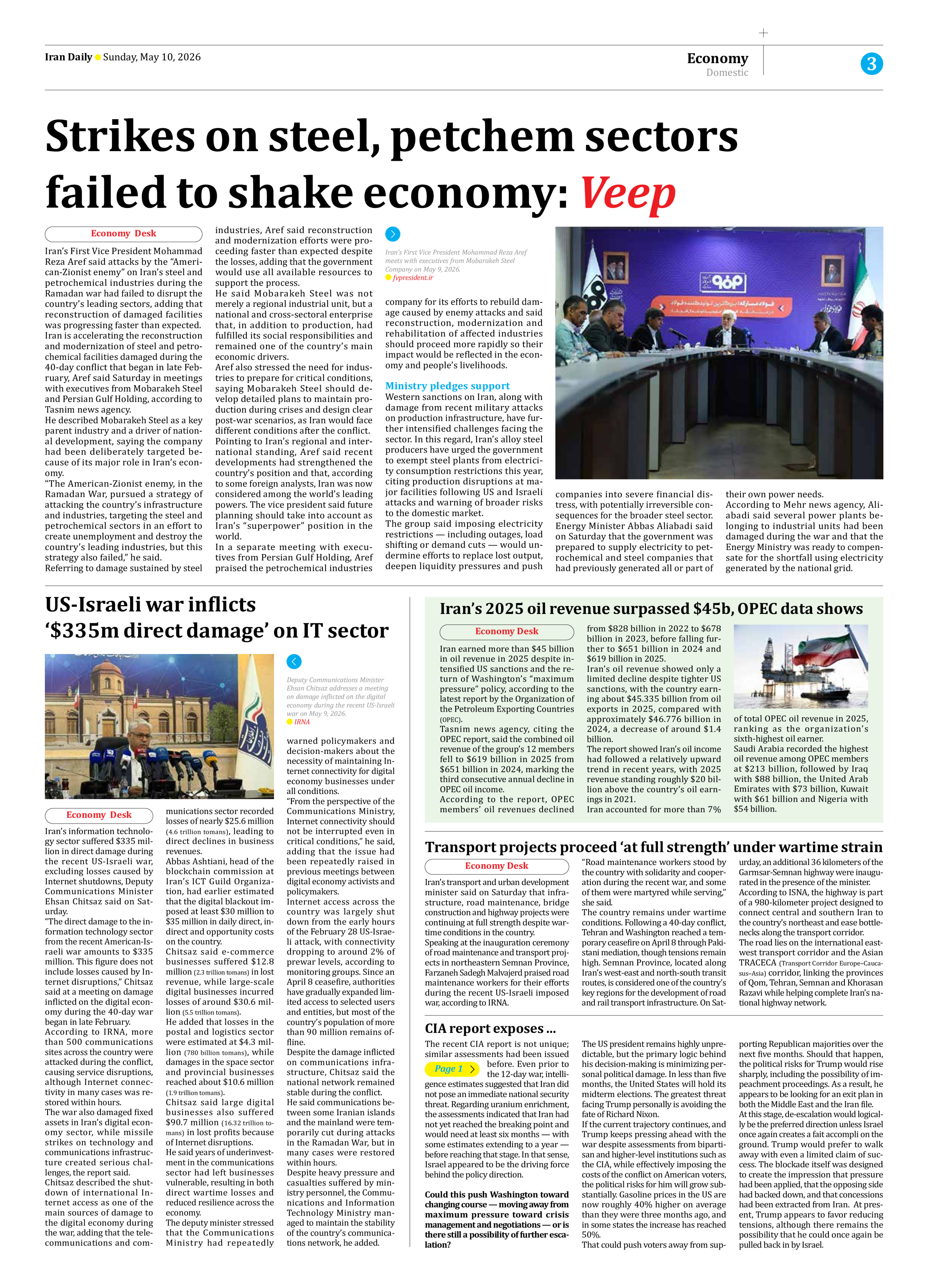
Iran’s information technology sector suffered $335 million in direct damage during the recent US-Israeli war, excluding losses caused by Internet shutdowns, Deputy Communications Minister Ehsan Chitsaz said on Saturday.
“The direct damage to the information technology sector from the recent American-Israeli war amounts to $335 million. This figure does not include losses caused by Internet disruptions,” Chitsaz said at a meeting on damage inflicted on the digital economy during the 40-day war began in late February.
According to IRNA, more than 500 communications sites across the country were attacked during the conflict, causing service disruptions, although Internet connectivity in many cases was restored within hours.
The war also damaged fixed assets in Iran’s digital economy sector, while missile strikes on technology and communications infrastructure created serious challenges, the report said.
Chitsaz described the shutdown of international Internet access as one of the main sources of damage to the digital economy during the war, adding that the telecommunications and communications sector recorded losses of nearly $25.6 million (4.6 trillion tomans), leading to direct declines in business revenues.
Abbas Ashtiani, head of the blockchain commission at Iran’s ICT Guild Organization, had earlier estimated that the digital blackout imposed at least $30 million to $35 million in daily direct, indirect and opportunity costs on the country.
Chitsaz said e-commerce businesses suffered $12.8 million (2.3 trillion tomans) in lost revenue, while large-scale digital businesses incurred losses of around $30.6 million (5.5 trillion tomans).
He added that losses in the postal and logistics sector were estimated at $4.3 million (780 billion tomans), while damages in the space sector and provincial businesses reached about $10.6 million (1.9 trillion tomans).
Chitsaz said large digital businesses also suffered $90.7 million (16.32 trillion tomans) in lost profits because of Internet disruptions.
He said years of underinvestment in the communications sector had left businesses vulnerable, resulting in both direct wartime losses and reduced resilience across the economy.
The deputy minister stressed that the Communications Ministry had repeatedly warned policymakers and decision-makers about the necessity of maintaining Internet connectivity for digital economy businesses under all conditions.
“From the perspective of the Communications Ministry, Internet connectivity should not be interrupted even in critical conditions,” he said, adding that the issue had been repeatedly raised in previous meetings between digital economy activists and policymakers.
Internet access across the country was largely shut down from the early hours of the February 28 US-Israeli attack, with connectivity dropping to around 2% of prewar levels, according to monitoring groups. Since an April 8 ceasefire, authorities have gradually expanded limited access to selected users and entities, but most of the country’s population of more than 90 million remains offline.
Despite the damage inflicted on communications infrastructure, Chitsaz said the national network remained stable during the conflict.
He said communications between some Iranian islands and the mainland were temporarily cut during attacks in the Ramadan War, but in many cases were restored within hours.
Despite heavy pressure and casualties suffered by ministry personnel, the Communications and Information Technology Ministry managed to maintain the stability of the country’s communications network, he added.