







Strikes on steel, petchem sectors failed to shake economy: Veep
Iran’s First Vice President Mohammad Reza Aref said attacks by the “American-Zionist enemy” on Iran’s steel and petrochemical industries during the Ramadan war had failed to disrupt the country’s leading sectors, adding that reconstruction of damaged facilities was progressing faster than expected.
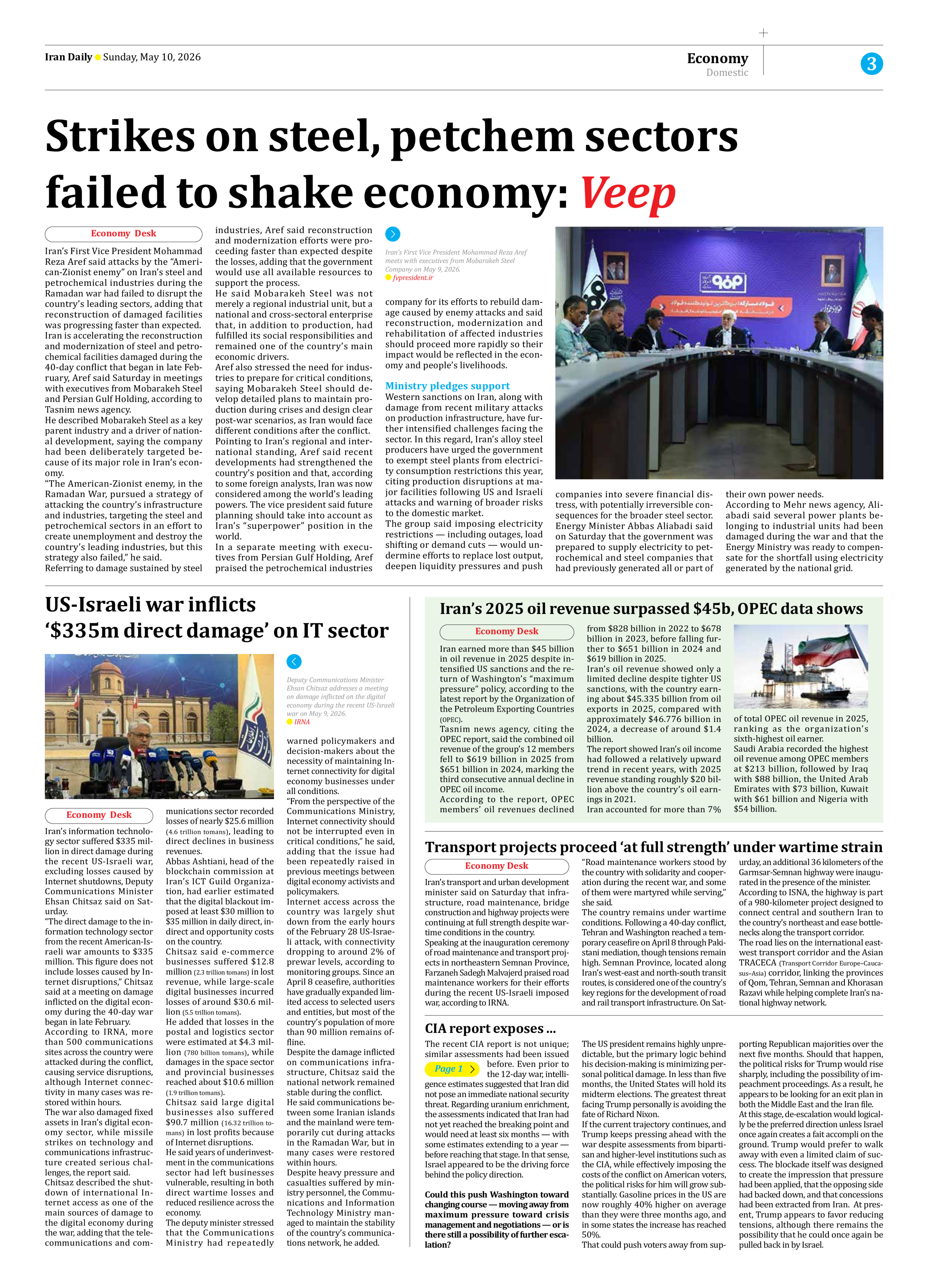
Iran is accelerating the reconstruction and modernization of steel and petrochemical facilities damaged during the 40-day conflict that began in late February, Aref said Saturday in meetings with executives from Mobarakeh Steel and Persian Gulf Holding, according to Tasnim news agency.
He described Mobarakeh Steel as a key parent industry and a driver of national development, saying the company had been deliberately targeted because of its major role in Iran’s economy.
“The American-Zionist enemy, in the Ramadan War, pursued a strategy of attacking the country’s infrastructure and industries, targeting the steel and petrochemical sectors in an effort to create unemployment and destroy the country’s leading industries, but this strategy also failed,” he said.
Referring to damage sustained by steel industries, Aref said reconstruction and modernization efforts were proceeding faster than expected despite the losses, adding that the government would use all available resources to support the process.
He said Mobarakeh Steel was not merely a regional industrial unit, but a national and cross-sectoral enterprise that, in addition to production, had fulfilled its social responsibilities and remained one of the country’s main economic drivers.
Aref also stressed the need for industries to prepare for critical conditions, saying Mobarakeh Steel should develop detailed plans to maintain production during crises and design clear post-war scenarios, as Iran would face different conditions after the conflict.
Pointing to Iran’s regional and international standing, Aref said recent developments had strengthened the country’s position and that, according to some foreign analysts, Iran was now considered among the world’s leading powers. The vice president said future planning should take into account as Iran’s “superpower” position in the world.
In a separate meeting with executives from Persian Gulf Holding, Aref praised the petrochemical industries company for its efforts to rebuild damage caused by enemy attacks and said reconstruction, modernization and rehabilitation of affected industries should proceed more rapidly so their impact would be reflected in the economy and people’s livelihoods.
Ministry pledges support
Western sanctions on Iran, along with damage from recent military attacks on production infrastructure, have further intensified challenges facing the sector. In this regard, Iran’s alloy steel producers have urged the government to exempt steel plants from electricity consumption restrictions this year, citing production disruptions at major facilities following US and Israeli attacks and warning of broader risks to the domestic market.
The group said imposing electricity restrictions — including outages, load shifting or demand cuts — would undermine efforts to replace lost output, deepen liquidity pressures and push companies into severe financial distress, with potentially irreversible consequences for the broader steel sector.
Energy Minister Abbas Aliabadi said on Saturday that the government was prepared to supply electricity to petrochemical and steel companies that had previously generated all or part of their own power needs.
According to Mehr news agency, Aliabadi said several power plants belonging to industrial units had been damaged during the war and that the Energy Ministry was ready to compensate for the shortfall using electricity generated by the national grid.