







Gisum emerging as ecotourism model in northern Iran
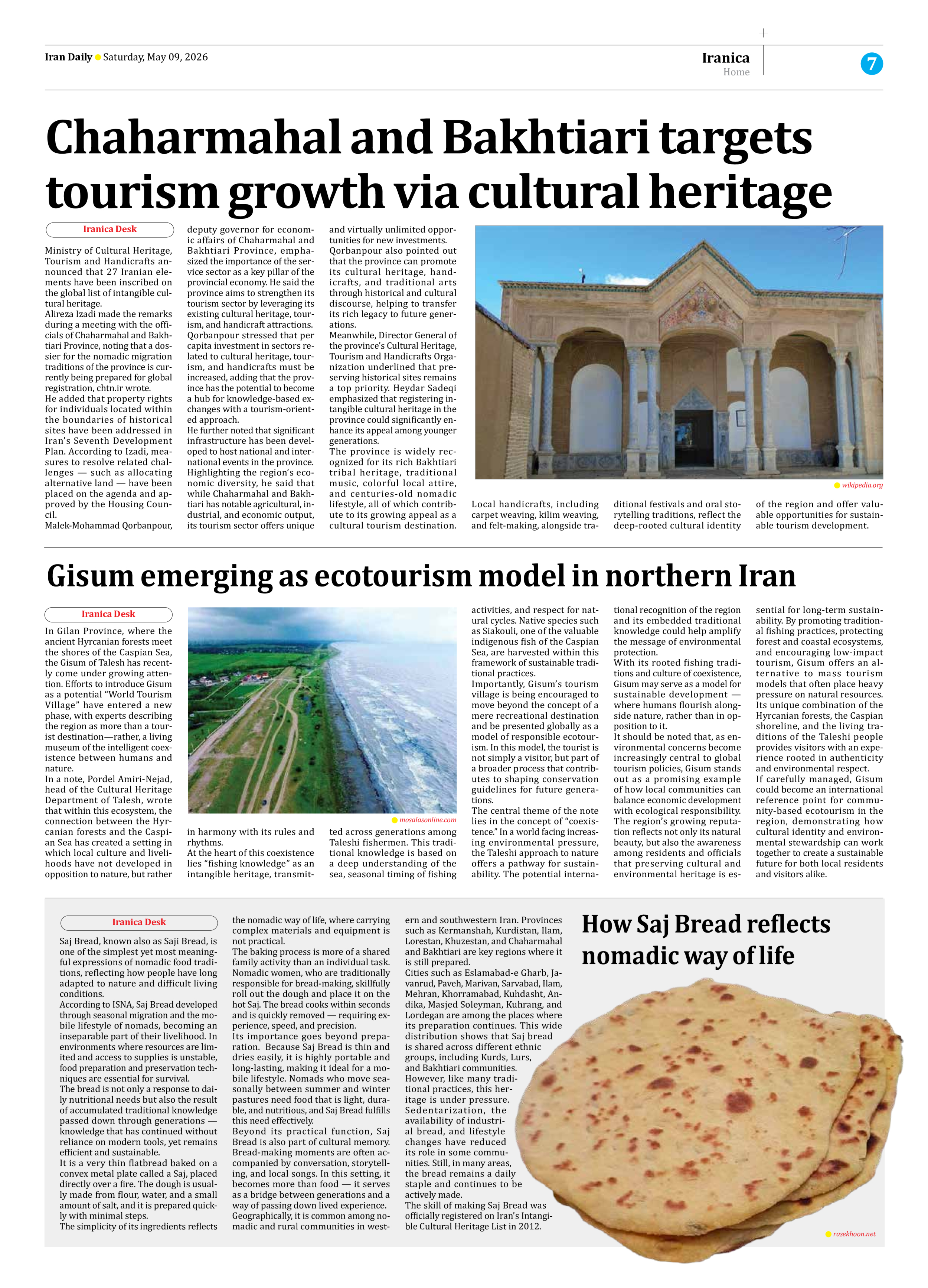
In Gilan Province, where the ancient Hyrcanian forests meet the shores of the Caspian Sea, the Gisum of Talesh has recently come under growing attention. Efforts to introduce Gisum as a potential “World Tourism Village” have entered a new phase, with experts describing the region as more than a tourist destination—rather, a living museum of the intelligent coexistence between humans and nature.
In a note, Pordel Amiri-Nejad, head of the Cultural Heritage Department of Talesh, wrote that within this ecosystem, the connection between the Hyrcanian forests and the Caspian Sea has created a setting in which local culture and livelihoods have not developed in opposition to nature, but rather in harmony with its rules and rhythms.
At the heart of this coexistence lies “fishing knowledge” as an intangible heritage, transmitted across generations among Taleshi fishermen. This traditional knowledge is based on a deep understanding of the sea, seasonal timing of fishing activities, and respect for natural cycles. Native species such as Siakouli, one of the valuable indigenous fish of the Caspian Sea, are harvested within this framework of sustainable traditional practices.
Importantly, Gisum’s tourism village is being encouraged to move beyond the concept of a mere recreational destination and be presented globally as a model of responsible ecotourism. In this model, the tourist is not simply a visitor, but part of a broader process that contributes to shaping conservation guidelines for future generations.
The central theme of the note lies in the concept of “coexistence.” In a world facing increasing environmental pressure, the Taleshi approach to nature offers a pathway for sustainability. The potential international recognition of the region and its embedded traditional knowledge could help amplify the message of environmental protection.
With its rooted fishing traditions and culture of coexistence, Gisum may serve as a model for sustainable development — where humans flourish alongside nature, rather than in opposition to it.
It should be noted that, as environmental concerns become increasingly central to global tourism policies, Gisum stands out as a promising example of how local communities can balance economic development with ecological responsibility. The region’s growing reputation reflects not only its natural beauty, but also the awareness among residents and officials that preserving cultural and environmental heritage is essential for long-term sustainability. By promoting traditional fishing practices, protecting forest and coastal ecosystems, and encouraging low-impact tourism, Gisum offers an alternative to mass tourism models that often place heavy pressure on natural resources. Its unique combination of the Hyrcanian forests, the Caspian shoreline, and the living traditions of the Taleshi people provides visitors with an experience rooted in authenticity and environmental respect.
If carefully managed, Gisum could become an international reference point for community-based ecotourism in the region, demonstrating how cultural identity and environmental stewardship can work together to create a sustainable future for both local residents and visitors alike.