







Copy in clipboard...
Screens fill again in Tehran as cinema represents post-conflict social outlet
Iran’s cinema sector is “gradually returning to normal life” following wartime disruptions, the head of the Cinema Organization of Iran said Wednesday after senior cultural officials toured a damaged Tehran movie complex, marking efforts to revive public entertainment and social cohesion.
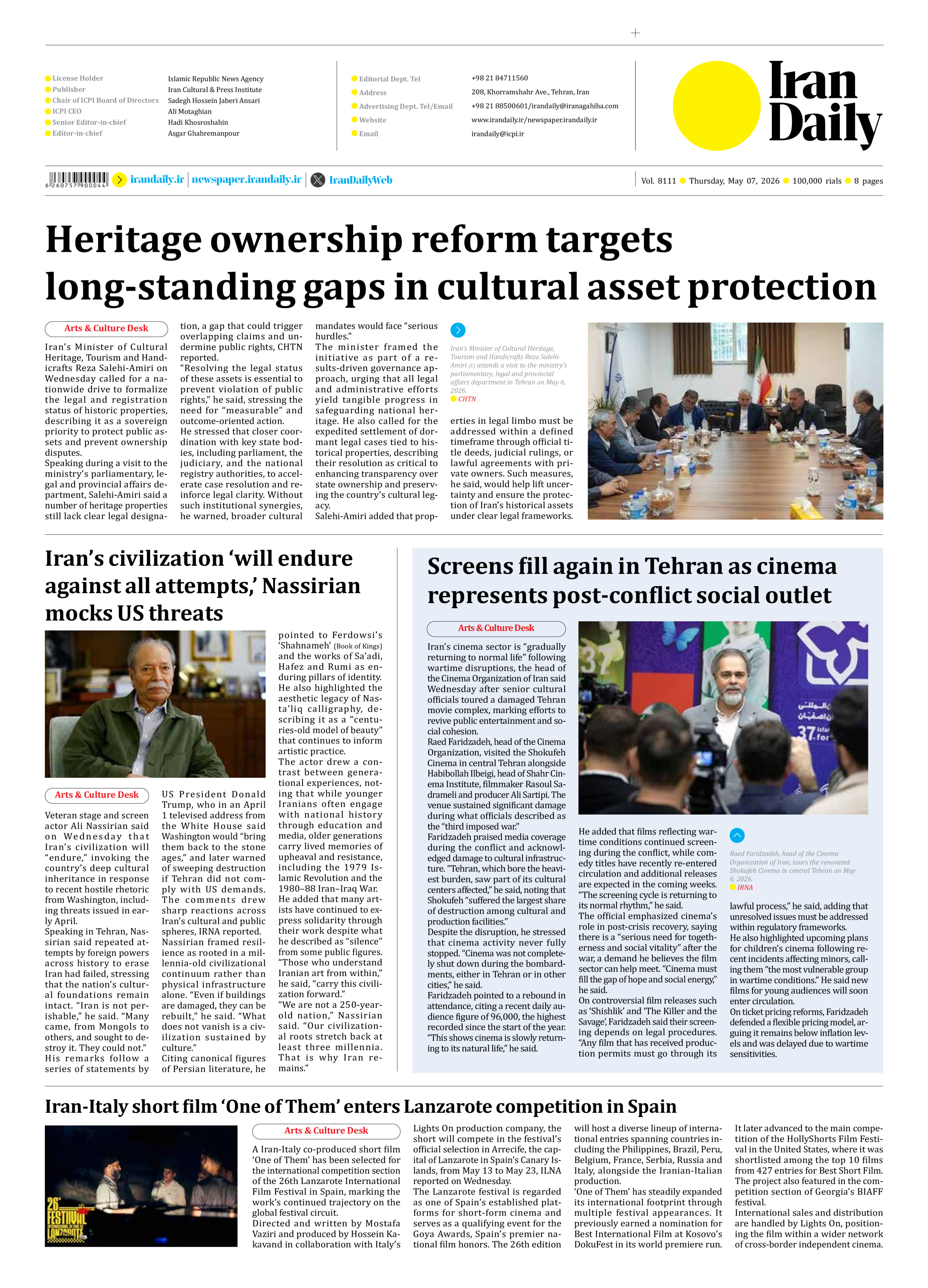
Raed Faridzadeh, head of the Cinema Organization, visited the Shokufeh Cinema in central Tehran alongside Habibollah Ilbeigi, head of Shahr Cinema Institute, filmmaker Rasoul Sadrameli and producer Ali Sartipi. The venue sustained significant damage during what officials described as the “third imposed war.”
Faridzadeh praised media coverage during the conflict and acknowledged damage to cultural infrastructure. “Tehran, which bore the heaviest burden, saw part of its cultural centers affected,” he said, noting that Shokufeh “suffered the largest share of destruction among cultural and production facilities.”
Despite the disruption, he stressed that cinema activity never fully stopped. “Cinema was not completely shut down during the bombardments, either in Tehran or in other cities,” he said.
Faridzadeh pointed to a rebound in attendance, citing a recent daily audience figure of 96,000, the highest recorded since the start of the year. “This shows cinema is slowly returning to its natural life,” he said.
He added that films reflecting wartime conditions continued screening during the conflict, while comedy titles have recently re-entered circulation and additional releases are expected in the coming weeks. “The screening cycle is returning to its normal rhythm,” he said.
The official emphasized cinema’s role in post-crisis recovery, saying there is a “serious need for togetherness and social vitality” after the war, a demand he believes the film sector can help meet. “Cinema must fill the gap of hope and social energy,” he said.
On controversial film releases such as ‘Shishlik’ and ‘The Killer and the Savage’, Faridzadeh said their screening depends on legal procedures. “Any film that has received production permits must go through its lawful process,” he said, adding that unresolved issues must be addressed within regulatory frameworks.
He also highlighted upcoming plans for children’s cinema following recent incidents affecting minors, calling them “the most vulnerable group in wartime conditions.” He said new films for young audiences will soon enter circulation.
On ticket pricing reforms, Faridzadeh defended a flexible pricing model, arguing it remains below inflation levels and was delayed due to wartime sensitivities.