







Heritage ownership reform targets long-standing gaps in cultural asset protection
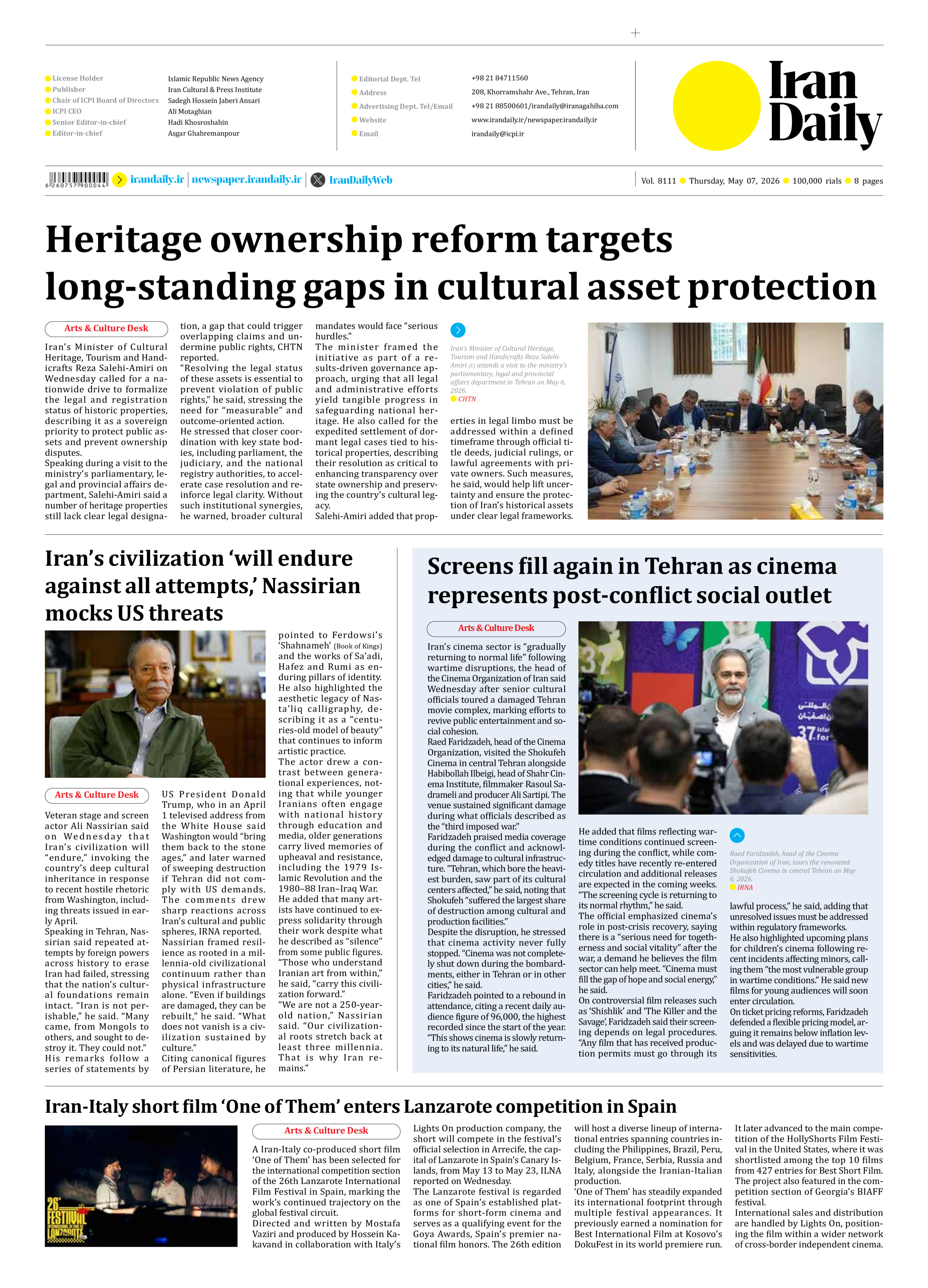
Iran’s Minister of Cultural Heritage, Tourism and Handicrafts Reza Salehi-Amiri on Wednesday called for a nationwide drive to formalize the legal and registration status of historic properties, describing it as a sovereign priority to protect public assets and prevent ownership disputes.
Speaking during a visit to the ministry’s parliamentary, legal and provincial affairs department, Salehi-Amiri said a number of heritage properties still lack clear legal designation, a gap that could trigger overlapping claims and undermine public rights, CHTN reported.
“Resolving the legal status of these assets is essential to prevent violation of public rights,” he said, stressing the need for “measurable” and outcome-oriented action.
He stressed that closer coordination with key state bodies, including parliament, the judiciary, and the national registry authorities, to accelerate case resolution and reinforce legal clarity. Without such institutional synergies, he warned, broader cultural mandates would face “serious hurdles.”
The minister framed the initiative as part of a results-driven governance approach, urging that all legal and administrative efforts yield tangible progress in safeguarding national heritage. He also called for the expedited settlement of dormant legal cases tied to historical properties, describing their resolution as critical to enhancing transparency over state ownership and preserving the country’s cultural legacy.
Salehi-Amiri added that properties in legal limbo must be addressed within a defined timeframe through official title deeds, judicial rulings, or lawful agreements with private owners. Such measures, he said, would help lift uncertainty and ensure the protection of Iran’s historical assets under clear legal frameworks.