







Ministry backs concert comeback, holds off on ticket price rise
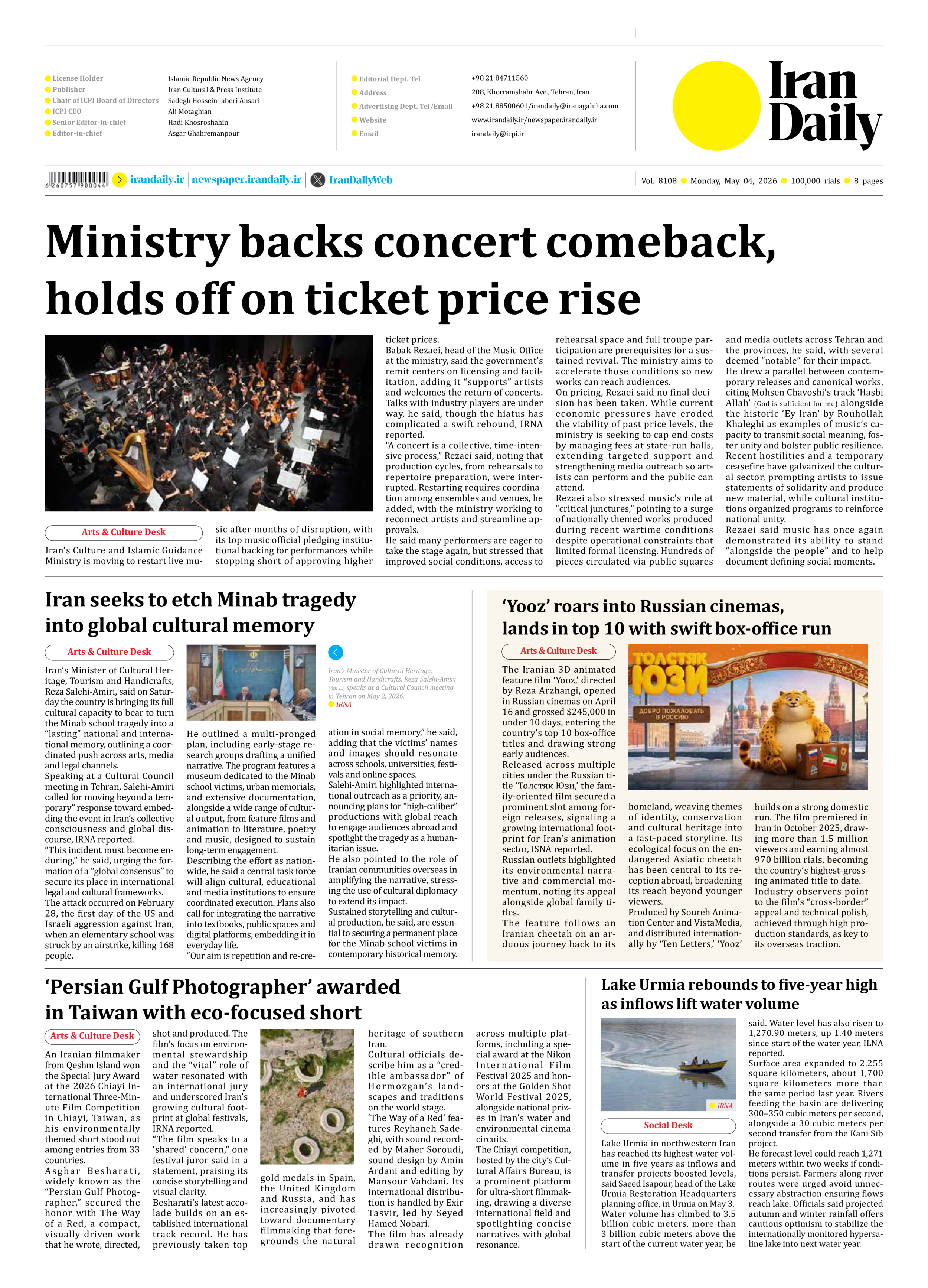
Iran’s Culture and Islamic Guidance Ministry is moving to restart live music after months of disruption, with its top music official pledging institutional backing for performances while stopping short of approving higher ticket prices.
Babak Rezaei, head of the Music Office at the ministry, said the government’s remit centers on licensing and facilitation, adding it “supports” artists and welcomes the return of concerts. Talks with industry players are under way, he said, though the hiatus has complicated a swift rebound, IRNA reported.
“A concert is a collective, time-intensive process,” Rezaei said, noting that production cycles, from rehearsals to repertoire preparation, were interrupted. Restarting requires coordination among ensembles and venues, he added, with the ministry working to reconnect artists and streamline approvals.
He said many performers are eager to take the stage again, but stressed that improved social conditions, access to rehearsal space and full troupe participation are prerequisites for a sustained revival. The ministry aims to accelerate those conditions so new works can reach audiences.
On pricing, Rezaei said no final decision has been taken. While current economic pressures have eroded the viability of past price levels, the ministry is seeking to cap end costs by managing fees at state-run halls, extending targeted support and strengthening media outreach so artists can perform and the public can attend.
Rezaei also stressed music’s role at “critical junctures,” pointing to a surge of nationally themed works produced during recent wartime conditions despite operational constraints that limited formal licensing. Hundreds of pieces circulated via public squares and media outlets across Tehran and the provinces, he said, with several deemed “notable” for their impact.
He drew a parallel between contemporary releases and canonical works, citing Mohsen Chavoshi’s track ‘Hasbi Allah’ (God is sufficient for me) alongside the historic ‘Ey Iran’ by Rouhollah Khaleghi as examples of music’s capacity to transmit social meaning, foster unity and bolster public resilience.
Recent hostilities and a temporary ceasefire have galvanized the cultural sector, prompting artists to issue statements of solidarity and produce new material, while cultural institutions organized programs to reinforce national unity.
Rezaei said music has once again demonstrated its ability to stand “alongside the people” and to help document defining social moments.