







Scores of ships brave US blockade in Strait of Hormuz, data shows
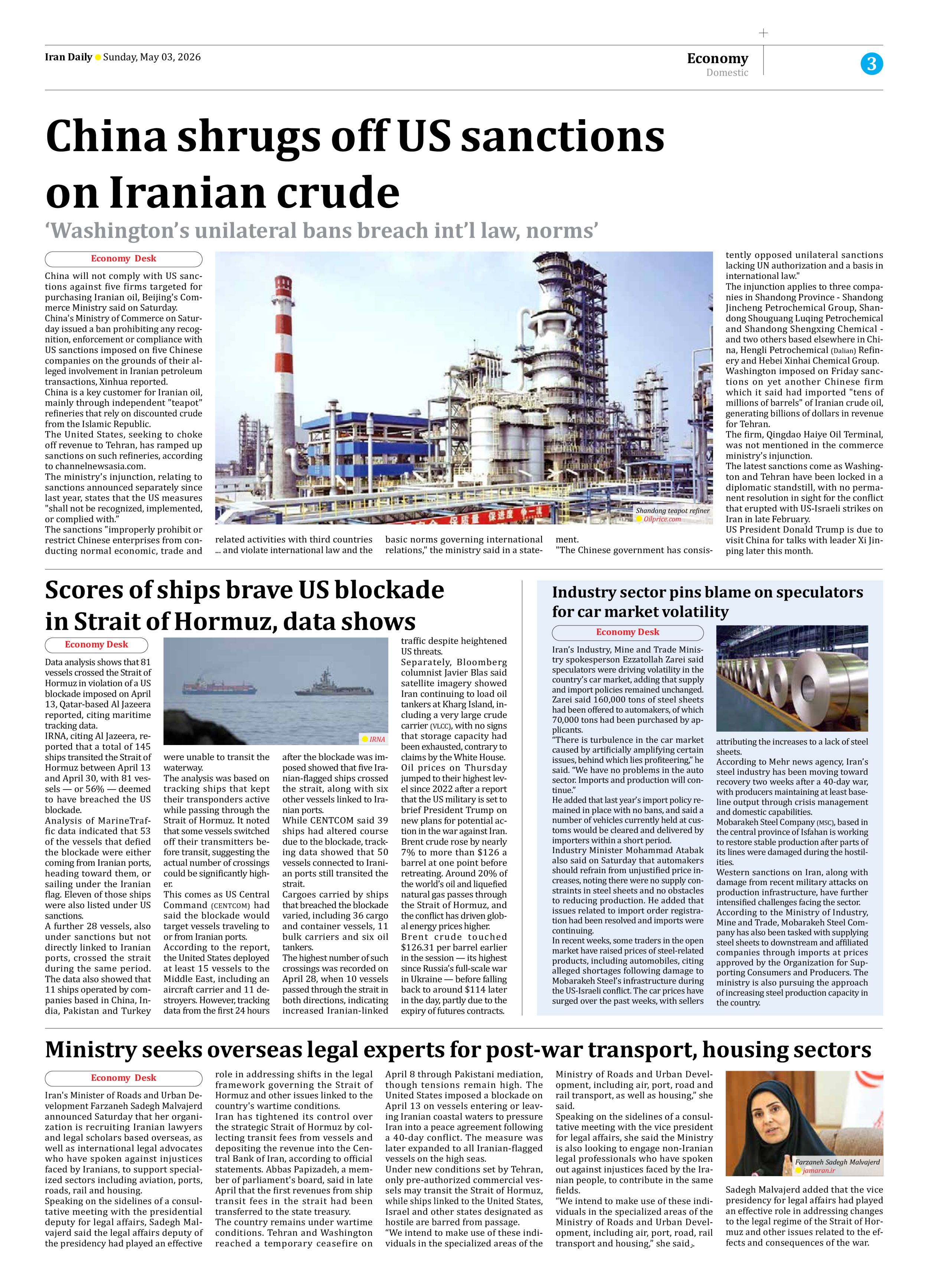
Data analysis shows that 81 vessels crossed the Strait of Hormuz in violation of a US blockade imposed on April 13, Qatar-based Al Jazeera reported, citing maritime tracking data.
IRNA, citing Al Jazeera, reported that a total of 145 ships transited the Strait of Hormuz between April 13 and April 30, with 81 vessels — or 56% — deemed to have breached the US blockade.
Analysis of MarineTraffic data indicated that 53 of the vessels that defied the blockade were either coming from Iranian ports, heading toward them, or sailing under the Iranian flag. Eleven of those ships were also listed under US sanctions.
A further 28 vessels, also under sanctions but not directly linked to Iranian ports, crossed the strait during the same period. The data also showed that 11 ships operated by companies based in China, India, Pakistan and Turkey were unable to transit the waterway.
The analysis was based on tracking ships that kept their transponders active while passing through the Strait of Hormuz. It noted that some vessels switched off their transmitters before transit, suggesting the actual number of crossings could be significantly higher.
This comes as US Central Command (CENTCOM) had said the blockade would target vessels traveling to or from Iranian ports.
According to the report, the United States deployed at least 15 vessels to the Middle East, including an aircraft carrier and 11 destroyers. However, tracking data from the first 24 hours after the blockade was imposed showed that five Iranian-flagged ships crossed the strait, along with six other vessels linked to Iranian ports.
While CENTCOM said 39 ships had altered course due to the blockade, tracking data showed that 50 vessels connected to Iranian ports still transited the strait.
Cargoes carried by ships that breached the blockade varied, including 36 cargo and container vessels, 11 bulk carriers and six oil tankers.
The highest number of such crossings was recorded on April 28, when 10 vessels passed through the strait in both directions, indicating increased Iranian-linked traffic despite heightened US threats.
Separately, Bloomberg columnist Javier Blas said satellite imagery showed Iran continuing to load oil tankers at Kharg Island, including a very large crude carrier (VLCC), with no signs that storage capacity had been exhausted, contrary to claims by the White House.
Oil prices on Thursday jumped to their highest level since 2022 after a report that the US military is set to brief President Trump on new plans for potential action in the war against Iran.
Brent crude rose by nearly 7% to more than $126 a barrel at one point before retreating. Around 20% of the world’s oil and liquefied natural gas passes through the Strait of Hormuz, and the conflict has driven global energy prices higher.
Brent crude touched $126.31 per barrel earlier in the session — its highest since Russia’s full-scale war in Ukraine — before falling back to around $114 later in the day, partly due to the expiry of futures contracts.