







Rural tourism emerges as growth driver in Khorasan Razavi
Although Khorasan Razavi Province is widely recognized as Iran’s leading tourism hub due to hosting millions of pilgrims and tourists and enjoying a prominent religious and historical status, a significant portion of its pristine treasures remains hidden within the serenity of nature and the authenticity of rural life.
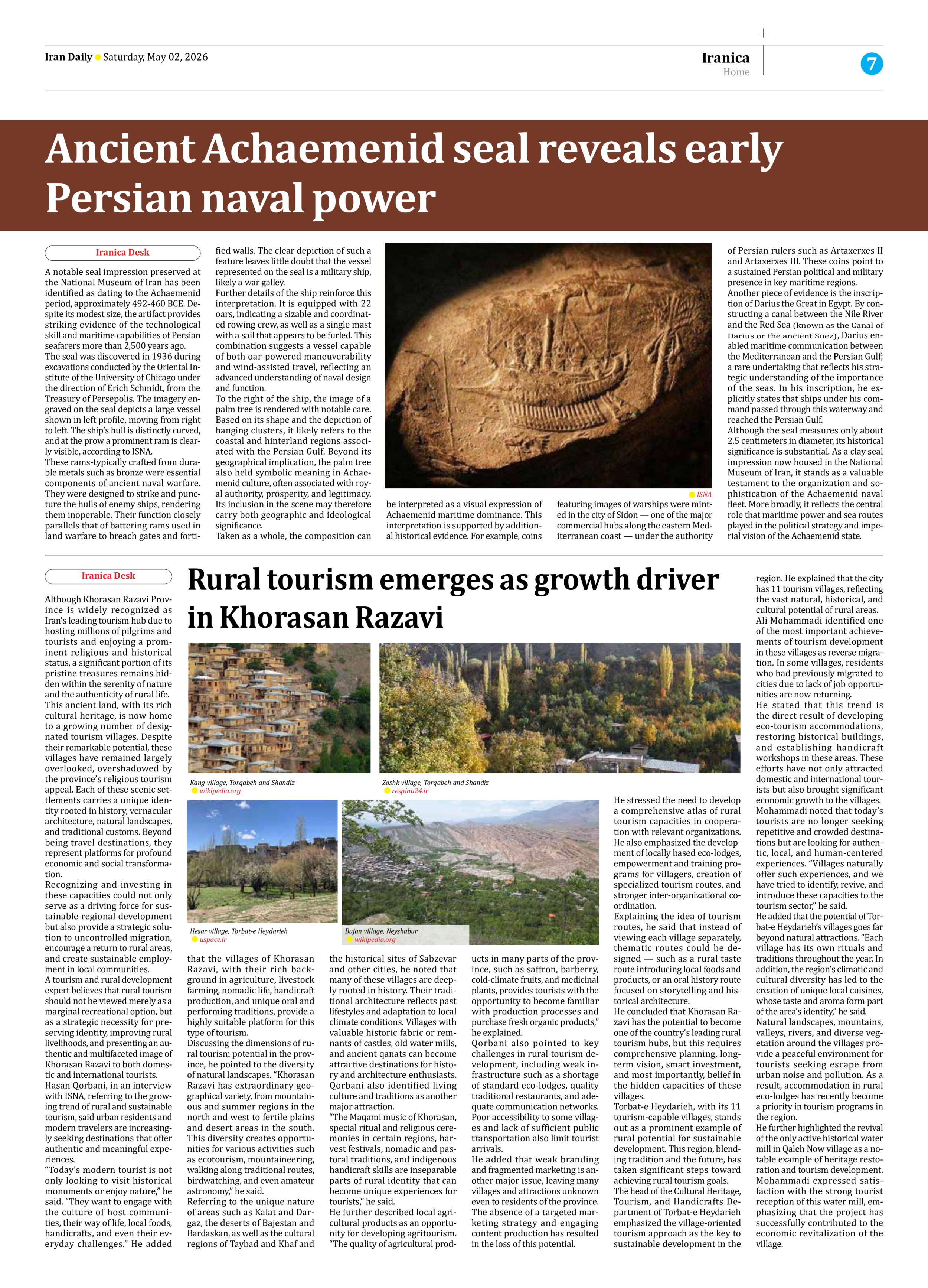
This ancient land, with its rich cultural heritage, is now home to a growing number of designated tourism villages. Despite their remarkable potential, these villages have remained largely overlooked, overshadowed by the province’s religious tourism appeal. Each of these scenic settlements carries a unique identity rooted in history, vernacular architecture, natural landscapes, and traditional customs. Beyond being travel destinations, they represent platforms for profound economic and social transformation.
Recognizing and investing in these capacities could not only serve as a driving force for sustainable regional development but also provide a strategic solution to uncontrolled migration, encourage a return to rural areas, and create sustainable employment in local communities.
A tourism and rural development expert believes that rural tourism should not be viewed merely as a marginal recreational option, but as a strategic necessity for preserving identity, improving rural livelihoods, and presenting an authentic and multifaceted image of Khorasan Razavi to both domestic and international tourists.
Hasan Qorbani, in an interview with ISNA, referring to the growing trend of rural and sustainable tourism, said urban residents and modern travelers are increasingly seeking destinations that offer authentic and meaningful experiences.
“Today’s modern tourist is not only looking to visit historical monuments or enjoy nature,” he said. “They want to engage with the culture of host communities, their way of life, local foods, handicrafts, and even their everyday challenges.” He added that the villages of Khorasan Razavi, with their rich background in agriculture, livestock farming, nomadic life, handicraft production, and unique oral and performing traditions, provide a highly suitable platform for this type of tourism.
Discussing the dimensions of rural tourism potential in the province, he pointed to the diversity of natural landscapes. “Khorasan Razavi has extraordinary geographical variety, from mountainous and summer regions in the north and west to fertile plains and desert areas in the south. This diversity creates opportunities for various activities such as ecotourism, mountaineering, walking along traditional routes, birdwatching, and even amateur astronomy,” he said.
Referring to the unique nature of areas such as Kalat and Dargaz, the deserts of Bajestan and Bardaskan, as well as the cultural regions of Taybad and Khaf and the historical sites of Sabzevar and other cities, he noted that many of these villages are deeply rooted in history. Their traditional architecture reflects past lifestyles and adaptation to local climate conditions. Villages with valuable historic fabric or remnants of castles, old water mills, and ancient qanats can become attractive destinations for history and architecture enthusiasts. Qorbani also identified living culture and traditions as another major attraction.
“The Maqami music of Khorasan, special ritual and religious ceremonies in certain regions, harvest festivals, nomadic and pastoral traditions, and indigenous handicraft skills are inseparable parts of rural identity that can become unique experiences for tourists,” he said.
He further described local agricultural products as an opportunity for developing agritourism. “The quality of agricultural products in many parts of the province, such as saffron, barberry, cold-climate fruits, and medicinal plants, provides tourists with the opportunity to become familiar with production processes and purchase fresh organic products,” he explained.
Qorbani also pointed to key challenges in rural tourism development, including weak infrastructure such as a shortage of standard eco-lodges, quality traditional restaurants, and adequate communication networks. Poor accessibility to some villages and lack of sufficient public transportation also limit tourist arrivals.
He added that weak branding and fragmented marketing is another major issue, leaving many villages and attractions unknown even to residents of the province. The absence of a targeted marketing strategy and engaging content production has resulted in the loss of this potential.
He stressed the need to develop a comprehensive atlas of rural tourism capacities in cooperation with relevant organizations. He also emphasized the development of locally based eco-lodges, empowerment and training programs for villagers, creation of specialized tourism routes, and stronger inter-organizational coordination.
Explaining the idea of tourism routes, he said that instead of viewing each village separately, thematic routes could be designed — such as a rural taste route introducing local foods and products, or an oral history route focused on storytelling and historical architecture.
He concluded that Khorasan Razavi has the potential to become one of the country’s leading rural tourism hubs, but this requires comprehensive planning, long-term vision, smart investment, and most importantly, belief in the hidden capacities of these villages.
Torbat-e Heydarieh, with its 11 tourism-capable villages, stands out as a prominent example of rural potential for sustainable development. This region, blending tradition and the future, has taken significant steps toward achieving rural tourism goals.
The head of the Cultural Heritage, Tourism, and Handicrafts Department of Torbat-e Heydarieh emphasized the village-oriented tourism approach as the key to sustainable development in the region. He explained that the city has 11 tourism villages, reflecting the vast natural, historical, and cultural potential of rural areas.
Ali Mohammadi identified one of the most important achievements of tourism development in these villages as reverse migration. In some villages, residents who had previously migrated to cities due to lack of job opportunities are now returning.
He stated that this trend is the direct result of developing eco-tourism accommodations, restoring historical buildings, and establishing handicraft workshops in these areas. These efforts have not only attracted domestic and international tourists but also brought significant economic growth to the villages.
Mohammadi noted that today’s tourists are no longer seeking repetitive and crowded destinations but are looking for authentic, local, and human-centered experiences. “Villages naturally offer such experiences, and we have tried to identify, revive, and introduce these capacities to the tourism sector,” he said.
He added that the potential of Torbat-e Heydarieh’s villages goes far beyond natural attractions. “Each village has its own rituals and traditions throughout the year. In addition, the region’s climatic and cultural diversity has led to the creation of unique local cuisines, whose taste and aroma form part of the area’s identity,” he said.
Natural landscapes, mountains, valleys, rivers, and diverse vegetation around the villages provide a peaceful environment for tourists seeking escape from urban noise and pollution. As a result, accommodation in rural eco-lodges has recently become a priority in tourism programs in the region.
He further highlighted the revival of the only active historical water mill in Qaleh Now village as a notable example of heritage restoration and tourism development.
Mohammadi expressed satisfaction with the strong tourist reception of this water mill, emphasizing that the project has successfully contributed to the economic revitalization of the village.