







Iran post-war tourism revives as arrivals show early increase
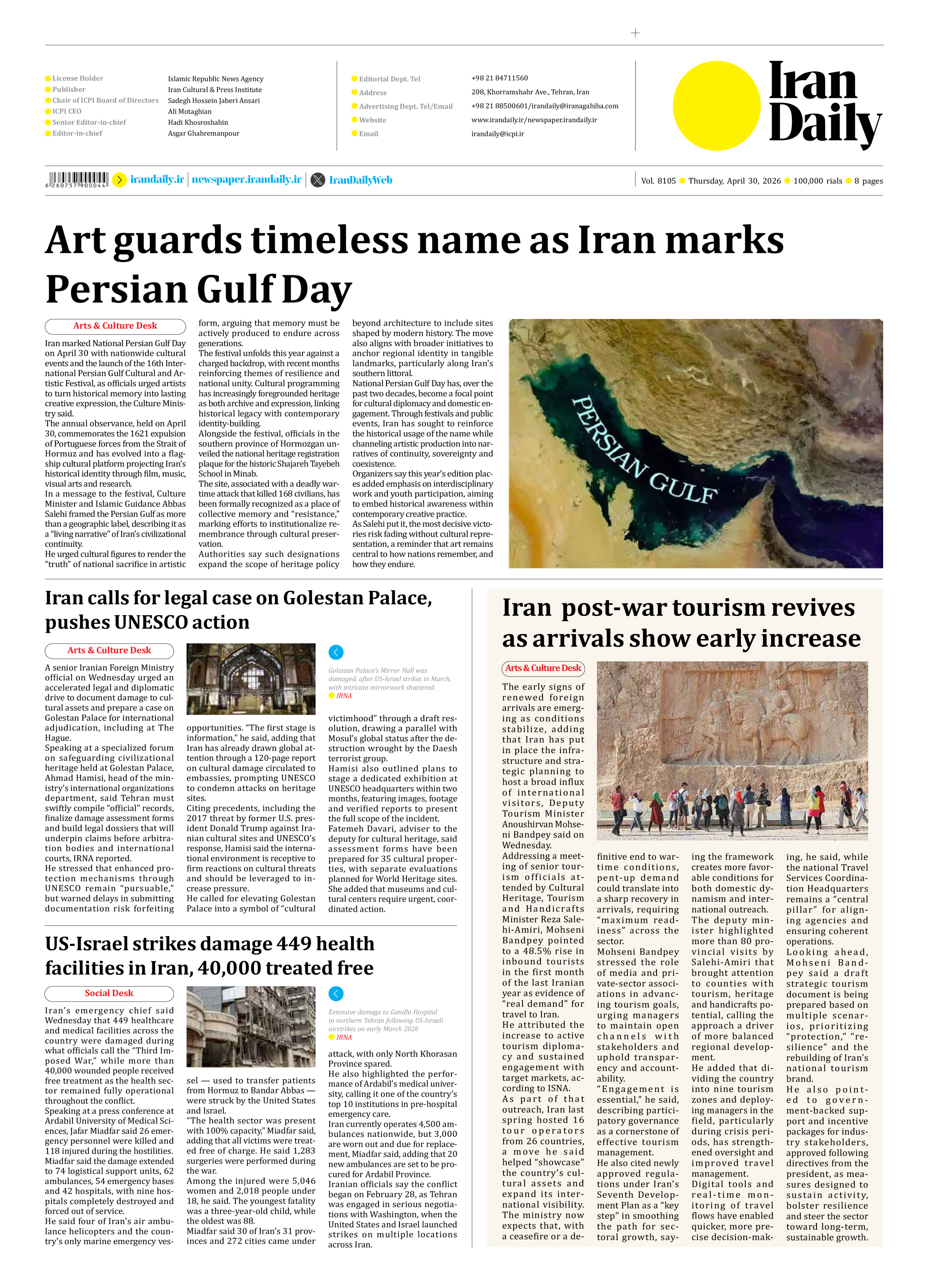
The early signs of renewed foreign arrivals are emerging as conditions stabilize, adding that Iran has put in place the infrastructure and strategic planning to host a broad influx of international visitors, Deputy Tourism Minister Anoushirvan Mohseni Bandpey said on Wednesday.
Addressing a meeting of senior tourism officials attended by Cultural Heritage, Tourism and Handicrafts Minister Reza Salehi-Amiri, Mohseni Bandpey pointed to a 48.5% rise in inbound tourists in the first month of the last Iranian year as evidence of “real demand” for travel to Iran.
He attributed the increase to active tourism diplomacy and sustained engagement with target markets, according to ISNA.
As part of that outreach, Iran last spring hosted 16 tour operators from 26 countries, a move he said helped “showcase” the country’s cultural assets and expand its international visibility. The ministry now expects that, with a ceasefire or a definitive end to wartime conditions, pent-up demand could translate into a sharp recovery in arrivals, requiring “maximum readiness” across the sector.
Mohseni Bandpey stressed the role of media and private-sector associations in advancing tourism goals, urging managers to maintain open channels with stakeholders and uphold transparency and accountability.
“Engagement is essential,” he said, describing participatory governance as a cornerstone of effective tourism management.
He also cited newly approved regulations under Iran’s Seventh Development Plan as a “key step” in smoothing the path for sectoral growth, saying the framework creates more favorable conditions for both domestic dynamism and international outreach.
The deputy minister highlighted more than 80 provincial visits by Salehi-Amiri that brought attention to counties with tourism, heritage and handicrafts potential, calling the approach a driver of more balanced regional development.
He added that dividing the country into nine tourism zones and deploying managers in the field, particularly during crisis periods, has strengthened oversight and improved travel management.
Digital tools and real-time monitoring of travel flows have enabled quicker, more precise decision-making, he said, while the national Travel Services Coordination Headquarters remains a “central pillar” for aligning agencies and ensuring coherent operations.
Looking ahead, Mohseni Bandpey said a draft strategic tourism document is being prepared based on multiple scenarios, prioritizing “protection,” “resilience” and the rebuilding of Iran’s national tourism brand.
He also pointed to government-backed support and incentive packages for industry stakeholders, approved following directives from the president, as measures designed to sustain activity, bolster resilience and steer the sector toward long-term, sustainable growth.